Application guide
Cooling Fan Applications By Equipment Type
Explore cooling and airflow requirements across electronics, energy equipment, machinery, liquid cooling, lighting, beauty equipment and more. Identify the heat source or airflow task, then send the operating conditions for an SXDOOL candidate review.
Power supplies · VFDs & inverters · Liquid cooling · Nail equipment · Stage lighting
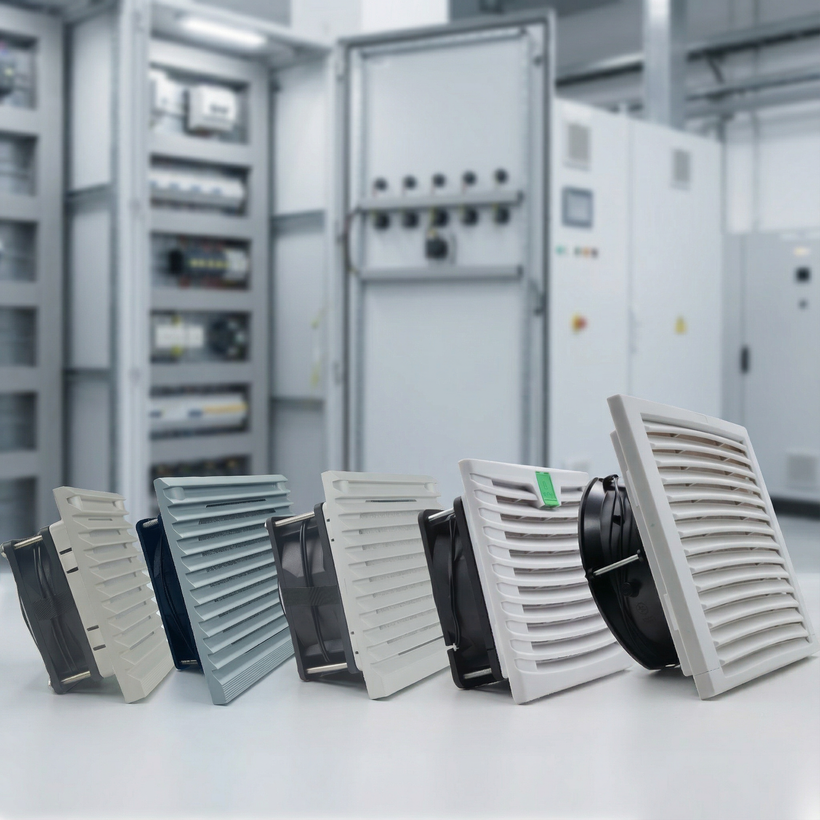
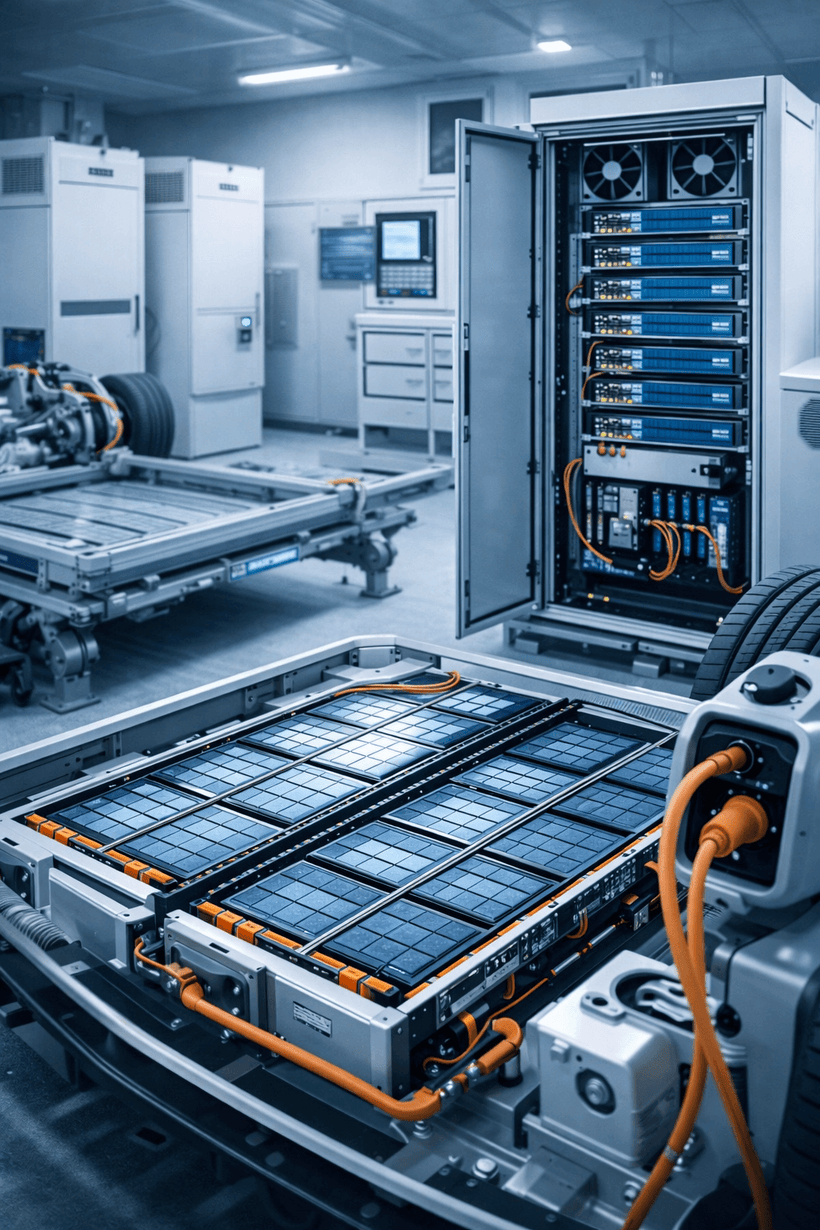
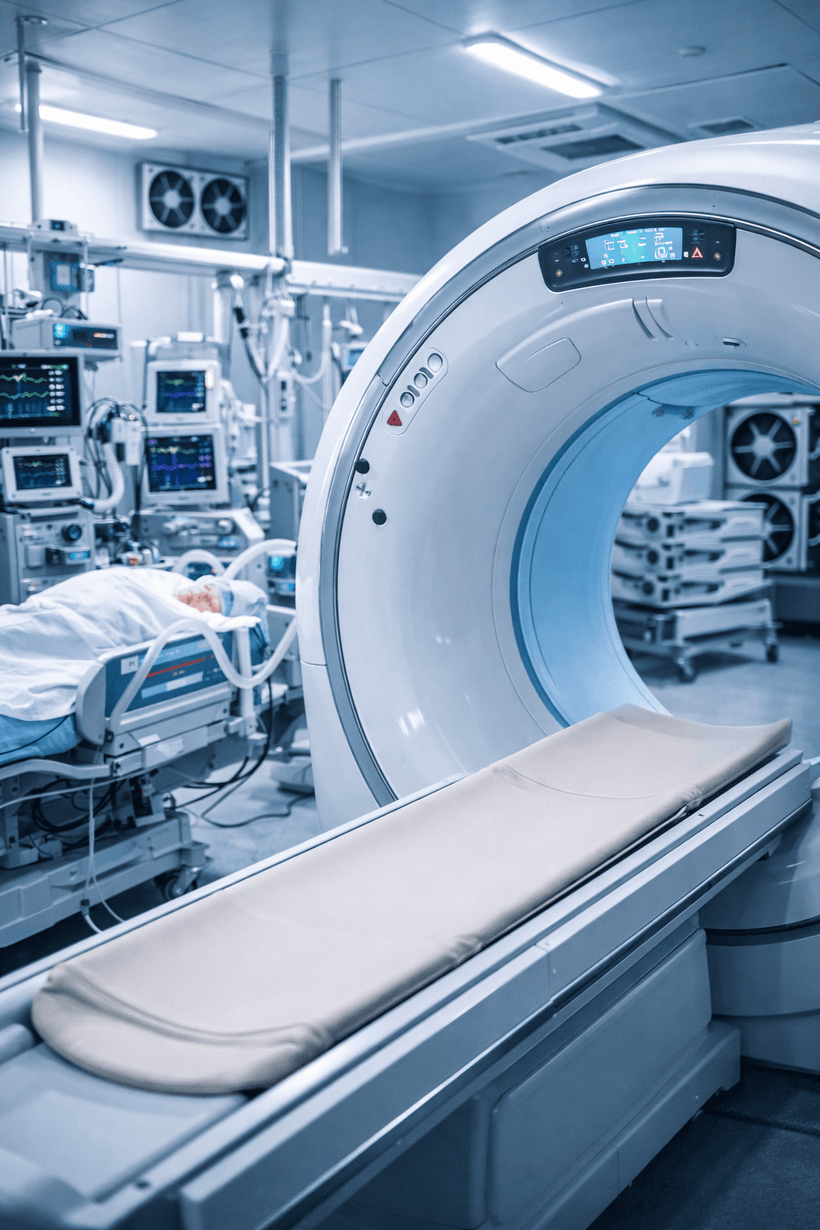
Cooling Fan Application Map
Use these 16 equipment families to define your cooling task. Thermal management, process circulation and dust extraction need different evidence; inclusion here is a project-review path, not approval of a specific fan.
Data Centers & Computing
Equipment: Rack servers; Storage and NAS; Edge computers.
Match chassis resistance, redundancy, supply and monitoring; rack size alone is insufficient.
Networking & Telecom
Equipment: Switches and routers; Baseband and optical transport equipment; Telecom cabinets.
Review airflow direction, continuous duty and outdoor temperature or moisture exposure.
Power Supplies & Drives
Equipment: Switch-mode power supplies and UPS; VFDs and servo drives; Welding power supplies.
Use actual power loss and fan supply, then check heat-sink resistance and signal logic.
Industrial Automation & Machinery
Equipment: PLC and industrial-PC cabinets; Robot control cabinets; CNC control electronics.
Include filter loading, oil mist, dust, vibration and maintenance access.
Renewable Energy & Charging
Equipment: EV charging power modules; Energy-storage electronics and enclosures; Solar and wind power conversion.
Define the cooling subsystem and load profile; ordinary cooling is not thermal-runaway protection.
Liquid Cooling & Heat Exchange
Equipment: Liquid-to-air radiators and dry coolers; CDU electronics and auxiliary enclosures.
Define the architecture, coil resistance and temperatures; liquid cooling does not always require fans.
Medical & Laboratory Equipment
Equipment: Imaging-equipment electronics; Analytical instrument electronics; Laboratory chamber air circulation.
Separate electronics cooling from patient airflow or containment; noise, cleanliness and system approval matter.
Refrigeration & Cold Chain
Equipment: Condenser airflow; Evaporator circulation; Refrigerated cabinets and vending equipment.
Check cold starts, coil resistance, condensation, defrost and refrigerant-related requirements.
HVAC & Air Treatment
Equipment: Air purifier airflow; Dehumidifier coil airflow; HVAC control electronics.
Specify filter or coil resistance, humidity and noise; electronics cooling and process airflow differ.
Kitchen & Commercial Appliances
Equipment: Induction-cooking electronics; Coffee and beverage appliance controls; Oven and dryer circulation.
Separate cool electronics from hot process air; review steam, grease, temperature and food-zone exposure.
Printing, 3D Printing & Laser Equipment
Equipment: Printer electronics and hotend heatsinks; 3D printed-part cooling; Laser source and control-electronics cooling.
Distinguish heat-sink cooling from material/process cooling; laser-fume extraction needs a separate system.
Security, Displays & Self-Service Terminals
Equipment: Surveillance recorders and edge imaging; Digital signage and display cabinets; Self-service kiosks and terminals.
Check narrow spaces, solar heat, moisture, public-space noise and service access.
Digital signage and display enclosures · Send enclosure requirements
Lighting & Audiovisual Equipment
Equipment: Stage-lighting thermal management; Projectors and AV amplifiers.
Review source and driver heat, acoustic targets and protective control at continuous duty.
Beauty & Personal-Care Equipment
Equipment: Nail-lamp and beauty-device electronics; Nail-dust extraction airflow.
Separate electronic cooling, curing reaction heat and filtered dust capture before defining a fan.
Transport & Elevator Electronics
Equipment: Elevator control-cabinet cooling; Rail auxiliary electronics cooling.
Review shock, vibration, supply transients and qualification; general cabinet cooling does not approve safety functions.
Agriculture & Food Equipment
Equipment: Agricultural controller cooling; Growing and livestock air circulation; Food-equipment drying and circulation.
Review humidity, corrosion, washdown, hygiene and fan scale; process circulation is not ordinary electronics cooling.
Liquid Cooling, Nail Equipment & Stage Lighting
Identify the actual airflow task before selecting a fan. Equipment names alone do not establish a suitable model.
Liquid-Cooling Air-Side & Auxiliary Fans
Where air still matters: a liquid-to-air CDU or radiator rejects heat into an air stream; an active rear-door heat exchanger moves air through a coil; a hybrid system may still cool power supplies and other electronics with fans. A liquid-to-liquid CDU transfers heat to another liquid circuit, and some fully liquid-cooled systems can operate without fans.
What to provide: identify the architecture, cooling location, heat duty, coolant and air temperatures, coil pressure drop, required airflow, dimensions, supply, controls, acoustic limit and redundancy. For outdoor heat rejection, include corrosion, condensation and fouling conditions.
Selection boundary: compare axial and centrifugal candidates at the coil or equipment duty point. A compact electronics fan is not automatically a complete dry-cooler solution, and a fan does not circulate coolant or establish liquid-side pressure ratings.
CDU architecture reference · Compare candidate platforms · Request liquid-cooling airflow review
Nail Lamps, Drill Controllers & Dust Extraction
Separate three tasks: nail-lamp electronics may need cooling when the thermal design calls for forced air; drill-controller electronics need a suitable heat path; a dust collector must capture dust through a defined inlet and filter. Not every nail lamp or controller requires an added fan.
What to provide: the actual heat source or dust-capture task, fan supply, enclosure space, working cycle, noise target near the user, filter resistance when clean and loaded, service access, contamination and connector or signal requirements.
Selection boundary: cooling electronics does not establish control of gel-curing reaction heat, curing quality or handpiece temperature. Dust filtration is not solvent-vapor removal. Extraction performance must be checked as a complete inlet, filter and air-moving system; it is not a generic cooling-fan claim.
Nail-lamp heat reference · Filtered extraction equipment example · Request nail-equipment fan review
Stage Lighting, Moving Heads & Projection
Customer problem: remove heat from the light source, driver and power electronics through a restricted enclosure while controlling noise in theaters, studios and live venues. Specify whether optical and cooling air paths are separate.
What to provide: continuous thermal load, inlet temperature, heat-sink or filter resistance, mounting orientation, supply, control interface, microphone-position acoustic target, transport vibration and contamination from dust or haze. For outdoor equipment, define moisture exposure and service requirements.
Selection boundary: quiet modes can require reduced light output; overheating and fan-failure protection must remain effective. Fixture DMX control does not imply the fan itself accepts DMX. Confirm speed-control and monitoring signals with the fixture controller, then test cooling and noise in the complete enclosure.
Lighting fan noise and control reference · Review wiring and connectors · Request lighting fan review
Application RFQ Hints
These details help SXDOOL avoid recommending the wrong fan family.
| Application | Likely fan | Must confirm |
|---|---|---|
| Cabinet ventilation | AC or EC axial | Input voltage, cutout size, airflow and filter resistance. |
| Electronics cooling | DC axial | Voltage, space, PWM/FG/RD and noise limit. |
| Ducted airflow | Blower fan | Static pressure, outlet direction and noise. |
| High-duty industrial use | Platform and bearing selected separately | Supply, duty point, inlet temperature, operating schedule, mounting orientation and required life-test basis. EC motor type alone does not establish bearing life. |
Application Review Flow
Keep the buying path short: confirm the key input, choose the product family, then send a clean RFQ.
Quick Answers
Use these answers to prepare a candidate review; approval still depends on the selected model and equipment test.
Can SXDOOL help choose by application?
Yes. Describe the equipment, heat source, voltage and airflow path for a fan family recommendation.
Which fan is best for control cabinets?
AC or EC axial fans are common, depending on input power, efficiency target and filter resistance.
Which fan is best for ducted airflow?
Compare axial and centrifugal candidates using their curves at the required airflow and pressure. Outlet direction, space and inlet clearance also matter; a duct or heat sink alone does not identify the best fan.
Can SXDOOL customize connectors for equipment?
Yes. Connector, cable length, signal wire, label and packaging can be reviewed by project.
Match A Fan To Your Application
Send the equipment type, heat source, voltage, airflow path and estimated quantity for SXDOOL review.
Cooling Fan Applications
Choose the equipment type closest to your project, then send size, voltage, airflow, connector and quantity for an OEM cooling fan quote.
APPLICATION VIDEO PROOF
Application Videos for Industrial Cooling Projects
Application-specific videos for cabinet ventilation, inverter cooling and enclosure airflow selection.

802 Cabinet Ventilation Fan Unit
Cabinet and server rack ventilation video for enclosure airflow, filter fan and panel cooling review.

802 Ventilator Filter Kit Options
Filter kit video for buyers reviewing cabinet ventilation units with AC, EC or DC fan options.

120mm High-Speed Fan for Inverter Cooling
Application video for power electronics and inverter cooling projects requiring high airflow DC axial fans.
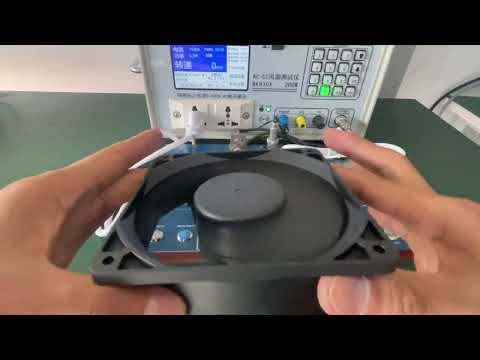
120x120x38mm EC Cooling Fan Test
Test video for 12038 EC fan buyers reviewing airflow, voltage input and continuous cabinet ventilation.
Application engineering
Industrial cooling fan application selection for OEM thermal-management projects
Engineering guide for industrial cooling fan applications
Translate equipment heat load, airflow resistance, mounting space and electrical controls into a suitable fan platform and verifiable duty point. A reliable design starts with the heat load and the resistance of the complete airflow path. Free-air CFM is not enough when filters, heat sinks, grilles, ducts or densely packed components create pressure loss.
SXDOOL supports project review for industrial automation, power electronics, telecom, charging, servers, medical equipment and compact machinery. The objective is to identify a suitable fan family and mounting envelope first, then confirm voltage, operating point, control signal, environment, cable, connector, documentation and sample requirements through RFQ.
| Primary engineering problem | Translate equipment heat load, airflow resistance, mounting space and electrical controls into a suitable fan platform and verifiable duty point. |
|---|---|
| Candidate fan platforms | DC, AC and EC axial fans, centrifugal blowers and cabinet filter fan assemblies. |
| Required project inputs | Equipment type, heat load, maximum component temperature, pressure drop, available frame, supply, control signals, environment and annual quantity. |
| Control and monitoring | PWM, FG, RD, EC speed control or simple mains switching should be selected around the host controller and fault-response requirement. |
| Environmental boundary | Ingress, dust, moisture, temperature and certification requirements must be assessed for the complete equipment rather than inferred from a fan family name. |
Recommended selection sequence
- Quantify heat generation and the maximum allowable component or enclosure temperature.
- Map the inlet, outlet and internal obstructions, then estimate or measure the pressure drop at the target airflow.
- Confirm the available frame, depth, mounting pattern, supply voltage and controller signal interface.
- Review ambient temperature, dust, moisture, acoustic limits, service access, life expectation and fault response before approving samples.
industrial cooling fan applications FAQ
Which fan family should engineers start with for industrial cooling fan applications?
DC, AC and EC axial fans, centrifugal blowers and cabinet filter fan assemblies. Start with the airflow path and system resistance, then compare the available frame, voltage and control interface.
Which project data is required to size a fan for industrial cooling fan applications?
Equipment type, heat load, maximum component temperature, pressure drop, available frame, supply, control signals, environment and annual quantity. Include target temperature, mounting envelope and expected quantity so a duty point can be reviewed instead of selecting by fan diameter alone.
How should environmental and control requirements be specified for industrial cooling fan applications?
PWM, FG, RD, EC speed control or simple mains switching should be selected around the host controller and fault-response requirement. Ingress, dust, moisture, temperature and certification requirements must be assessed for the complete equipment rather than inferred from a fan family name.
Compare the available fan platforms, use the fan selector, review the related engineering resource, or email david@sxdool.com with the application data.