EVSE power-electronics thermal management
EV charger cooling fan selection for outdoor and high-load power electronics
Engineering selection for EV charging power modules and outdoor enclosures. Define the charging duty, pressure path, environmental boundary, control interface and redundancy behavior before releasing the exact fan.
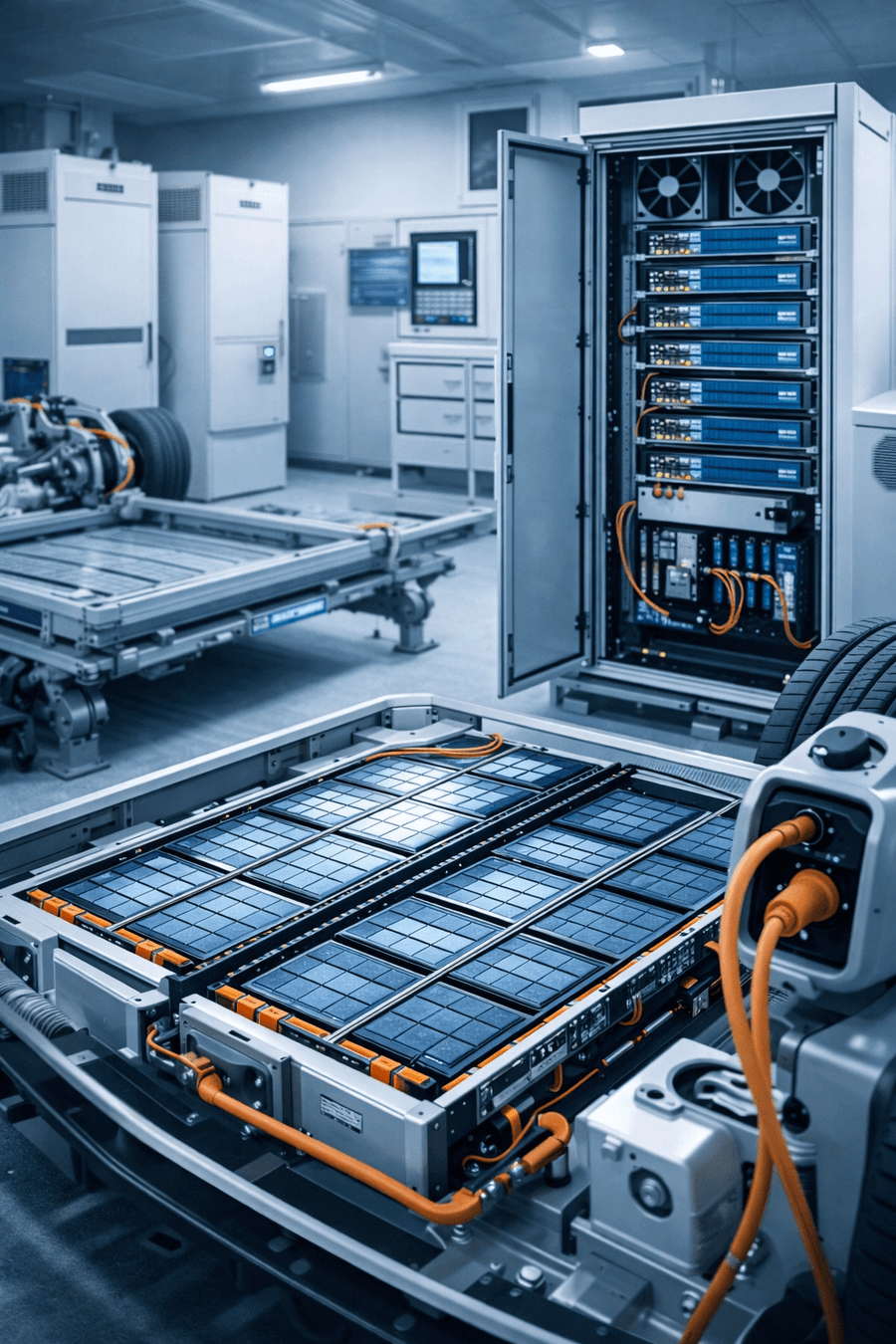
Cooling architecture for EVSE power electronics
Charger cooling must be selected against converter losses, duty cycle, enclosure pressure path and outdoor qualification requirements. A high free-air number does not prove that a fan can hold the required airflow through heat sinks, ducts, filters or restricted vents.
| EVSE input | Selection question | Release evidence |
|---|---|---|
| Power stage and duty cycle | What is the continuous and peak heat load during the charging profile? | Loss map, duty profile, ambient range and component temperature limits. |
| Air path | Is cooling filtered open-loop, sealed recirculation, heat-exchanger assisted or ducted? | System-resistance estimate and fan operating-point curve. |
| Control and monitoring | Is PWM speed control, FG tachometer output or RD stopped-fan indication required? | Approved pinout, logic level, pull-up requirement and controller test. |
| Outdoor environment | What moisture, dust, corrosion, temperature and acoustic conditions apply? | Exact construction, installation boundary and project qualification plan. |
Recommended qualification sequence
Thermal prototype
Instrument power modules, heat sinks, air inlet and outlet while reproducing peak and sustained charging loads.
Control integration
Verify startup, speed command, tachometer or alarm behavior, blocked-rotor response and restart logic.
Environmental release
Confirm the exact fan, cable, connector, protection construction, mounting and maintenance plan in the charger assembly.
EV charger cooling FAQ
When should an EV charger use PWM, FG or RD fan signals?
PWM is used when the controller must modulate speed. FG provides tachometer feedback for speed supervision. RD is used for stopped-fan or alarm logic. The exact voltage level, polarity, pulse definition and pull-up requirement must be confirmed on the approved interface drawing.
Should an outdoor charger use a waterproof fan or filtered cabinet airflow?
The answer depends on the enclosure architecture. A protected fan does not by itself establish the charger ingress rating, while filtered airflow introduces pressure loss and maintenance. Review the complete air path, sealing boundary, water path and filter service interval.
How should two-fan redundancy be qualified?
Test normal operation, one-fan failure, blocked inlet, alarm detection and controller response at the worst ambient and charging duty. Confirm whether the remaining fan can maintain safe component temperatures long enough for derating or shutdown.
EV charger thermal selection paths
Shortlist fans for charger modules, power cabinets and restricted air paths
Charger cooling should be selected from the operating airflow at system resistance, not from free-air CFM alone. Compare the candidate platforms below, then qualify the chosen voltage, current, connector, signal, acoustic result and hot-restart behavior in the complete charger assembly.
SXD12038B12H 12V high-speed fan
A 120x120x38mm 12V branch for high-resistance power-electronics paths after supply and acoustic validation.
SXD12038B24H 24V high-speed fan
A 24V, 38mm-deep option for charger cabinets with the electrical margin and space for a higher-output platform.
12025 high-speed DC family
A thinner 25mm platform for 12V, 24V or 48V projects where installation depth is limited.
SXD12025B24H-RBP 24V configuration
A drawing-controlled 24V high-output configuration for projects that need the -RBP interface defined before release.
SXD12025B24M 24V standard fan
A 25mm-deep 24V option when the measured duty point does not require the electrical and acoustic load of a higher-speed grade.