Blog
Mitigating Electrolytic Corrosion in Offshore Wind Power Electronics

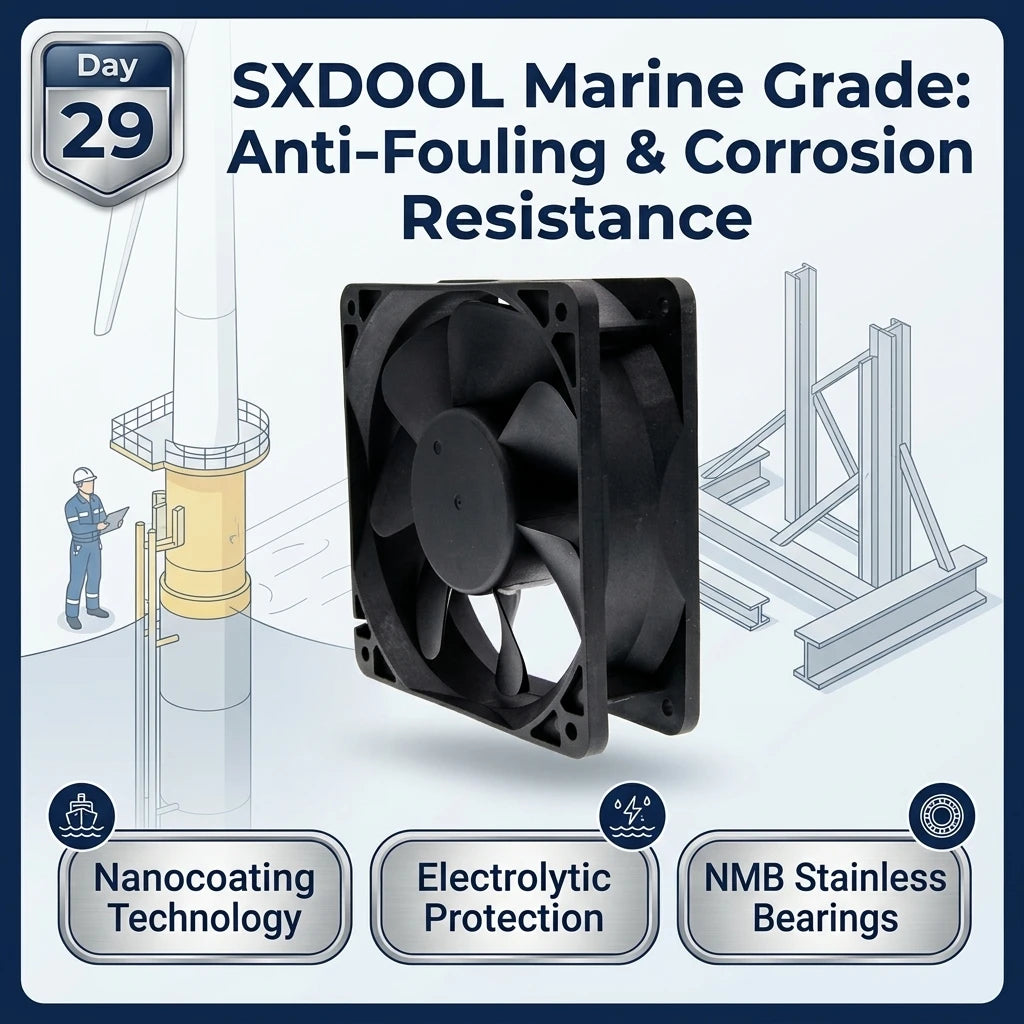
Mitigating Electrolytic Corrosion in Offshore Wind Power Electronics
Introduction: The Hostile Frontier of Offshore Wind
Offshore wind power is the cornerstone of the global transition to renewable energy. With massive turbines situated miles from the coast, the potential for energy generation is enormous, but so is the technical challenge. The primary adversary of offshore reliability is not the wind or the waves, but a silent chemical process: “Electrolytic corrosion.”
Power electronics, specifically the inverters and converters that bridge the gap between the turbine’s generator and the electrical grid, are the brains of the operation. These components generate significant heat and require robust thermal management systems. However, in an “Offshore wind” environment, the very cooling air used can trigger rapid degradation. This article explores how SXDOOL addresses the complexities of galvanic and electrolytic corrosion through material science, hardware selection, and advanced thermal engineering.
Understanding the Enemy: Electrolytic and Galvanic Corrosion
In a marine environment, the combination of salt (an electrolyte), moisture, and dissimilar metals creates a natural battery. This is the essence of galvanic corrosion.
The Mechanism in Power Electronics
In offshore inverters, multiple materials are often in close proximity: aluminum heat sinks, copper traces, and stainless steel fasteners. When salt-laden moisture settles on these interfaces, an electrochemical cell is formed.
* Anodic Dissolution: The less noble metal (often the aluminum frame or heat sink) acts as the anode and begins to dissolve, losing structural integrity.
* Electrolytic Acceleration: “Electrolytic corrosion” occurs when stray currents from the high-voltage power electronics leak into the chassis. This electrical potential drastically accelerates the natural rate of oxidation, leading to “pitting” that can penetrate a fan housing or heat sink in months rather than years.
The Galvanic Series: A Designer’s Guide
To mitigate these risks, SXDOOL engineers refer to the Galvanic Series in seawater. When choosing materials for “Offshore wind” cooling, we aim for a potential difference of less than 0.15V for outdoor/harsh environments.
| Material Combination | Potential Difference (V) | Compatibility |
| :— | :— | :— |
| Aluminum (6061) to 316 Stainless Steel | 0.50V | High Risk (Requires Isolation) |
| Anodized Aluminum to 316 Stainless Steel | 0.30V | Moderate Risk |
| Powder Coated Aluminum to 316 Stainless Steel | < 0.05V | Safe (Barrier Protected) |
For B2B buyers, understanding these interactions is the difference between a system that lasts 2 years and one that lasts 20.
Material Science: Aluminum Anodizing vs. Marine-Grade Powder Coating
The first line of defense is the surface treatment of the cooling components’ frames and housings. At SXDOOL, we evaluate two primary methods for protecting aluminum components in marine environments.
1. Aluminum Anodizing
Anodizing is an electrochemical process that converts the metal surface into a decorative, durable, corrosion-resistant, anodic oxide finish.
* Pros: It provides a very hard surface and excellent adhesion. Since the oxide layer is part of the metal, it cannot peel or flake off.
* Cons: In extreme offshore environments, the thin oxide layer can be compromised by salt crystals under high-velocity air. Once the layer is breached, localized “pitting” occurs rapidly.
2. Marine-Grade Powder Coating
For “Offshore wind” applications, SXDOOL often recommends high-performance marine-grade powder coatings.
* The Barrier Effect: Unlike anodizing, powder coating creates a thick, non-conductive polymer barrier (typically epoxy or polyester based) over the metal. This barrier prevents the electrolyte (saltwater) from ever touching the metal surface.
* Dielectric Strength: Because the coating is an insulator, it helps mitigate “Electrolytic corrosion” by preventing stray currents from finding a path through the chassis.
* Edge Coverage: Advanced powder coating techniques ensure that even sharp edges and corners—the most common sites for corrosion initiation—are fully encapsulated.
The Importance of Hardware: Stainless Steel and Insulation
A common mistake in marine engineering is the use of standard zinc-plated steel screws to mount high-end cooling fans. This creates a massive galvanic mismatch with the aluminum frame.
Stainless Steel Selection
SXDOOL specifies 316-grade (A4) stainless steel hardware for all offshore-ready thermal solutions.
* Molybdenum Content: Grade 316 contains molybdenum, which significantly enhances resistance to chloride-induced pitting—the primary form of corrosion in offshore environments.
* Fastener Isolation: To further prevent galvanic cells, we utilize nylon or PTFE washers and bushings to provide physical and electrical isolation between the stainless steel hardware and the aluminum housing.
Thermal Management in Offshore Wind Inverters
Managing heat in a sealed offshore nacelle is a balancing act. Inverters are often housed in IP65 or IP66 enclosures to keep out the salt air, but this creates a “greenhouse effect” for the electronics.
IGBT Thermal Management: The Core Challenge
The most sensitive components in an offshore inverter are the IGBT (Insulated Gate Bipolar Transistor) modules. These devices can dissipate kilowatts of heat in a space the size of a postcard.
* Temperature Sensitivity: If an IGBT’s junction temperature exceeds its limit (typically 150°C-175°C), it fails instantaneously.
* Thermal Fatigue: Even if it doesn’t fail immediately, thermal cycling—caused by fluctuating wind speeds and inconsistent cooling—leads to solder fatigue and bond wire failure.
SXDOOL’s high-performance fans are designed to maintain a consistent airflow rate across the inverter’s heat sink, minimizing Delta-T and extending the fatigue life of the power modules.
Forced Air vs. Closed-Loop Cooling
SXDOOL provides specialized high-static pressure fans designed to move air through dense heat exchangers within the nacelle.
* Internal Circulation: Fans inside the enclosure must have high reliability to prevent “hot spots” on IGBT modules.
* Heat Exchange Cooling: For systems that pull in external air, the fans must be capable of withstanding the direct impact of salt spray while maintaining the pressure needed to push air through fine-fin heat sinks.
Maintenance Costs and ROI: The True Price of Corrosion
In the “Offshore wind” sector, the Return on Investment (ROI) of a cooling system is not calculated based on the purchase price of the fan, but on the cost of its *avoided failure*.
The Cost of an Offshore Service Call
A typical onshore fan replacement might cost $500 in labor. Offshore, the costs escalate exponentially:
1. Vessel Charter: A Service Operation Vessel (SOV) or Crew Transfer Vessel (CTV) can cost thousands of dollars per day.
2. Technician Safety: Working in a nacelle 100 meters above the sea requires specialized training and two-person teams.
3. Lost Production: While the inverter is down, the turbine is not generating revenue. A 12MW turbine can lose over $10,000 in revenue per day of downtime.
By investing in SXDOOL’s corrosion-resistant solutions, operators can extend the MTBF (Mean Time Between Failures) of their thermal management systems from 3 years to over 10 years, saving hundreds of thousands of dollars over the lifetime of the wind farm.
Frequently Asked Questions (FAQ)
1. Is 304 stainless steel sufficient for offshore wind?
Generally, no. Grade 304 lacks the molybdenum found in Grade 316, making it susceptible to “tea-staining” and pitting in high-chloride environments. SXDOOL defaults to Grade 316 for all offshore hardware.
2. How does powder coating handle vibration?
Standard powder coatings can be brittle. SXDOOL uses specialized “Flexible Marine Polyester” coatings that are designed to withstand the structural vibrations inherent in wind turbines without cracking or losing adhesion.
3. Can SXDOOL provide customized fan curves for high-static pressure applications?
Yes. We understand that offshore inverters often use high-density heat sinks. We can customize the impeller design and motor torque to meet specific P-Q (Pressure-Flow) requirements.
The SXDOOL Solution: Engineering for the 25-Year Lifecycle
Offshore wind turbines are designed for a 20 to 25-year service life. Our approach to “Mitigating Electrolytic Corrosion” is built on long-term durability:
1. Electrochemical Analysis: We select materials based on their position in the galvanic series to ensure minimal potential difference between adjacent parts.
2. Environmental Simulation: SXDOOL products undergo 1,000+ hour Neutral Salt Spray (NSS) testing and C5-M (Marine) category corrosion testing to validate our coatings.
3. Smart Monitoring: Many of our marine-grade fans include “Tacho output” or “Locked Rotor Alarm” features, allowing the turbine’s control system to monitor cooling health remotely and schedule maintenance before a failure occurs.
Conclusion
The offshore wind industry cannot afford “standard” components. The intersection of high voltage and high salinity demands a sophisticated understanding of material science and electrochemistry.
By focusing on superior surface treatments like marine-grade powder coating, utilizing 316 stainless steel hardware, and designing for the specific thermal loads of power inverters, SXDOOL provides the reliability that offshore operators demand. In the battle against “Electrolytic corrosion,” the right cooling partner is the difference between a profitable wind farm and a maintenance nightmare.
—
Keywords: Electrolytic corrosion, Offshore wind, SXDOOL, Marine-grade powder coating, Galvanic corrosion, Power electronics cooling, 316 Stainless Steel, Thermal management.