Blog
Cooling Fans for Solar and Wind Converter Electronics

For a solar inverter or wind converter, select a cooling fan for the specific heat-removal path it serves. Identify whether the fan moves air through a power-stage heat sink, cools auxiliary electronics inside the cabinet, or serves an external heat exchanger. These duties have different airflow resistance, environmental exposure and failure responses. A fan’s free-air rating alone does not establish converter cooling capacity.
This guide is for OEM design and qualification of renewable-power conversion equipment. Replacement work on an installed inverter must follow the equipment manufacturer’s approved parts and service instructions.
Locate the air path before choosing a fan
| Architecture | What the fan must support | Information to obtain |
|---|---|---|
| Air-cooled solar inverter | The specified duct or heat-sink path, without recycling hot discharge into its inlet. | Heat loss at the intended load, inverter clearances, inlet conditions, duct resistance and permitted temperature derating. |
| Wind converter with separate liquid and air circuits | The identified air-cooled components; the liquid circuit remains a separate thermal system. | Cabinet-zone losses, air openings, local component limits, coolant conditions and the equipment’s cooling schematic. |
Architecture varies by model. ABB’s ACS880-87CC hardware manual, Cooling and heating describes a combined system: major power components use liquid cooling, while control electronics, some filter capacitors and the main breaker use air cooling. This is an example of why a liquid-cooled converter may still need an air-circuit assessment; it is not a claim that every wind converter uses that layout or that an SXDOOL fan is an approved replacement.
Separate fan limitations from installation and derating
First identify the measured temperature and operating condition that limits output. A hot inlet, recirculated exhaust, obstructed fins or a failed fan can each reduce available cooling. Record the inverter load, inlet temperature, enclosure state and fan command together so that a fan change is evaluated against the same conditions.
SMA’s Temperature derating technical information, version 1.5 explains that temperature derating reduces output to protect components and discusses installation conditions, clogged cooling surfaces and fan faults. For a new design, use the converter’s permitted derating behavior as an acceptance condition. A larger or faster fan does not by itself remove a restriction imposed by installation, electrical design or the equipment’s operating limits.
Evaluate the installed air path and the service condition
List every obstruction between the fan inlet and the component being cooled: guard, duct bend, filter, heat sink and outlet. Obtain the pressure-flow curve for the exact proposed fan configuration and assess the required operating point. Check for bypass around the heat sink and for an inlet drawing air from a neighboring converter’s exhaust. Neither maximum static pressure nor maximum free-air flow describes the installed operating point.
Define a maintainable condition as well as a clean starting condition. The enclosure layout must leave access to the relevant filter, grille and fan assembly. Plan temperature and airflow observations for the allowable service condition rather than assuming the clean-sample result applies throughout the maintenance interval.
For outdoor equipment, distinguish the fan’s local exposure from the enclosure rating. Rain, condensation, dust, salt and cleaning chemicals require separate evidence for the ordered fan and assembly. A component IP statement does not establish salt-fog endurance, a whole-cabinet rating or unrestricted outdoor service.
SXDOOL candidate for a compact auxiliary air path
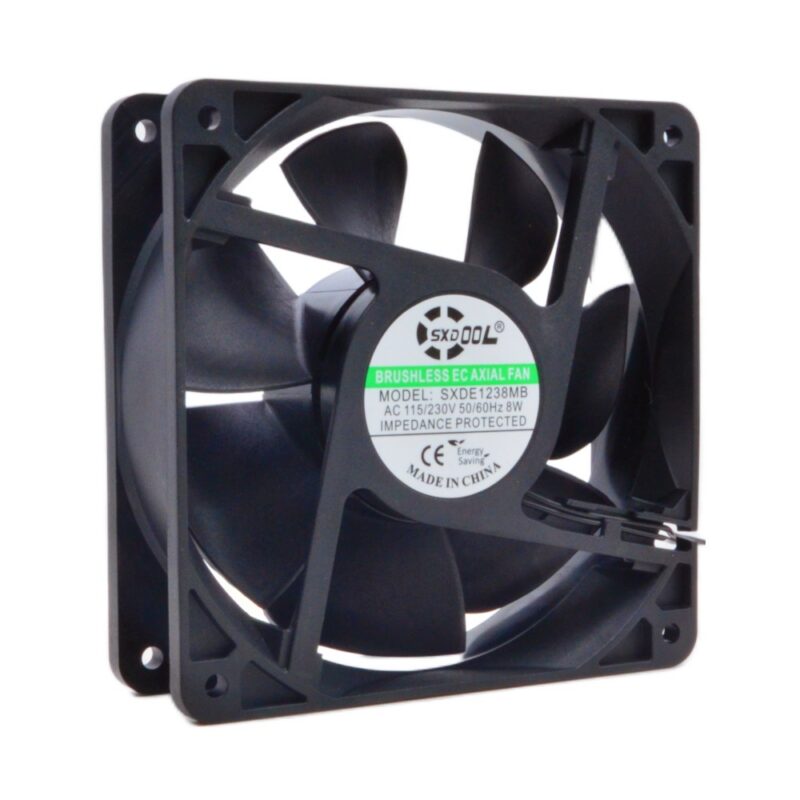
The SXD6038B24H-RDP catalogue entry is a starting point for reviewing a compact, restricted air path in an OEM design. Its catalogue positioning makes it worth requesting configuration-specific documents when mounting space, auxiliary supply and controller requirements point toward this class of fan. Inclusion here does not establish sufficient cooling for a converter, outdoor qualification or compatibility with the ABB or SMA examples.
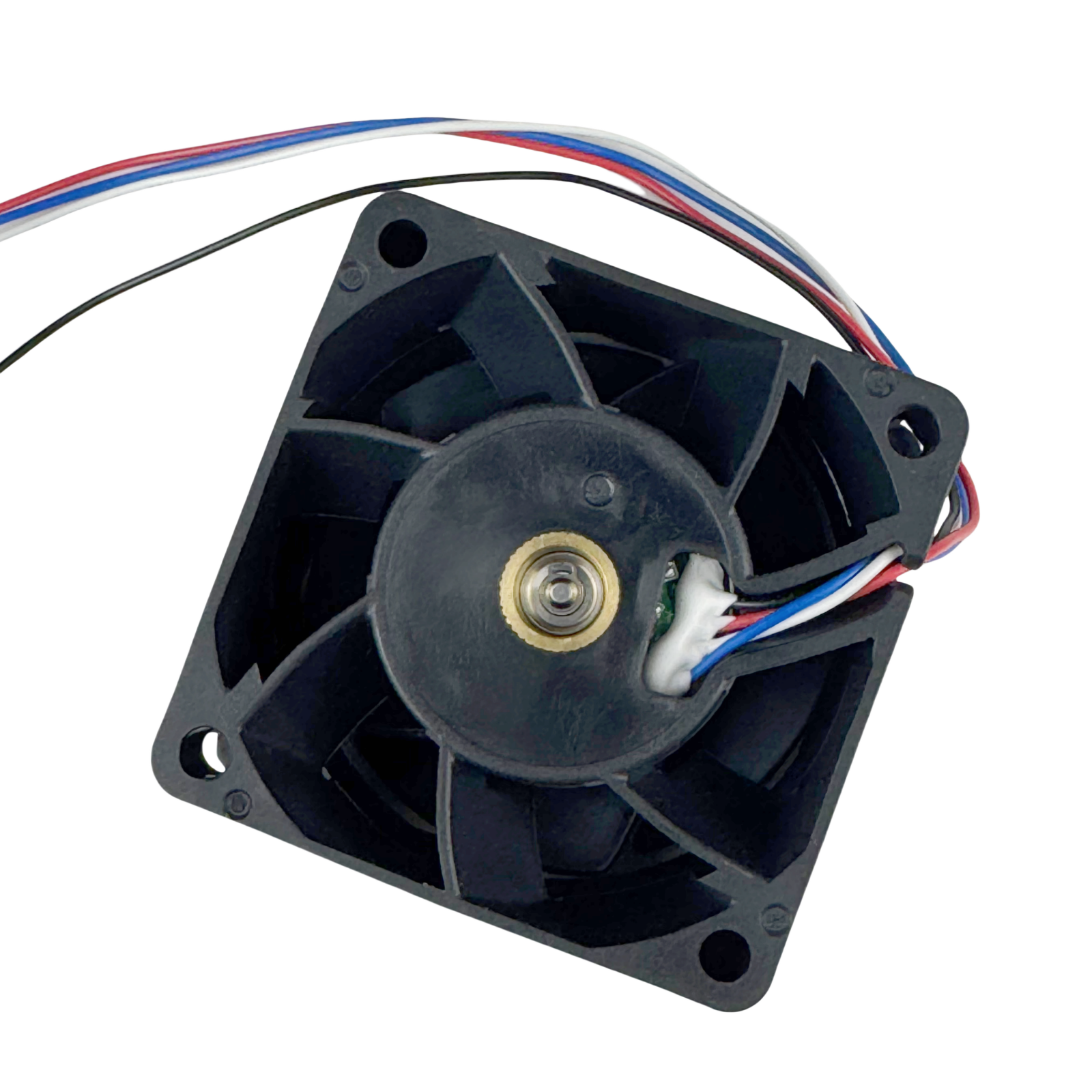
Request the current mechanical drawing, matching pressure-flow data, startup-current definition, wiring and controller interface before selecting a sample. Establish whether the controller needs speed-pulse feedback or a fault indication; these signals are not interchangeable. Specify normal running, commanded stop, failed start and locked-rotor responses, including the equipment’s action when cooling is unavailable. Confirm the acoustic limit at the installed equipment, not from a photograph or model suffix.
Choose another configuration if the required duty point, supply, feedback function, space or noise limit cannot be demonstrated. For an OEM-approved replacement, use the exact replacement process rather than treating a catalogue candidate as interchangeable.
Qualification information to include in the request
- Converter type and whether the fan serves the power heat sink, auxiliary electronics or a separate exchanger.
- Cooling-path drawing, available mounting space, inlet and outlet restrictions, and service access.
- Losses and component temperature limits at the intended operating conditions, including acceptable derating.
- Auxiliary supply range and startup budget; connector, pinout, control and fault-monitoring requirements.
- Local temperature, altitude, contaminants, condensation risk and the required acoustic and environmental evidence.
Agree pass/fail criteria before testing: component temperatures, delivered output, control response, restart behavior and maintainable airflow must be checked together. Keep the ordered fan revision, test configuration and operating conditions in the acceptance record. This guide supplies a selection process, not a completed equipment qualification.
Questions from converter designers
Can a new fan be selected from inverter power alone?
No. Electrical output power does not directly specify heat loss in the fan’s zone or the resistance it must overcome. Obtain the heat distribution, air-path constraints and component limits for that converter design.
Does a liquid-cooled wind converter eliminate the need for fans?
It depends on its architecture. Review the manufacturer’s schematic for remaining air-cooled components and heat rejection equipment. Do not assign the liquid circuit’s full heat load to a local electronics fan.
Can this SXDOOL candidate replace an installed inverter’s original fan?
No replacement approval is established here. Equipment maintenance instructions and approved parts govern that decision. For example, SMA’s Sunny Tripower 125 operating manual, maintenance section requires manufacturer-approved spare parts. An OEM designing new equipment can request a candidate for its own documented qualification.
Request a converter fan document review
For other equipment duties, see VFD and servo-drive cooling, liquid-to-air radiator fan selection, and the application guide.