Blog
Thermal Uniformity Challenges in Containerized Battery Energy Storage Systems (BESS)

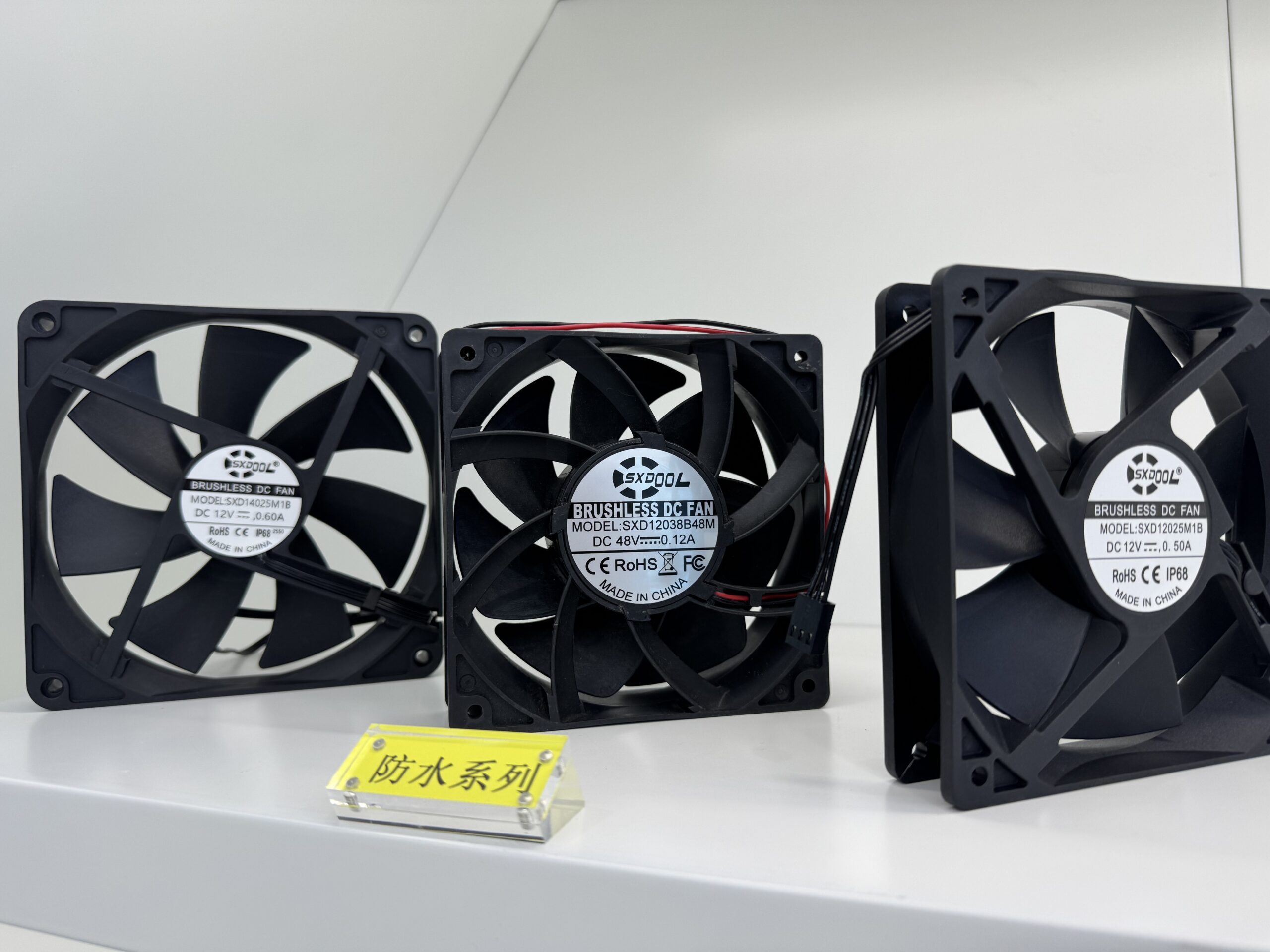
As the world transitions to renewable energy, Battery Energy Storage Systems (BESS) have emerged as the critical link in grid stability. However, the densification of lithium-ion cells within shipping containers has introduced a formidable engineering hurdle: Thermal Uniformity.
Temperature variance across a battery rack is not just a performance issue; it is a safety and longevity risk. At SXDOOL, we specialize in high-airflow, high-static pressure solutions like our SXD20060 Series to ensure every cell stays within the optimal thermal window.
1. The “Heat Island” Effect in BESS
In a containerized BESS, thousands of cells are packed into racks with minimal spacing. Without precise airflow management, “heat islands” form in the center of the racks where stagnant air traps thermal energy.
A variance of just 5°C between cells can lead to:
* Imbalanced Aging: Cells in hotter zones degrade faster, reducing the overall capacity of the entire string.
* Reduced Round-Trip Efficiency: High temperatures increase internal resistance, leading to energy loss during charge/discharge cycles.
* Thermal Runaway Risk: Localized hotspots are the primary precursors to fire hazards in BESS installations.
2. High-Static Pressure: Penetrating the Rack Impedance
The physical structure of a battery rack creates high system impedance. Standard cooling fans often fail to push air through the dense wiring and cell gaps.
The SXDOOL SXD20060 DC Fan is engineered with optimized blade geometry to deliver the high static pressure required to overcome this resistance. By providing a consistent “wall of air,” we ensure that the thermal gradient is minimized from the intake to the exhaust of the container.
3. Intelligent Control via PWM
BESS systems are dynamic. They generate different thermal loads during “peak shaving” versus “frequency regulation.”
Our EC and DC fan series support 4-wire PWM speed control. This allows the BESS controller to:
* Ramp up fan speeds during high-C-rate discharge.
* Slow down fans during idle periods to reduce auxiliary power consumption (OPEX).
* Monitor fan health via FG (Tachometer) and RD (Locked Rotor) signals for predictive maintenance.
4. Ruggedized for Outdoor Infrastructure
BESS containers are often deployed in harsh environments—from coastal regions with high salt mist to dusty solar farms. SXDOOL provides IP68 Vacuum Potting as an option, completely sealing the motor and PCB against moisture and particulates.
5. Conclusion
Achieving thermal uniformity is the difference between a 10-year and a 20-year BESS project lifespan. By selecting high-reliability, long-life fans with verified P-Q curves, OEM engineers can ensure the “Engineering Truth” of their storage assets.
Need a technical audit for your BESS cooling design? [Request a Technical Quote](https://sxdool.com/request-a-quote/) or contact our engineering team today.