Blog
Thermal Management of Liquid-Cooled EV Charging Cables: Overcoming the 500A Barrier

Introduction: The Race for Faster Charging and the 500A Threshold
The global transition to electric vehicles (EVs) hinges on one critical factor: charging speed. While traditional AC home charging is sufficient for overnight stays, long-distance travel and fleet operations require DC Fast Charging (DCFC) that can mimic the “five-minute refuel” experience of internal combustion engines. To achieve this, charging power has surged from the standard 50kW chargers of the last decade to 350kW, and now 500kW+ “ultra-fast” stations.
As voltage levels migrate toward 800V architectures, the current—measured in Amperes—remains the primary driver of heat. To deliver 400kW at 800V, a system must pull 500 Amperes. At these levels, the industry hits a “thermal wall.” Standard air-cooled cables, which rely on the thickness of the copper to keep resistance low, become prohibitively heavy and rigid at currents above 200A. A 500A air-cooled cable would be thicker than a human arm and impossible for most users to handle. The solution that has enabled the “Supercharger” era and the rise of ultra-fast highway hubs is Liquid Cooling.
The Physics of Resistance: Why Cables Heat Up
Heat generation in an electrical conductor is not a linear problem; it is an exponential one. According to Joule’s First Law, the power dissipated as heat (P) is equal to the square of the current (I) multiplied by the resistance (R): P = I^2R.
Because the heat increases with the square of the current, doubling the charging speed from 250A to 500A doesn’t just double the heat—it quadruples it. In a high-power charging environment, even a tiny amount of resistance in the cable connectors or the copper strands can result in kilowatts of heat being trapped inside the cable assembly.
The Problem with Thickness
To lower resistance (R), you can increase the cross-sectional area of the copper. However, copper is heavy and expensive. An air-cooled cable rated for 500A would require so much copper that the cable’s weight and stiffness would violate ergonomics and safety standards. Liquid cooling allows engineers to use thinner, more flexible copper conductors by actively removing the heat as it is generated, keeping the cable manageable while tripling its current-carrying capacity.
Anatomy of a Liquid-Cooled Cable: How the Loop Works
A liquid-cooled charging cable is a feat of modern engineering. Unlike a standard power cord, it features a complex internal architecture that includes power conductors, communication lines, and coolant channels.
1. The Coolant Jacket and Channels
The most common design involves a coolant jacket or specialized internal tubes that surround the copper conductors. A mixture of water and ethylene glycol (or a specialized dielectric fluid) is circulated through these channels by a high-precision pump system located in the base of the charging station (EVSE).
2. Direct vs. Indirect Cooling
- Indirect Cooling: The coolant flows in a jacket around the insulated copper strands. This is simpler to seal but slightly less thermally efficient.
- Direct Cooling: In some advanced designs, a dielectric fluid flows in direct contact with the copper strands. This provides the highest possible heat transfer rate but requires advanced seals to prevent leaks into the vehicle’s inlet.
3. The Heat Exchanger Module
The “heart” of the thermal management system isn’t in the cable itself, but in the charging station. The hot fluid returns from the cable and passes through a radiator (heat exchanger). This radiator must shed several kilowatts of thermal energy into the ambient air. If this process fails, the station’s software will “throttle” the charging speed, frustrating the user and reducing the station’s ROI.
The Critical Role of High-Performance Fans in the Thermal Loop
The efficiency of a liquid-cooled cable is strictly limited by the charging station’s ability to reject heat. This is where the choice of cooling fan becomes a mission-critical engineering decision. In a 350kW+ charger, the cooling fans are the only thing standing between a 15-minute charge and a one-hour thermal throttle.
High Static Pressure: Fighting Backpressure
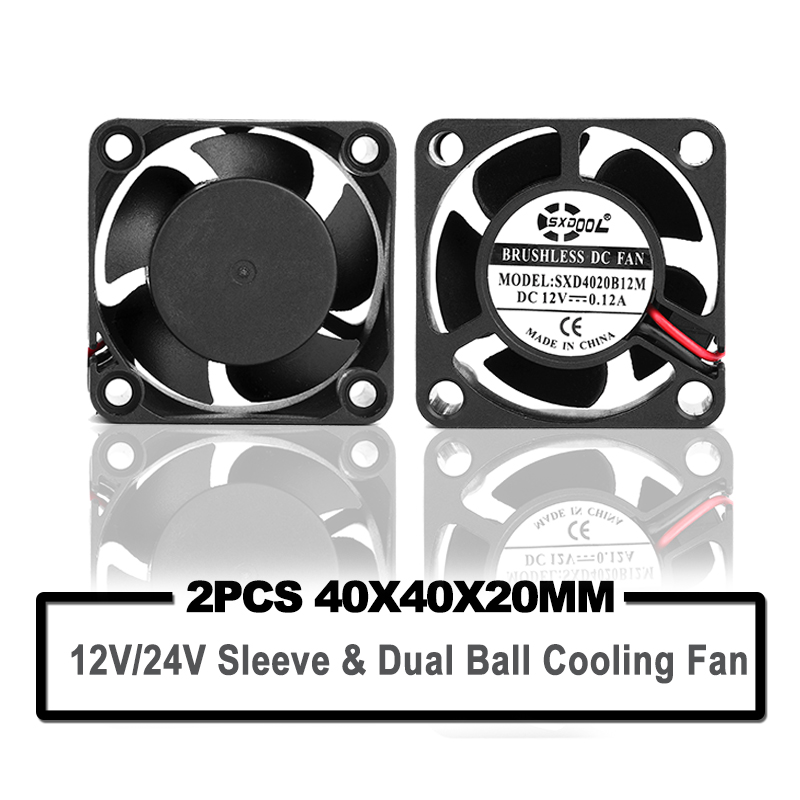
The radiators used in ultra-fast chargers are extremely dense. To maximize surface area in a compact enclosure, engineers use tight fin spacing. Standard axial fans often suffer from “stall” or a massive drop in airflow when faced with this high backpressure. SXDOOL’s high-performance axial fans are specifically designed with high-torque motors and optimized blade pitch to maintain high CFM (Cubic Feet per Minute) even under extreme static pressure.
IP68 Protection: Resilience Against the Elements
Charging stations are outdoor infrastructure. They face relentless exposure to rain, snow, salt spray in coastal regions, and fine dust in arid climates. If a fan fails due to water ingress or bearing corrosion, the coolant loop stops, and the station goes offline. SXDOOL utilizes advanced vacuum-potting technology to completely seal the fan’s PCB and motor windings. Our IP68-rated fans are tested to operate even when fully submerged, ensuring 24/7 uptime in any climate.
NMB Bearing Technology: The 70,000-Hour Rule
For infrastructure operators, maintenance is the single largest operating expense. A fan that needs replacing every 18 months is a liability. By utilizing Japan NMB precision ball bearings, SXDOOL fans achieve an L10 lifespan of over 70,000 hours. This translates to nearly 8 years of continuous operation, matching the expected maintenance cycle of the charging station itself and providing a lower Total Cost of Ownership (TCO).
Material Science and Fluid Selection: The Dielectric Advantage
While water-glycol is the most common coolant due to its cost and heat capacity, the industry is increasingly looking at dielectric fluids (synthetic oils). These fluids do not conduct electricity, providing an extra layer of safety in the event of a cable rupture. However, dielectric fluids are more viscous and require even more powerful pumps and higher-pressure cooling fans to maintain effective flow rates. SXDOOL’s “Force Series” fans are currently being integrated into next-generation dielectric cooling modules to overcome these fluid-dynamic hurdles.
Case Study: Optimizing Average Charging Throughput (ACT)
In a recent deployment at a high-power hub in Southern Europe, an operator noticed that charging speeds were dropping by 30% during summer afternoons when ambient temperatures hit 40°C. The culprit was a standard cooling fan that couldn’t handle the thermal load. By upgrading the heat exchanger modules with SXDOOL IP68 120mm high-speed fans, the operator was able to maintain the 500A current for 20% longer durations, resulting in a measurable increase in the station’s “Average Charging Throughput” and higher customer satisfaction.
Future Trends: The Megawatt Charging System (MCS)
The next frontier is the Megawatt Charging System (MCS), designed for Class 8 heavy-duty trucks and electric aircraft. MCS aims for currents up to 3,000A at 1,250V. At these power levels, the thermal management system becomes the central engineering challenge of the entire vehicle. These systems will require multiple redundant liquid-cooling loops and massive, high-reliability fan arrays. SXDOOL is already working with industry pioneers to develop the 200mm and 250mm industrial-grade fans that will power the megawatt era.
Conclusion: Supporting the Backbone of the EV Revolution
Liquid cooling is the “secret sauce” that makes modern EV travel possible. It bridges the gap between the limitations of physics and the demands of the consumer. However, the cable is only the visible part of a complex thermal ecosystem. The reliability of that ecosystem depends on the ruggedness of the active cooling components inside the charging station.
As the industry moves toward 500A+ currents as the new standard, the margin for error in thermal management vanishes. At SXDOOL, we are committed to providing the high-pressure, IP68-protected, and NMB-backed fans that keep the coolant flowing and the power moving. We aren’t just making fans; we are building the reliability that the electric revolution depends on.