Blog
Hot/Cold Aisle Containment with Intelligent Fan Arrays

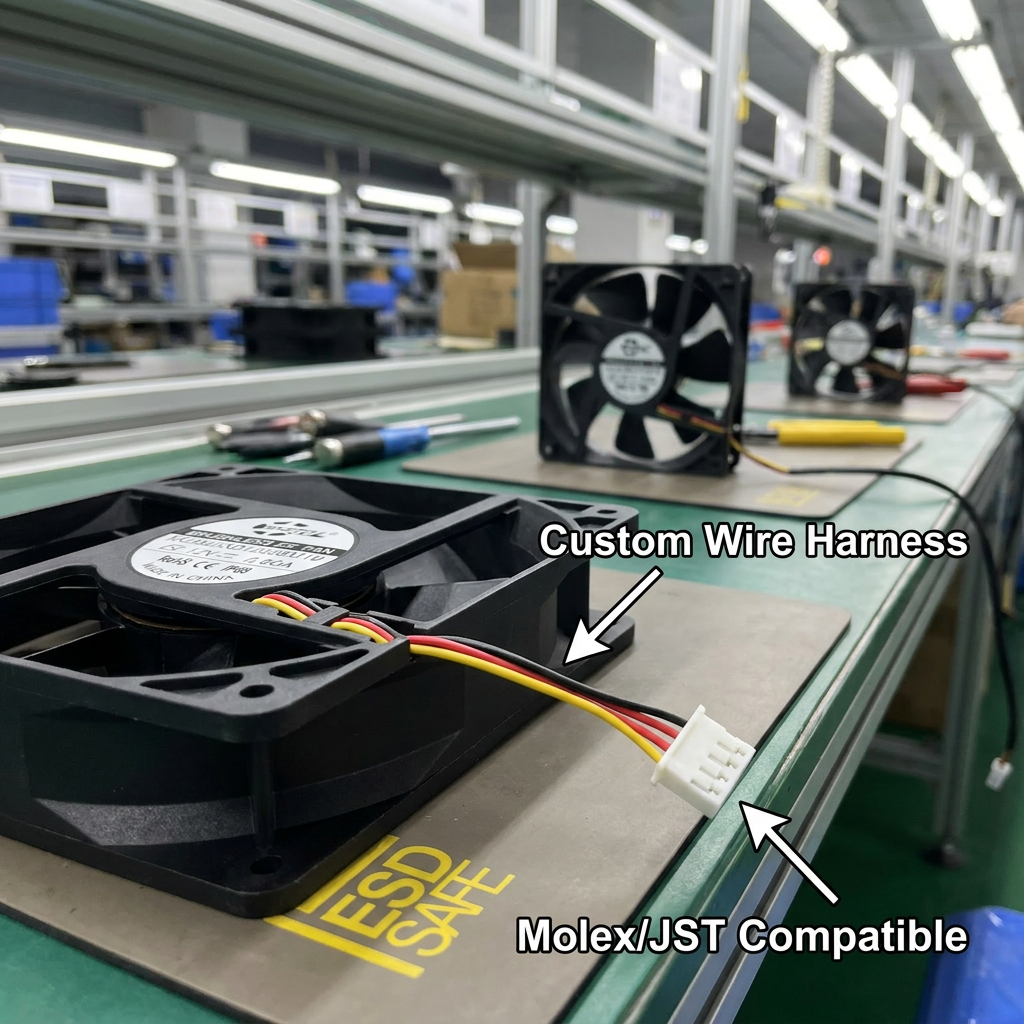
Containment improves data-center cooling only when the air movers, rack pressure and server demand are coordinated. A fan array that produces high free-air volume can still waste energy if air bypasses the equipment, leaks around blanking panels or recirculates from the hot aisle to the cold aisle.
The engineering target is a stable pressure and temperature envelope at the server inlets. Fan arrays should respond to measured demand while avoiding excessive differential pressure that can fight the fans inside IT equipment. Redundancy and service access must be designed into the array from the beginning.
Engineering workflow
- Audit airflow paths. Locate missing blanking panels, floor leakage, cable openings and gaps around containment doors before adding fan capacity.
- Define pressure boundaries. Measure cold-aisle and hot-aisle pressure relative to the room. Use the smallest pressure differential that supplies the racks without causing bypass.
- Match array control to demand. Use inlet temperature, differential pressure and rack load as control inputs. Apply rate limits and hysteresis to prevent rapid speed hunting.
- Design redundancy. Size the array so the required operating point remains available during one fan or one power-channel failure. Monitor each fan where practical.
- Commission rack by rack. Validate the top, middle and bottom inlet temperatures and inspect high-density racks separately from the room average.
Technical decision table
| Design item | Engineering meaning | Evidence or action | Acceptance focus |
|---|---|---|---|
| Cold-aisle pressure | Insufficient supply or excessive leakage | Differential-pressure sensor | Adjust fan setpoint and close bypass paths |
| Server inlet temperature | Recirculation or uneven distribution | Multi-height rack sensors | Balance tiles, vents or local airflow |
| Hot-aisle temperature | Expected heat capture or local exhaust restriction | Return-air sensors | Check return path and containment leakage |
| Fan-array status | Stall, disconnection or degraded redundancy | FG/RD signal or current monitoring | Alarm and service failed module |
| Filter/coil pressure | Loading increases system resistance | Differential-pressure trend | Clean or replace while preserving airflow |
Validation in the finished system
Commission the system at low, typical and peak IT load, then repeat the critical checks with one fan disabled. Verify that all rack inlet temperatures remain within the equipment limits, doors do not become difficult to operate, and the fan array does not create oscillating pressure. Trend temperature, pressure, speed command and fan feedback together so control problems can be diagnosed.
Information to include in the OEM RFQ
- Rack count, heat load by aisle and expected expansion
- Containment drawing, leakage paths and supply/return architecture
- Target airflow and static pressure or measured system curve
- Fan-array voltage, communication, feedback and redundancy topology
- Noise limit, service-access constraints and filter/coil pressure loss
- Commissioning acceptance criteria and monitoring-point list
Frequently asked engineering questions
Should the cold aisle always be strongly pressurized?
No. Excess pressure can increase leakage and force air around rather than through servers. Use the minimum stable differential pressure that serves the racks and verify it with inlet-temperature measurements.
Can fan speed be controlled from room temperature alone?
Room temperature is usually too coarse. Rack inlet temperature and aisle differential pressure provide more direct information about cooling delivery; control logic should also include safe limits and sensor-failure behavior.
How is N+1 fan-array capacity verified?
Disable one fan or one defined module during commissioning, then measure pressure and rack inlet temperatures at the design load. A mathematical fan count alone does not prove redundancy in the installed airflow path.
Work with SXDOOL engineering
SXDOOL supports factory-direct OEM/ODM cooling fan projects with application review, dynamic balancing and 100% end-of-line testing for the agreed production specification. Review 120 mm high-airflow fan series and Fan selection engineering guide, then send the operating point, drawing, electrical interface and expected quantity through the contact page or email david@sxdool.com.