Blog
A Buyer’s First-Article Inspection Checklist for OEM Cooling Fans

Before releasing an OEM cooling fan for production, compare a production-intent sample with the agreed drawing and record the result for each requirement. For a buyer, the most useful first-article inspection (FAI) report answers three questions. Which exact assembly did the supplier build? Which requirements did that sample meet? Who can authorize the next batch, and on what terms?
A fan can fit the mounting holes and still arrive with a connector that the assembly line cannot use. The sample review is the least expensive point to catch a mirrored pin assignment, a lead that will not reach the mating header or an alarm output the controller cannot interpret. Give engineering, purchasing and the supplier the same drawing before anyone orders production material.
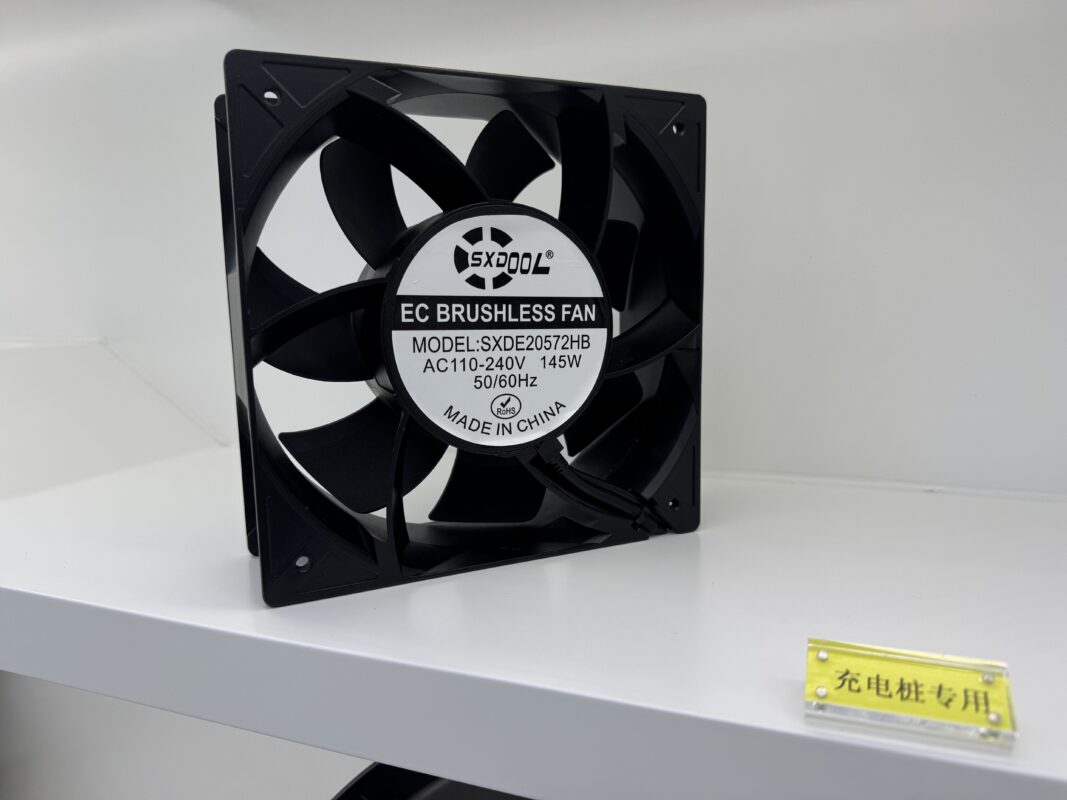
Freeze the configuration that the purchase order will reference
Put the buyer part number, supplier model with its full suffix, drawing revision and sample identifier on the inspection record. Specify the fan and harness as they will be supplied. If the sample uses a temporary extension, adapter or different connector, identify it and state which checks must be repeated on the production-intent assembly. A passing airflow test on that sample cannot settle whether the final cable will latch or route correctly.
Agree on acceptance limits and test methods before the sample arrives. For a cable length, for example, the drawing should give the two measurement points and the tolerance. A nominal length measured from the fan housing to the connector housing is a different dimension from wire cut length. For a custom assembly, include the drawing and its revision when requesting a configuration review.
Record evidence against each drawing requirement
| Check | Record on the sample report |
|---|---|
| Identity and traceability | Photograph the sample label. Match the complete model and configured options to the purchase order. Record the sample ID and drawing revision so each result can be traced to the unit inspected. |
| Mounting and airflow direction | Record frame depth, mounting-hole pattern, mounting face and inlet and outlet orientation. Check guard clearance, cable exit and access to the connector latch in the intended assembly. |
| Harness and connector | Record housing and mating part numbers, lead length, keying, latch orientation and pin assignment. Retain a labeled drawing or photograph showing which face the inspector viewed. |
| Electrical and signal functions | Identify the specified supply and control interface. If ordered, record the agreed PWM control response, FG speed feedback or RD alarm behavior under the specified conditions. Each function has its own acceptance criterion. |
| Performance | Write the required flow at the specified pressure, or the installed temperature limit at the agreed heat load. Include the fixture, operating conditions, measured value, units and decision. |
| Receiving and packaging | Check label legibility, part identification on the carton, pack quantity and protection of leads and terminals against the agreed packing instructions. |
Check the connector from the mating face
Ask for both mating part numbers and the drawing’s viewing direction. Looking into the mating face of a plug and looking at its wire-entry side can reverse the apparent left-to-right order. Mark pin 1 and the latch on each view. Then write the required function beside each numbered cavity. Wire color alone cannot establish whether a conductor is a supply return, a speed command or a fault output.
Suppose an enclosure prototype ran with an adapter harness. At first inspection the delivered connector looks identical to the one in the drawing, but the supplier’s photograph shows the wire-entry side and the drawing shows the mating side. Hold the electrical check until the two teams reconcile the numbered cavities. Verify the unpowered harness against the agreed pin map before the responsible technician performs a powered functional test. Retain the agreed view for incoming inspection.
Choose a performance check that represents the purchase requirement
If the purchase requirement calls for a particular airflow through a filter, ask for the result at the relevant pressure drop. Maximum free-air flow and maximum static pressure describe different ends of a fan curve. Neither number alone shows how much air will move through that filter. For an enclosure acceptance test, record the filter condition, fan command, other operating fans, inlet temperature and equipment heat load. That record makes a later change of fan or filter easier to evaluate.
For noise, agree on the microphone position, distance, operating state and installation before comparing results. For an environmental or compliance requirement, ask which exact configuration and revision the document covers. The SXDOOL quality and document review page is an entry point for that discussion. Attach the applicable document or list it as outstanding on the sample record.
Decide whether the sample or the batch is released
Give each open item an owner and a disposition. If the sample passes mechanical fit but has the wrong label, record the mechanical result and hold label approval. If a concession is acceptable, obtain written approval from the authorized buyer or engineering representative. Identify the affected characteristic, quantity or lot, expiry and required follow-up. Without that disposition, purchasing should leave the affected release on hold.
After a correction, record the new sample or revision and repeat the affected checks. A connector substitution can change fit, retention and pin assignment even when the motor is unchanged. Freeze the approved drawing, test record, sign-off date and any signed concession together. First-article approval applies to the identified sample and configuration. Batch release still follows the purchase order and agreed lot-inspection or receiving plan.
Questions buyers ask before first-article sign-off
Can a catalogue data sheet serve as the first-article report?
Use it as a reference for the specified model and conditions. Add the measurements, drawings, sample identifier and dispositions for the assembly the supplier actually delivered. A catalogue entry alone cannot resolve a custom pinout or cable tolerance.
Does approval of one voltage variant cover the rest of a fan family?
Only extend an approval if engineering documents which requirements and evidence carry over to the other identified variant. Different wiring, control electronics or operating limits can require a new check even when the frame dimensions match.
What should I include when requesting a sample review?
Send the application, exact fan model if known, drawing revision, mating connector and viewing direction, supply, required signals, airflow at the intended resistance and proposed acceptance tests. Identify the person authorized to accept deviations and the evidence you need before releasing the first batch. Use the SXDOOL inquiry form to request a review of that configuration.
If the variant is still open, start with the Fan Selector. For the sample handoff, review the factory capabilities and contact SXDOOL with the revision to be assessed at david@sxdool.com or +86 13432093474.