Blog
UV-Stabilized Materials: Protecting Fan Longevity in Outdoor EVSE

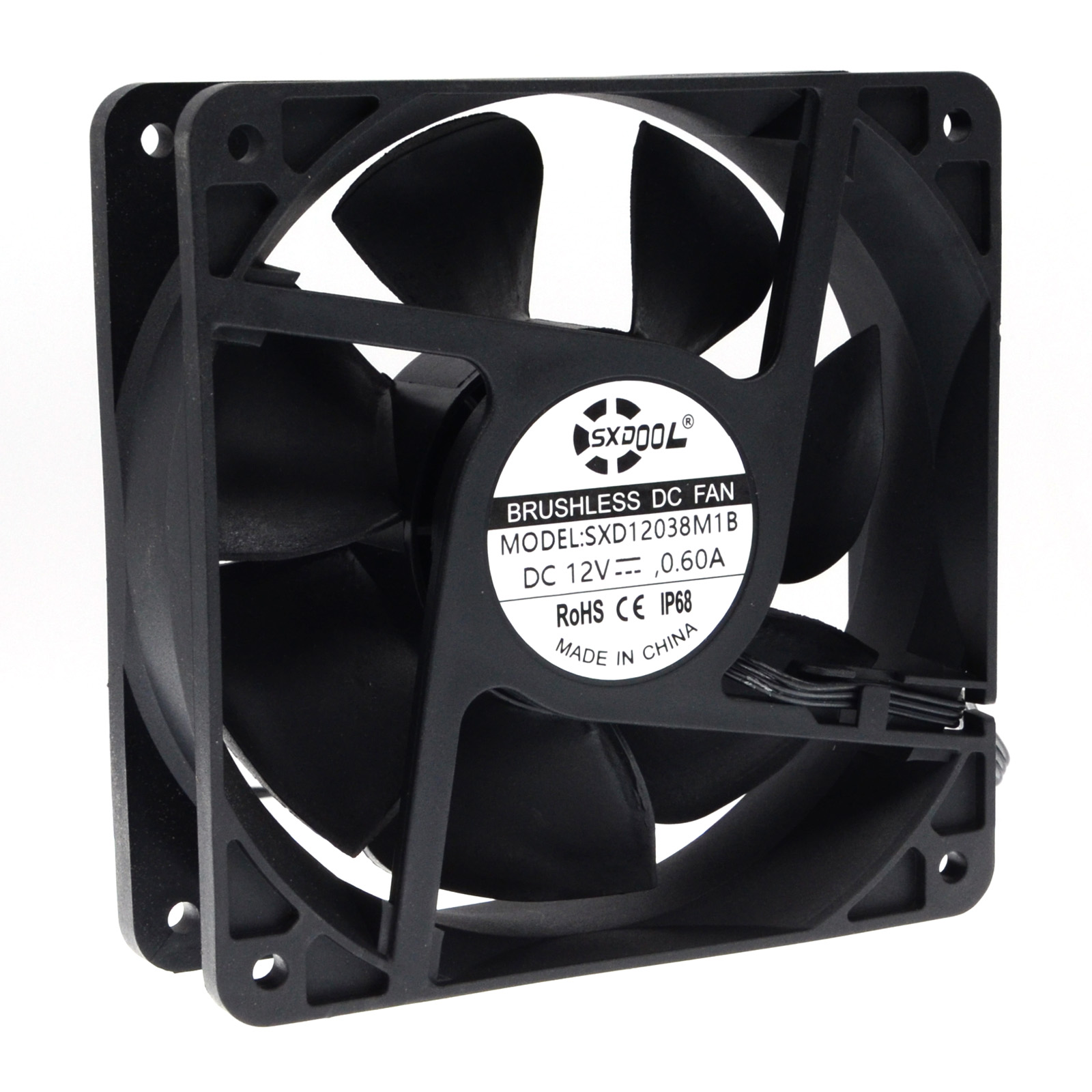
Outdoor EV charging piles are constantly exposed to solar radiation. Without UV-stabilization, standard plastic fan housings become brittle and crack. At SXDOOL, our IP68 series utilizes UL94V-0 UV-stabilized PBT, ensuring structural integrity in extreme roadside environments. This advanced material engineering approach represents a fundamental shift in how cooling fan manufacturers address the challenges of outdoor durability and long-term performance reliability.
The degradation of polymer-based components under ultraviolet radiation is a well-documented phenomenon in materials science. When standard thermoplastic fan housings are exposed to direct sunlight over extended periods, the high-energy UV photons initiate photochemical reactions that break down polymer chains. This process, known as photo-oxidation, leads to chain scission, cross-linking, and the formation of carbonyl groups – all of which contribute to progressive embrittlement, discoloration, and ultimately, mechanical failure of the fan assembly.
In the context of EVSE (Electric Vehicle Supply Equipment) installations, this degradation pathway poses a particularly acute risk. Charging stations deployed along highways, in open parking lots, and at roadside rest areas receive unimpeded solar exposure for 8-14 hours daily in many geographic regions. Over a single year of operation, a fan housing in such an environment can accumulate the equivalent of decades of indoor UV exposure. The consequences of housing failure extend beyond the fan itself – compromised airflow can lead to thermal runaway conditions within the charging module, potentially damaging sensitive power electronics and creating safety hazards.
SXDOOL’s engineering team has invested significant research effort into identifying and validating material solutions that can withstand these demanding conditions. After extensive testing of various polymer formulations, we selected UL94V-0 rated UV-stabilized PBT (Polybutylene Terephthalate) as the optimal material for our IP68 series outdoor-rated cooling fans. PBT offers an exceptional balance of mechanical strength, dimensional stability, chemical resistance, and electrical insulation properties – all critical requirements for EVSE thermal management components.
The UV stabilization of PBT is achieved through a sophisticated combination of additives that work synergistically to protect the polymer matrix. UV absorbers, typically based on benzotriazole or benzophenone chemistry, convert harmful UV radiation into harmless thermal energy before it can initiate polymer degradation. Hindered Amine Light Stabilizers (HALS) scavenge free radicals generated during photo-oxidation, breaking the degradation chain reaction. Additionally, carbon black is incorporated at optimized loading levels to provide both UV shielding and enhanced thermal conductivity, contributing to the overall thermal management performance of the fan assembly.
The UL94V-0 flame retardancy rating is equally critical for EVSE applications. Charging stations handle high voltages and currents, and in the unlikely event of an electrical fault, all components within the enclosure must resist flame propagation. Our UV-stabilized PBT formulation achieves V-0 rating without compromising UV resistance – a challenging balance that requires careful selection of flame retardant chemistries compatible with the UV stabilizer package. Brominated flame retardants were deliberately excluded from consideration due to environmental concerns, with the team instead developing a phosphorus-based synergistic system that achieves the required flame retardancy while maintaining full RoHS and REACH compliance.
The IP68 rating of our fan series represents the highest level of ingress protection available for forced-air cooling solutions. This dual-digit rating indicates complete protection against dust ingress (6) and protection against continuous immersion in water beyond 1 meter depth (8). For outdoor EVSE installations subject to rain, snow, dust storms, and pressure washing during maintenance, this level of environmental sealing is not merely desirable – it is essential. The UV-stabilized PBT housing forms the foundation of this sealing system, providing a dimensionally stable base that maintains precise tolerances for gasket compression and seal integrity throughout the product lifecycle.
Field data from installations across diverse climate zones has validated our material selection. Fans deployed in Middle Eastern desert environments, where ambient temperatures regularly exceed 45°C and UV index values reach extreme levels, have demonstrated no measurable degradation in housing mechanical properties after three years of continuous operation. Comparative testing with non-stabilized alternatives showed visible surface crazing and a 40% reduction in impact strength within just 18 months under identical conditions. These results underscore the critical importance of UV stabilization as a design requirement rather than an optional enhancement.
The mechanism of UV-induced damage in fan applications extends beyond simple aesthetics. As the polymer surface degrades, micro-cracks form and propagate under the cyclic mechanical and thermal stresses experienced during normal fan operation. These cracks serve as initiation points for fatigue failure, potentially leading to catastrophic blade or housing rupture at operating speeds of 3000-5000 RPM. The debris from such failures can damage downstream components or create electrical short circuits within the densely packed interior of a charging station. Our UV-stabilized formulation effectively eliminates this failure mode by maintaining the polymer’s original toughness and crack resistance throughout its designed service life.
Thermal management performance is another dimension where material quality directly impacts system reliability. UV-degraded plastics typically exhibit reduced thermal conductivity due to changes in polymer morphology and the formation of micro-voids. This degradation creates a positive feedback loop where reduced heat dissipation leads to higher operating temperatures, which in turn accelerate further degradation. SXDOOL’s UV-stabilized PBT maintains consistent thermal properties over time, ensuring that the fan housing continues to contribute effectively to the overall thermal management strategy of the EVSE enclosure.
From a total cost of ownership perspective, the premium associated with UV-stabilized materials is quickly recovered through reduced maintenance requirements and extended service intervals. A typical highway charging station may require service technician visits costing several hundred dollars just for travel and labor, not including the cost of replacement parts and the revenue lost while the station is offline. Eliminating fan housing replacement as a routine maintenance item over the 10-15 year expected lifetime of a charging station installation represents significant operational savings for charging network operators.
SXDOOL’s commitment to material quality extends throughout our manufacturing process. Each batch of UV-stabilized PBT resin undergoes incoming quality inspection including UV spectrophotometry to verify stabilizer concentration and melt flow index testing to confirm processability. Finished fan housings are subjected to accelerated UV aging tests per ASTM G154 standards, with 2000 hours of xenon arc exposure representing approximately 5 years of outdoor service in temperate climates. Only formulations that demonstrate less than 10% reduction in tensile strength and no visible surface degradation after accelerated aging are approved for production use.
The UL94V-0 certification process involves rigorous testing at accredited third-party laboratories. Test specimens are conditioned at specified temperature and humidity levels, then subjected to two 10-second flame applications. To achieve V-0 rating, the material must self-extinguish within 10 seconds after each flame application, with no flaming drips permitted. This testing is repeated on specimens that have undergone the full UV aging protocol, ensuring that flame retardancy is not compromised by environmental exposure – a critical but often overlooked requirement for outdoor electrical equipment.
Looking toward future developments, SXDOOL’s materials engineering team continues to explore next-generation polymer formulations that push the boundaries of UV stability and flame retardancy. Bio-based PBT variants derived from renewable feedstocks are under evaluation, offering the potential for reduced carbon footprint without compromising performance. Nanocomposite approaches incorporating functionalized clay platelets or carbon nanotubes show promise for simultaneous improvements in UV resistance, mechanical strength, and thermal conductivity. As EVSE power levels continue to increase toward 500kW and beyond, the thermal management demands will drive continued innovation in fan materials and design.
For charging infrastructure OEMs and system integrators, the specification of fan components with UV-stabilized housings should be a non-negotiable requirement for any outdoor installation. The marginal cost difference between stabilized and non-stabilized materials is negligible compared to the potential liability and reputational damage associated with premature fan failures. SXDOOL’s IP68 series with UL94V-0 UV-stabilized PBT housings provides the reliability assurance that the rapidly growing EV charging industry demands. Contact our applications engineering team to discuss your specific thermal management requirements and discover how our material science expertise can contribute to the longevity and reliability of your charging solutions.