

Monitoring Fan Health in Remote BESS Installations via Modbus/Canbus
Monitoring Fan Health in Remote BESS Installations via Modbus/Canbus
As Battery Energy Storage Systems (BESS) become more distributed, many installations are situated in remote, unmanned locations—from high-altitude wind farms to desert-based solar fields. In these environments, the cost of maintenance is dominated by "truck rolls": the expense of sending a technician to a site just to diagnose a fault. Thermal management is often the most active mechanical system in a BESS container, making it a frequent point of service. The transition to "smart cooling"—specifically fan health monitoring via Modbus or Canbus—is revolutionizing how operators manage these assets, shifting from reactive repairs to data-driven predictive maintenance.
The Evolution of Cooling: From "Dumb" to "Digital"
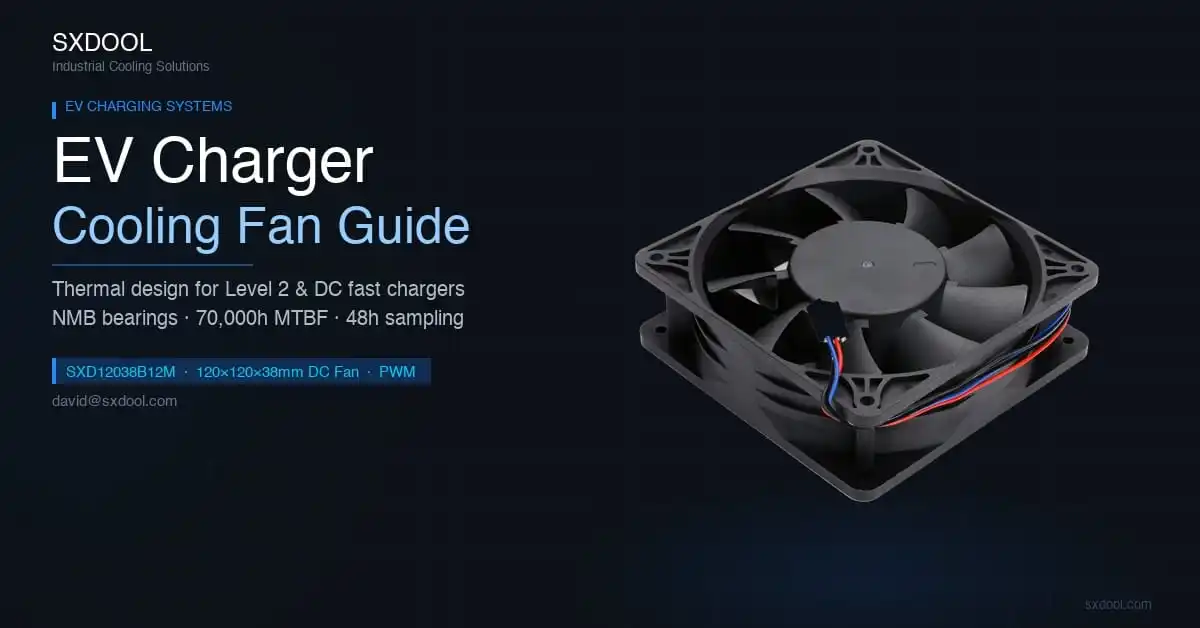
For decades, industrial fans were simple devices. A 2-wire fan received power and spun at a fixed speed. A 3-wire fan added a "Tachometer" (FG) signal to confirm the fan was spinning. A 4-wire fan introduced PWM (Pulse Width Modulation) for speed control. While effective, these methods only provide a "binary" view of fan health: it’s either spinning or it’s not.
In a large-scale BESS, where hundreds of fans may be working in parallel, this limited visibility is a bottleneck. If a fan's bearings are beginning to fail or its filters are clogged, a simple tachometer signal won't show the degradation until the fan actually stops. By then, the battery rack may have already overheated, triggering a system derate or shutdown. This is where remote BESS thermal management using digital communication protocols like Modbus RTU or CANopen becomes essential.
Modbus vs. Canbus: Powering the Smart BESS Ecosystem
BESS designers typically choose between two primary communication protocols for their internal component monitoring: Modbus and Canbus.
Modbus RTU (RS485)
Modbus is the "workhorse" of the industrial world. It is a master-slave protocol that is simple to implement and highly cost-effective. In a BESS, a central controller (or BMS) can act as the Modbus master, polling each fan (the slave) for its status. Because RS485 supports daisy-chaining, dozens of fans can be connected using a single twisted-pair cable, significantly reducing wiring complexity.
Canbus / CANopen
Originally developed for the automotive industry, Canbus is a robust, multi-master protocol designed for high-interference environments. It is often preferred in BESS applications where high-speed communication and advanced error-checking are required. Canbus allows fans to "broadcast" their status or respond to specific priority messages, making it ideal for safety-critical thermal management systems.
Telemetric Data Points: Decoding Fan Health
What makes a fan "smart"? It is the ability to report real-time telemetry beyond just speed. Modern fan health monitoring via Modbus provides three critical data points that enable deep diagnostics:
1. Real-time RPM (Revolutions Per Minute)
By comparing the actual RPM to the requested PWM command, the system can detect "speed slip." If a fan is commanded to run at 3000 RPM but only reaches 2600 RPM, it indicates increased mechanical resistance—often a sign of bearing wear or excessive dust buildup on the blades.
2. Motor Current (Amperage)
Current monitoring is a window into the motor's workload. An unexpected spike in current, even if the RPM is stable, suggest that the fan is working harder to push air. This is a classic indicator of a clogged air filter or a blocked intake louver. Conversely, a drop in current might indicate a broken impeller or a decoupled fan blade.
3. Internal Temperature
Smart fans often include an internal thermistor on the motor's PCB. Monitoring this temperature allows the system to detect if the motor itself is overheating due to poor ventilation or electrical stress. If the motor temperature exceeds a safety threshold, the BMS can proactively increase the speed of neighboring fans while flagging the hot unit for inspection.
Predictive Maintenance: The ROI of Data
The ultimate goal of fan health monitoring Modbus integration is predictive maintenance. Instead of waiting for a "Fan Fail" alarm, operators can use trend analysis to predict when a fan will reach the end of its useful life.
For example, if the vibration (detected via current fluctuations) and internal temperature of a specific fan have been steadily rising over the last three months, the software can schedule a replacement during the next planned site visit. This avoids an emergency "truck roll" and prevents an unplanned outage, which can cost thousands of dollars in lost revenue and liquidated damages in utility-scale energy storage contracts.
Reducing Truck Rolls in Remote BESS Operations
For a BESS site located 500 miles from the nearest service hub, every site visit is a major expense. Remote diagnostics allow operators to distinguish between a "critical failure" and a "maintenance warning."
- Scenario A (Traditional): The BMS reports a general "Thermal Fault." A technician drives to the site, spends 2 hours diagnosing a clogged filter, and has to return later with the correct replacement parts.
- Scenario B (Smart): The BMS sees a high current draw on Fan #14. The operator remotely confirms it’s a filter issue via Modbus data. The technician is dispatched with the exact filter model, resolving the issue in a single trip.
In large installations, the reduction in OpEx (Operational Expenditure) through improved logistics and fewer site visits can pay for the incremental cost of smart fans within the first two years of operation.
SXDOOL’s Smart Fan Portfolio: 4-Wire and Communication-Enabled Models
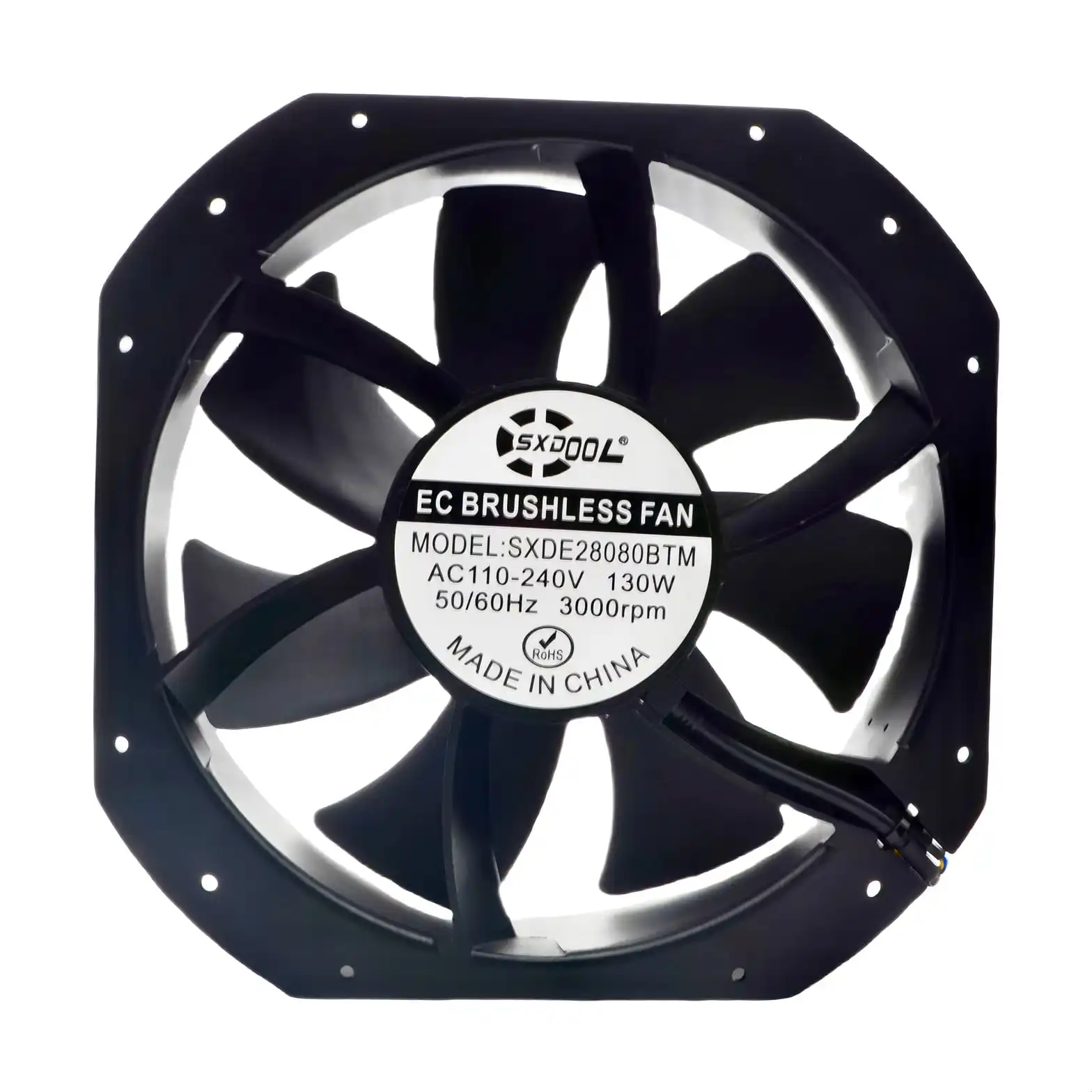
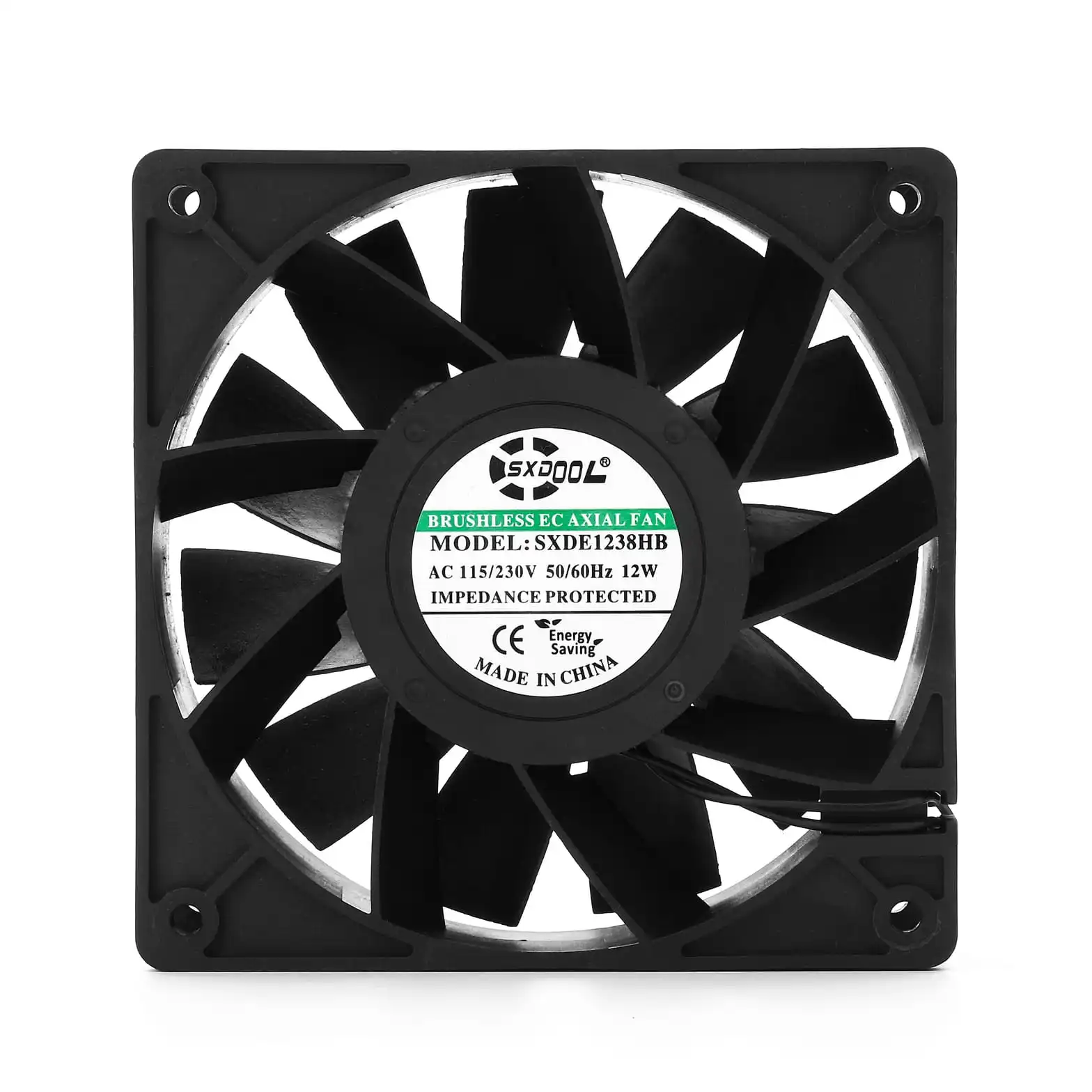
At SXDOOL, we have pioneered the development of communication-enabled fans specifically for the energy storage market. Our product line offers a tiered approach to smart cooling:
Advanced 4-Wire Fans
For systems that require simplicity, our 4-wire fans provide precise PWM speed control and high-resolution Tachometer output. When paired with an external controller, these fans can still be part of a sophisticated monitoring loop.
Integrated Modbus/Canbus Fans
Our flagship BESS fans feature integrated microcontrollers that handle all communication protocols internally. These fans are "plug-and-play" for RS485 or CAN networks, providing direct access to internal registers for RPM, Current, Temperature, and Fault Codes (e.g., Locked Rotor, Overvoltage, or Under-temperature).
High-Reliability Bearings
To complement our smart electronics, SXDOOL fans use premium dual-ball bearings rated for up to 70,000 hours of continuous operation at high temperatures. The telemetry data simply ensures you get the full value out of that 70,000-hour investment.
Implementation: Connecting Fans to the BMS/SCADA
Integrating smart fans into a BESS architecture is straightforward. Most modern Power Conversion Systems (PCS) and Battery Management Systems (BMS) already speak Modbus TCP or RTU. By adding the fans to the existing bus, the thermal data becomes part of the site’s "Digital Twin."
For larger systems, a dedicated "Fan Gateway" can be used to aggregate data from hundreds of fans and provide a single, summarized health report to the SCADA (Supervisory Control and Data Acquisition) system. This prevents the main BMS from being overwhelmed with granular fan data while still ensuring every unit is monitored.
Conclusion: The Intelligent Future of BESS Cooling
The scale and criticality of modern energy storage demand a more sophisticated approach to thermal management. Relying on "dumb" fans in a multi-million dollar BESS installation is a risk that most operators can no longer afford. By embracing fan health monitoring via Modbus and Canbus, the industry is moving toward a future of 100% uptime and optimized O&M costs.
SXDOOL remains at the forefront of this transition, providing the hardware and expertise needed to turn cooling fans from simple components into intelligent assets. Whether you are designing a compact residential BESS or a massive utility-scale project, our smart fans provide the visibility you need to keep your batteries cool and your operations profitable.










0 Comentarios