

Thermal Management Strategies for V2G (Vehicle-to-Grid) Bi-directional Inverters
Thermal Management Strategies for V2G (Vehicle-to-Grid) Bi-directional Inverters
*by Engineering Team, SXDOOL Cooling Solutions | April 21, 2026*
The Bi-directional Revolution: V2G, V2H, and V2X
Vehicle-to-Grid (V2G) and Vehicle-to-Home (V2H) technologies are transforming electric vehicles from passive energy consumers into active, grid-stabilizing assets. This paradigm shift, often categorized under the umbrella of V2X (Vehicle-to-Everything), allows the massive battery capacity of the global EV fleet to be used as a distributed power plant.
However, this transition places an unprecedented thermal load on the power electronics within bi-directional inverters. Unlike traditional EVSE, which only manages power flow in one direction (AC to DC), V2G inverters must manage efficient power conversion in both directions (AC to DC and DC to AC) within the same enclosure footprint. As power densities rise to accommodate 11kW or 22kW bi-directional charging at the residential level, thermal management has become the primary engineering bottleneck.
---
1. The Dual Thermal Profile Challenge
In a V2G inverter, the power conversion modules—typically Silicon Carbide (SiC) MOSFETs or high-speed IGBTs—operate under two distinct and alternating thermal profiles:
G2V Mode (Grid to Vehicle)
In this mode, the inverter acts as a high-power charger. Heat is concentrated in the rectification and DC-DC conversion stages. The thermal load is predictable, typically lasting 4–8 hours during overnight charging.V2G Mode (Vehicle to Grid)
In this mode, the inverter converts the vehicle's DC power back into AC grid power. This process involves high-frequency switching and higher magnetic heat in the inductors and transformers. Grid frequency regulation services may require the inverter to switch between charging and discharging hundreds of times per hour, creating Thermal Cycling Stress on the power modules.The SXDOOL Solution: Because the "hot spots" shift between G2V and V2G modes, a fixed-speed cooling solution is insufficient. It either over-cools the system (wasting energy) or creates thermal gradients that stress the delicate SiC junctions.
---
2. Overcoming High Impedance with High-Static Pressure EC Fans
Residential V2G inverters are typically wall-mounted and must remain compact. This high-density packaging creates a high-impedance environment where standard axial fans often "stall" or operate in a state of aerodynamic instability due to the back-pressure of tightly packed heatsinks, filters, and inductors.
The Physics of Static Pressure
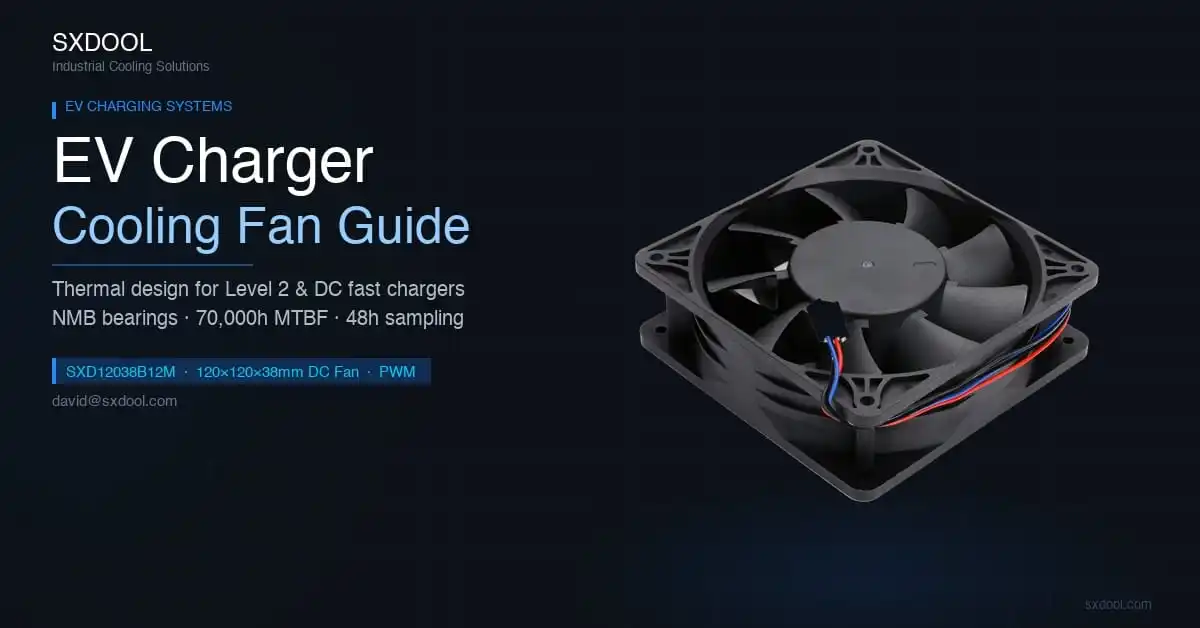
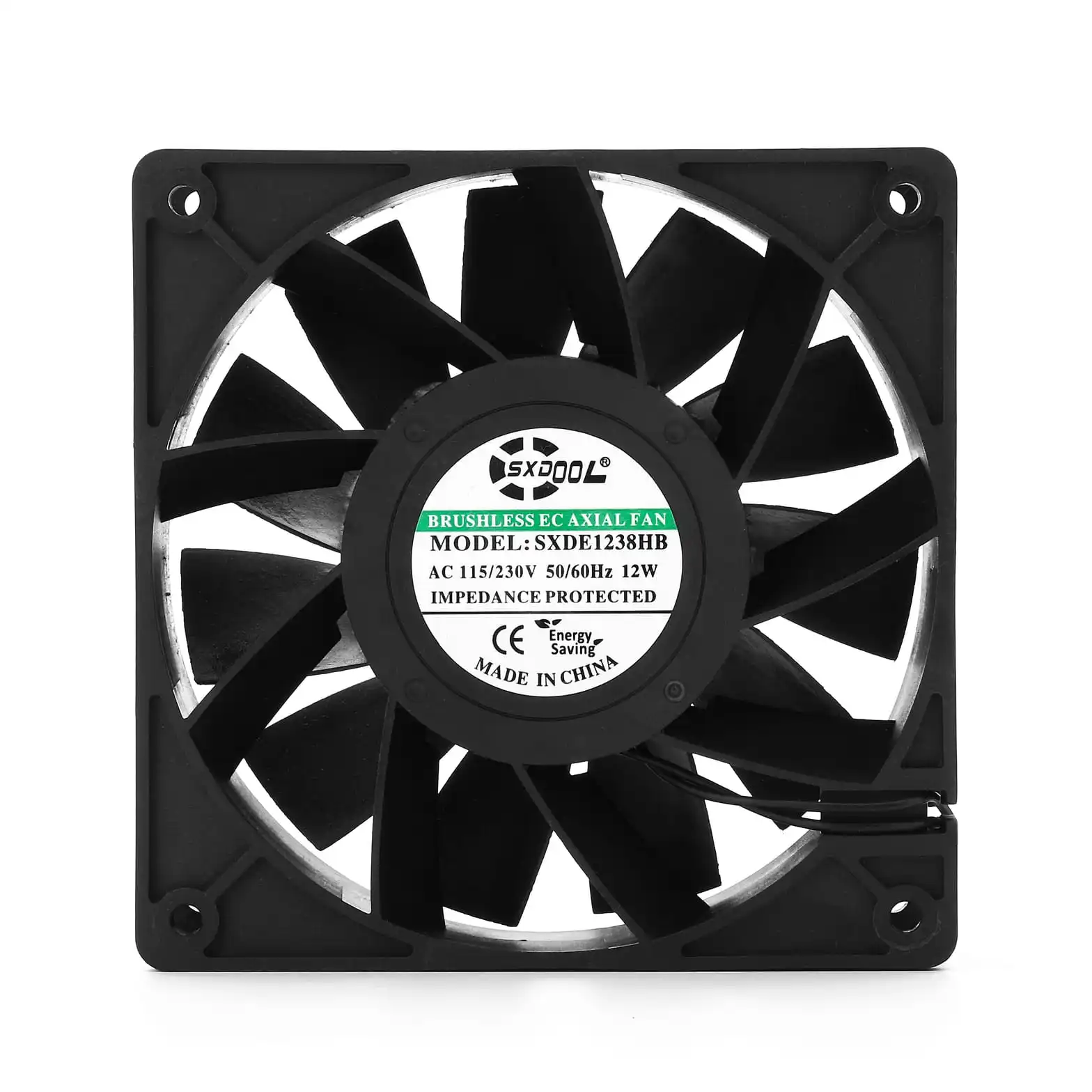
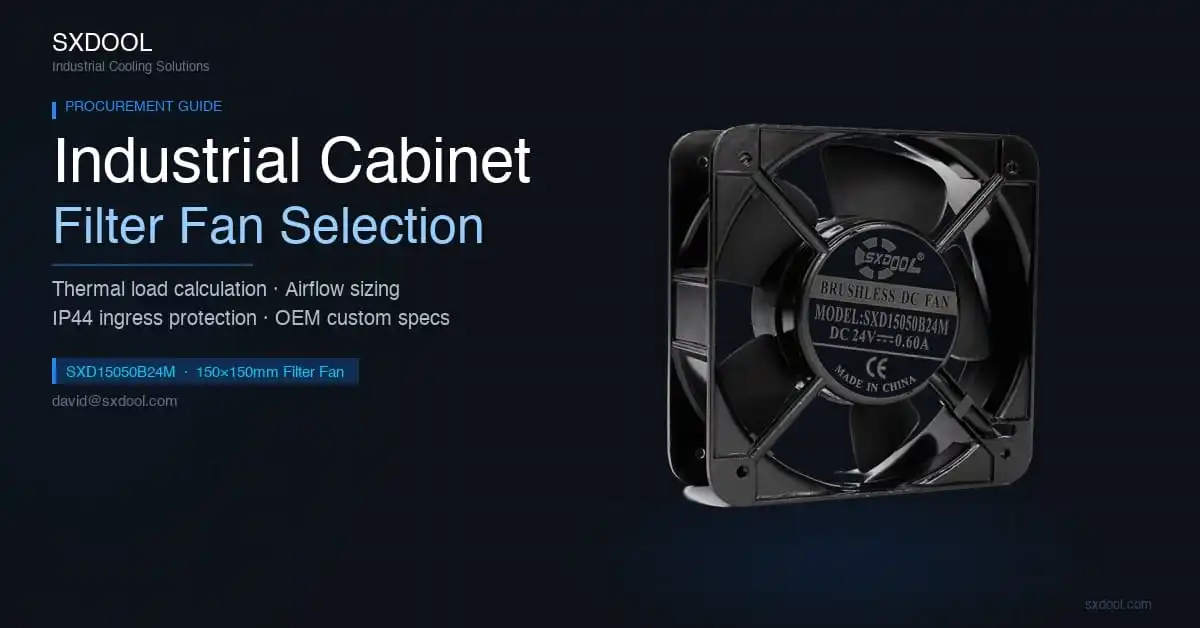
In a V2G enclosure, the air must be "forced" through dense fins. A standard fan's airflow drops precipitously as resistance (static pressure) increases.SXDOOL high-static pressure EC fans, such as our 12038 or 15050 series, are engineered with a specific blade pitch and housing geometry to maintain high CFM even at 0.8 inches of H2O pressure. By using these "brute force" axial fans, engineers can maintain the required ΔT (temperature delta) across the power modules without increasing the physical size of the cooling intake.
EC Efficiency and Parasitic Load
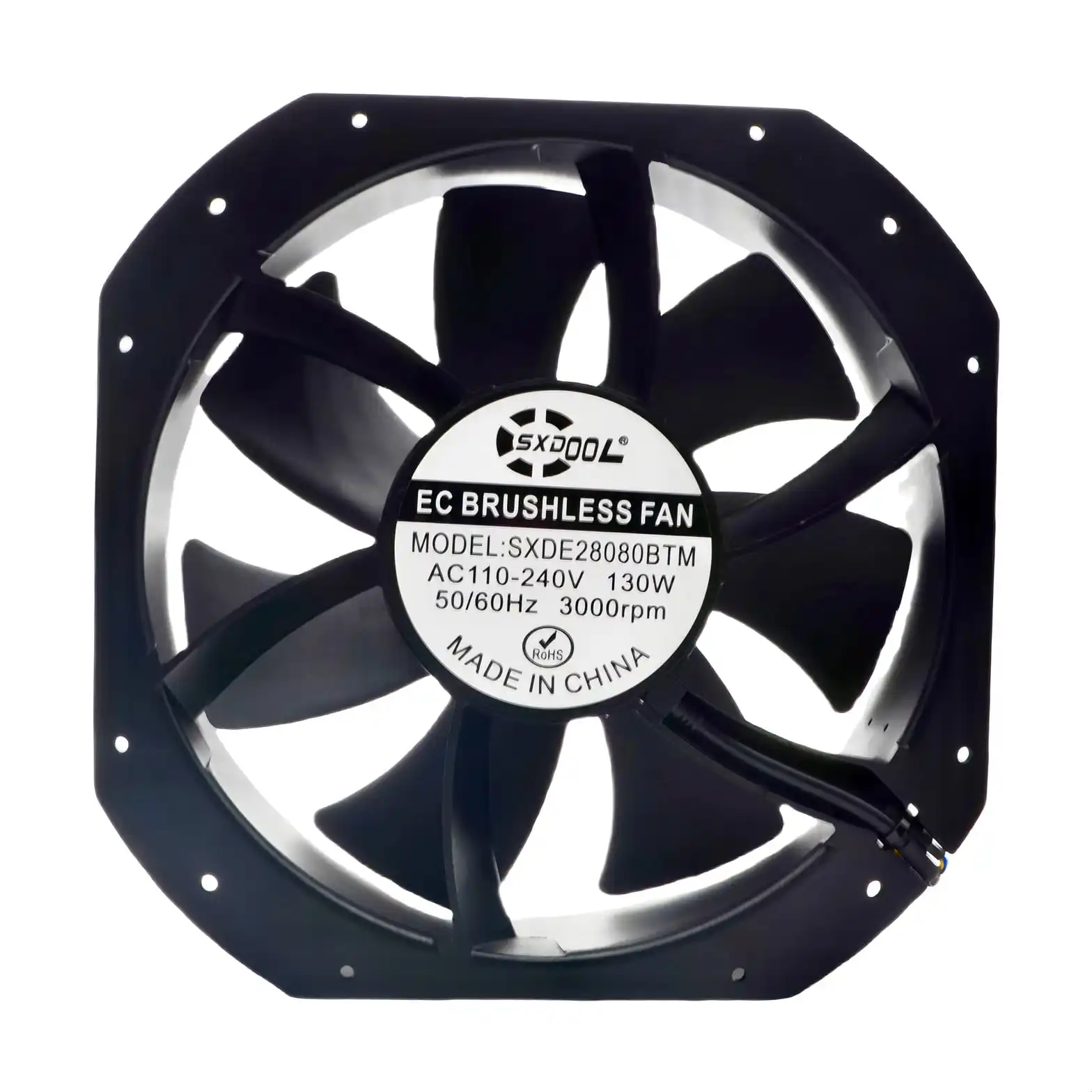
V2G systems are designed to improve grid efficiency. If the cooling system consumes too much power, it degrades the Round-Trip Efficiency (RTE) of the V2G transaction. SXDOOL EC fans are up to 70% more efficient than traditional AC fans, ensuring that the "parasitic load" of the thermal management system is kept to a absolute minimum.---
3. Acoustic Compliance in Residential Neighborhoods
Because V2G inverters are often installed on exterior residential walls, they are subject to strict acoustic ordinances. In many regions, residential noise levels are capped at 55–60 dBA at 1 meter during the day and even lower at night.
The "Silent Grid" Algorithm
V2G discharge often happens during peak evening hours or late at night when the grid needs stability but the neighborhood needs quiet.SXDOOL fans utilize linear PWM (Pulse Width Modulation) speed control. By integrating a sophisticated thermal algorithm that tracks the junction temperature of the SiC modules, the fan only spins as fast as necessary. This "Smart Speed" strategy reduces the noise floor by up to 15 dBA during low-load grid stabilization events, ensuring the V2G system remains a "good neighbor."
| Mode | Thermal Load | Fan Speed (PWM) | Noise Level (dBA) | | :--- | :--- | :--- | :--- | | Standby | < 5W | 0% (Off) | 0 dBA | | Grid Stabilization | Low/Pulsed | 20% - 40% | 35 - 42 dBA | | Peak 22kW V2G | High | 85% - 100% | 58 - 62 dBA |
---
4. EMI/EMC Compliance: Managing High-Frequency Switching Noise
V2G inverters utilize ultra-fast switching frequencies (often 50kHz to 100kHz+) to achieve high power density with Silicon Carbide (SiC) semiconductors. These high-frequency components generate significant Electromagnetic Interference (EMI) that can interfere with the fan's internal control electronics or be radiated back into the grid.
Integrated EMI Protection
SXDOOL EC fans for V2G applications are engineered with integrated EMI/EMC filtering. We utilize high-quality capacitors and inductors within the fan's motor controller to suppress both conducted and radiated emissions. Our fans are tested to meet CISPR 11 / EN 55011 Class B standards, ensuring they do not interfere with the sensitive communication systems or the grid-monitoring sensors within the bi-directional inverter.PWM Signal Integrity
In a high-EMI environment, a standard PWM signal can be corrupted by noise, leading to erratic fan speeds or control failure. SXDOOL fans employ differential-style signaling or low-pass filtering on the PWM input to ensure that the fan speed remains stable and responsive, even when mounted in close proximity to high-power inductors and switching transistors.---
5. Reliability and Continuous Duty Cycles
Standard EV chargers may only operate once every 24 hours. A V2G inverter, however, may be called upon by the utility company multiple times throughout the day and night. This significantly increases the cumulative duty cycle of the cooling fan.
The 70,000-Hour Benchmark
For V2G applications, SXDOOL specifies NMB (Japan) Dual-Ball Bearings as a non-negotiable standard. Sleeve bearings or lower-grade ball bearings will likely fail within 2–3 years under the continuous, high-speed operation required by high-density bi-directional power conversion.Our dual-ball bearing fans are rated for 70,000+ hours of continuous L10 life at 40°C. This ensures that the V2G inverter remains a reliable asset for the grid operator over its 10-to-15-year intended service life, avoiding the high cost of field replacements.
---
6. Summary: The V2G Cooling Roadmap
For engineers developing the next generation of V2X bi-directional inverters, the thermal strategy must prioritize:
1. High-Static Pressure axial fans to overcome the high impedance of compact, bi-directional magnetic components. 2. EC Motors with PWM Control for maximum energy efficiency and noise reduction in sensitive residential environments. 3. NMB Dual-Ball Bearings to support the continuous, high-duty-cycle operation required by modern grid services. 4. IP68 Protection via vacuum encapsulation to ensure the fans can survive 15 years of outdoor exposure in all climates.
Technical Collaboration SXDOOL works directly with V2G inverter manufacturers to provide custom fan curves and PWM tuning specifically for the unique bi-directional power conversion profiles of 2026-2030 systems.
Contact our engineering team: david@sxdool.com Visit our Technical Hub: www.sxdool.com WhatsApp: +86 134 3209 3474
---
*SXDOOL: Powering the Energy Transition with Precision Cooling. No AI-Generated Specs. 100% Engineering Transparency.*







0 Comentarios