

How to Prevent Dust Accumulation in Outdoor EVSE Ventilation Systems?
How to Prevent Dust Accumulation in Outdoor EVSE Ventilation Systems?
For outdoor Electric Vehicle Supply Equipment (EVSE), the environment is a constant adversary. From high-altitude desert locations to urban roadsides, dust and particulate matter are pervasive. For engineers designing these systems, dust isn't just a nuisance—it's a critical failure point. Dust accumulation on heat sinks and power modules leads to insulation degradation, localized hot spots, and eventually, total system failure. In this article, we explore technical strategies to prevent dust accumulation in outdoor EVSE ventilation systems, focusing on the role of advanced IP68 cooling fans and intelligent design.
As a leading expert in thermal management, SXDOOL (Sensda Electronics) has spent years perfecting fan designs that thrive in particulate-heavy environments. Here is how you can protect your infrastructure from the "silent killer" of electronics.
1. The Physics of Dust Ingress in EVSE Enclosures
In a forced-air cooled EVSE, the fans create a pressure differential that draws ambient air through the system. This air carries dust, pollen, and industrial pollutants. When the air velocity slows down inside the enclosure, these particles drop out of the air stream and settle on components. Over time, these particles form an insulating layer that traps heat, effectively "blanketing" the power modules.
Furthermore, in humid conditions, dust can become conductive or corrosive, leading to electrical arcing or the degradation of copper traces on the PCB. To prevent this, engineers must look beyond simple filters and consider the entire aerodynamic and mechanical ecosystem of the charging station.
2. Passive vs. Active Dust Mitigation
There are two primary approaches to managing dust in outdoor EVSE ventilation: passive filtration and active aerodynamic design.
Passive Filtration
Most outdoor cabinets use G3 or G4 grade filters at the air intake. While effective at stopping large particles, these filters eventually clog. A clogged filter increases the system's static pressure, forcing the cooling fans to work harder and reducing the total airflow. This necessitates frequent maintenance visits—a significant cost driver for charging network operators.
Active Aerodynamic Design
The goal of active design is to maintain a high enough air velocity throughout the enclosure so that particles remain suspended until they are exhausted. This requires high-performance fans with a steep P-Q (Pressure-Flow) curve. By maintaining high static pressure, you can ensure that air moves through the internal heat sinks even as the resistance from dust build-up begins to increase.
3. High-Static Pressure Fans: The First Line of Defense
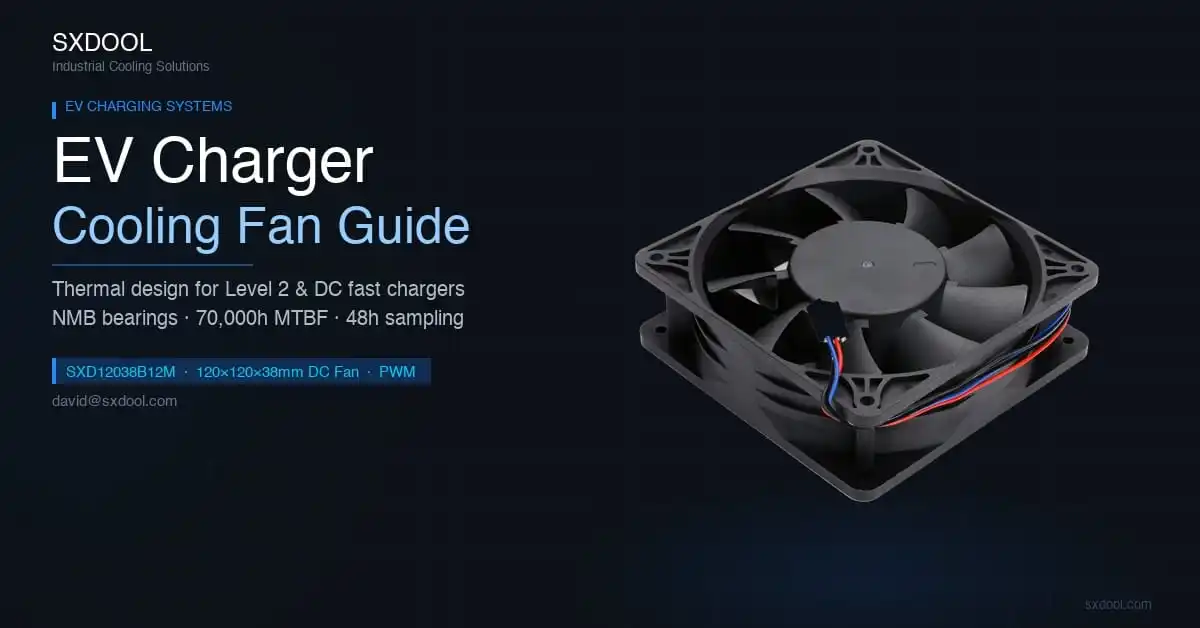
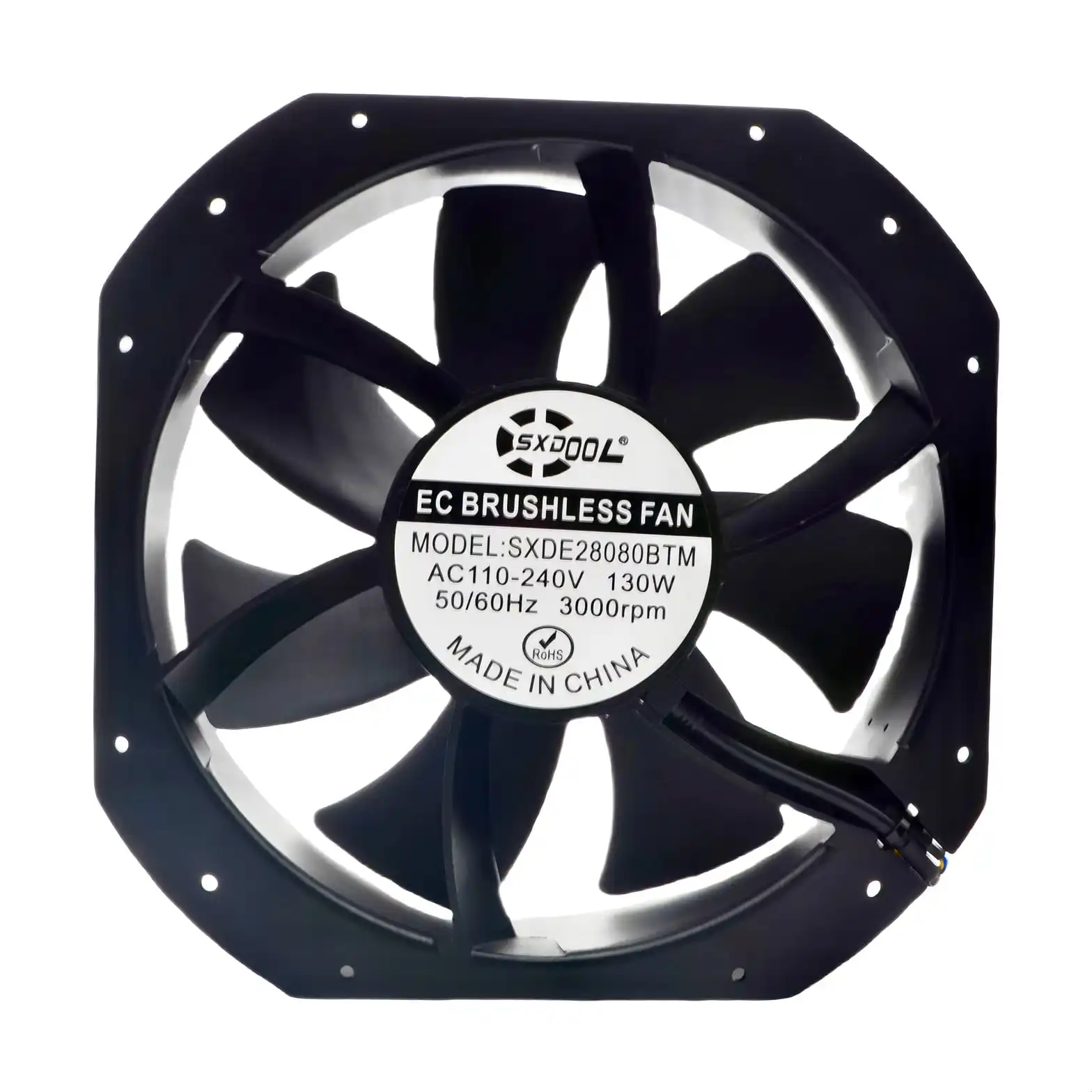
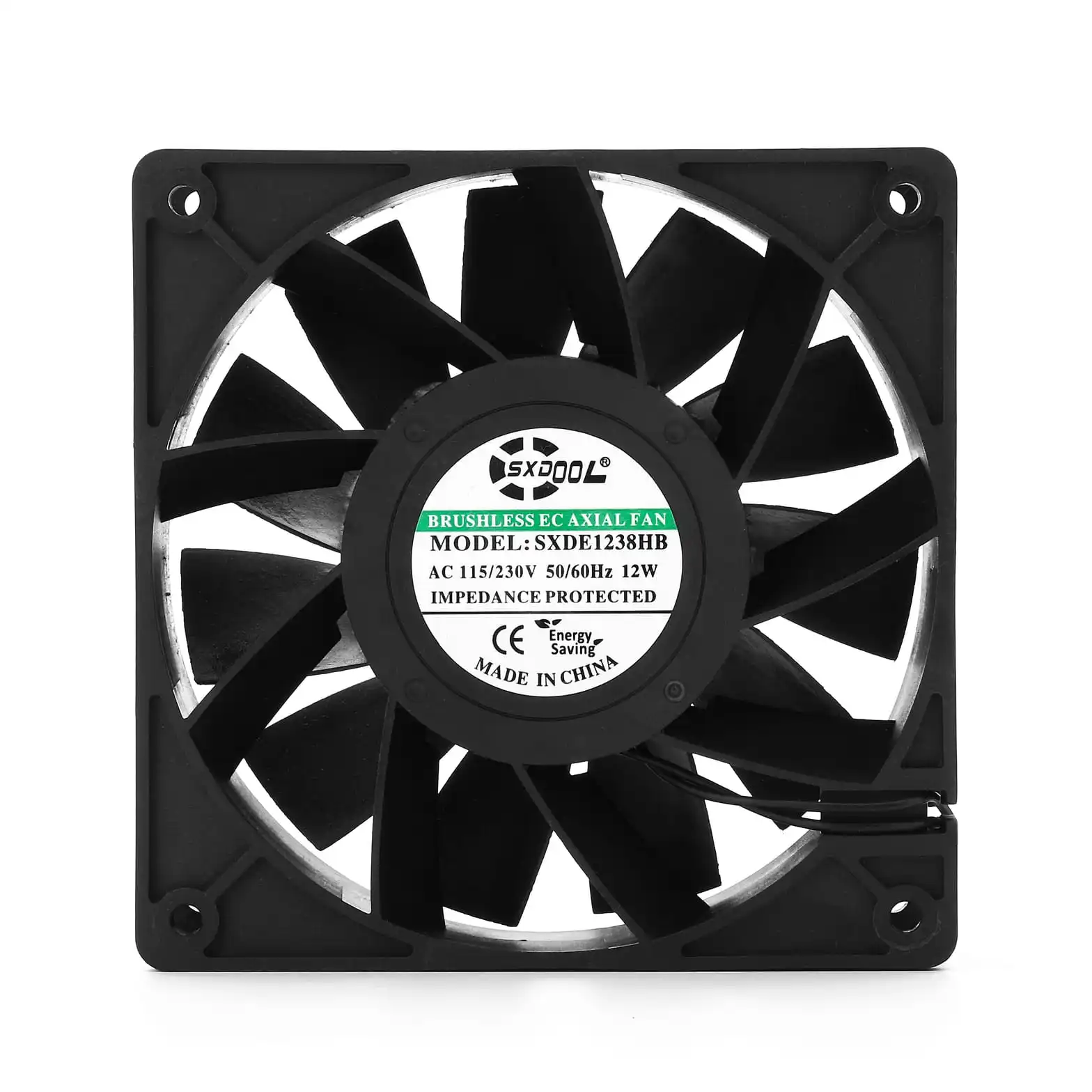
In dusty environments, not all fans are created equal. A standard cooling fan may provide high airflow in free-air conditions but will fail to deliver when faced with the resistance of a filter or a dense heat sink. SXDOOL's high-static pressure fans are specifically engineered for these high-impedance applications.
Our fan blades are designed with an optimized angle of attack and high-strength UL94V-0 PBT material. This allows the blades to maintain their shape and efficiency even at high RPMs, ensuring that the air velocity remains high enough to prevent dust settling on critical components. By selecting a fan with the correct static pressure profile, engineers can extend the intervals between filter maintenance by up to 40%.
4. Why IP68 Protection is Essential for Dust Resistance
While the IP (Ingress Protection) rating is often associated with water, the first digit "6" specifically refers to protection against dust. An IP68-rated fan is "dust-tight"—meaning no ingress of dust is possible into the motor's internal workings.
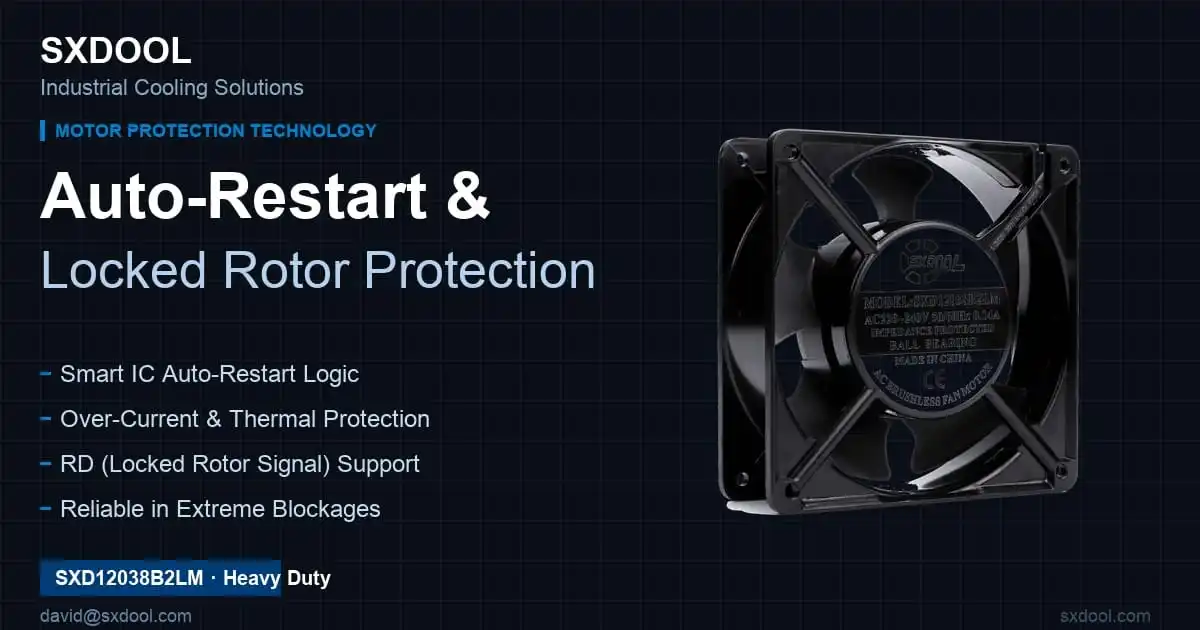
At SXDOOL (Sensda Electronics), we achieve this through our proprietary vacuum potting technology. The entire motor assembly and PCB are encased in a high-grade epoxy resin. This prevents fine particulate matter from entering the motor gaps where it could cause friction or unbalance the impeller. For outdoor EVSE, using anything less than an IP68-rated fan is a recipe for premature motor failure.
5. The Role of NMB Dual Ball Bearings in Dusty Environments
Bearings are the most vulnerable part of any fan. In a dusty environment, fine particles can penetrate the bearing housing, acting as an abrasive that grinds down the metal surfaces and dries out the lubricant. This leads to increased noise, vibration, and eventual seizure.
To combat this, SXDOOL utilizes Japanese NMB dual ball bearings in all our industrial-grade fans. These bearings are double-sealed to provide an extra layer of protection against contaminants. The use of dual ball bearings also allows the fan to be mounted in any orientation—vertical, horizontal, or angled—without compromising the 70,000-hour L10 life expectancy. This flexibility is crucial for the compact and often complex internal layouts of modern charging stations.
6. Engineering a "Self-Cleaning" Ventilation Path
Advanced EVSE designs are now incorporating "dust-ejection" cycles. By using the PWM control capabilities of SXDOOL fans, the system controller can periodically run the fans at 100% speed or even pulse the fans to create a "vibration" effect that dislodges loosely settled dust from the heat sink fins.
Additionally, the placement of the fans matters. Drawing air from the bottom of the enclosure and exhausting it through the top (the chimney effect) helps leverage natural convection. However, in dusty areas, placing the intake higher up can avoid the heavy dust kicked up by vehicle tires. SXDOOL's engineering team provides consultation to help OEMs optimize these placement strategies for maximum maintenance-free cooling.
7. Material Excellence: UL94V-0 PBT for Longevity
Outdoor exposure means the fan must also withstand UV radiation and temperature fluctuations from -40°C to +85°C. Our use of UL94V-0 PBT housing ensures that the fan frame does not become brittle or warp over time. PBT is also resistant to many of the chemicals found in urban environments, such as road salt and cleaning agents, ensuring that the structural integrity of the ventilation system remains intact for the 10+ year service life of the EVSE.
Conclusion
Dust accumulation is a manageable risk, provided that engineers prioritize high-quality thermal components from the start. By integrating IP68 cooling fans with NMB dual ball bearings and designing for high static pressure, you can create an EVSE ventilation system that is as robust as the electronics it protects. SXDOOL (Sensda Electronics) remains at the forefront of this technology, providing the industrial-grade solutions needed to keep the global EV infrastructure running cool and clean.
For more technical specifications on our range of waterproof and dust-proof fans, contact the Sensda Electronics engineering team today or visit our product catalog.








0 Comentarios