Tag Archives: axial fan
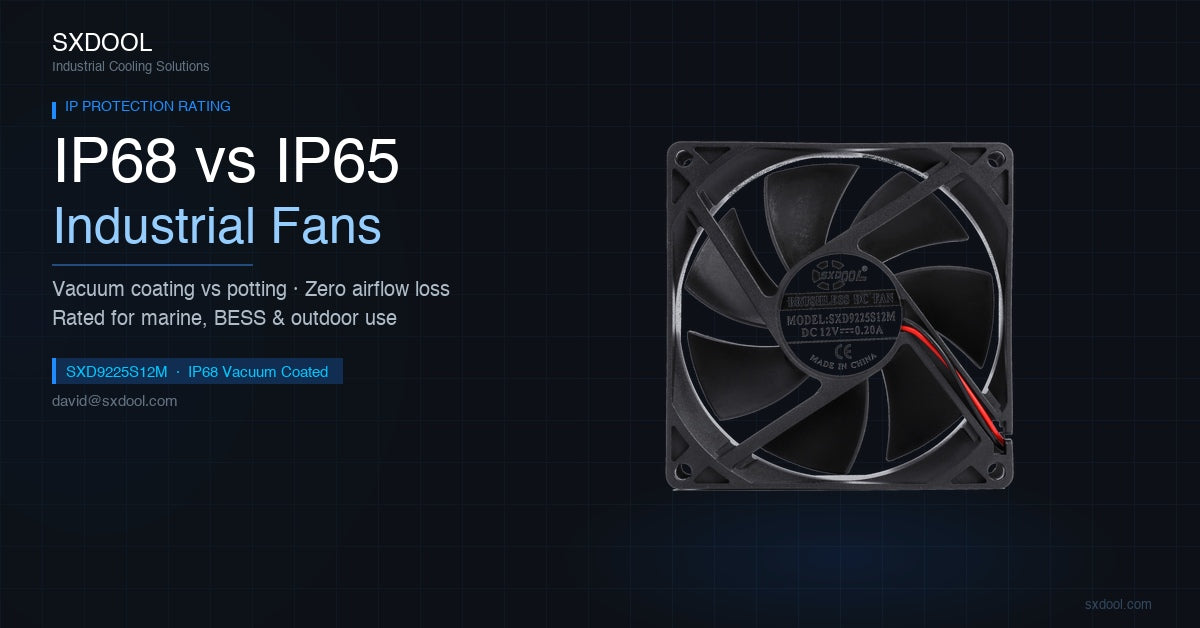
IP68 vs IP65 Industrial Fans: Why the Rating Gap Matters More Than You Think

In procurement specifications for industrial cooling fans, IP65 and IP68 frequently appear interchangeable. Both protect against d...
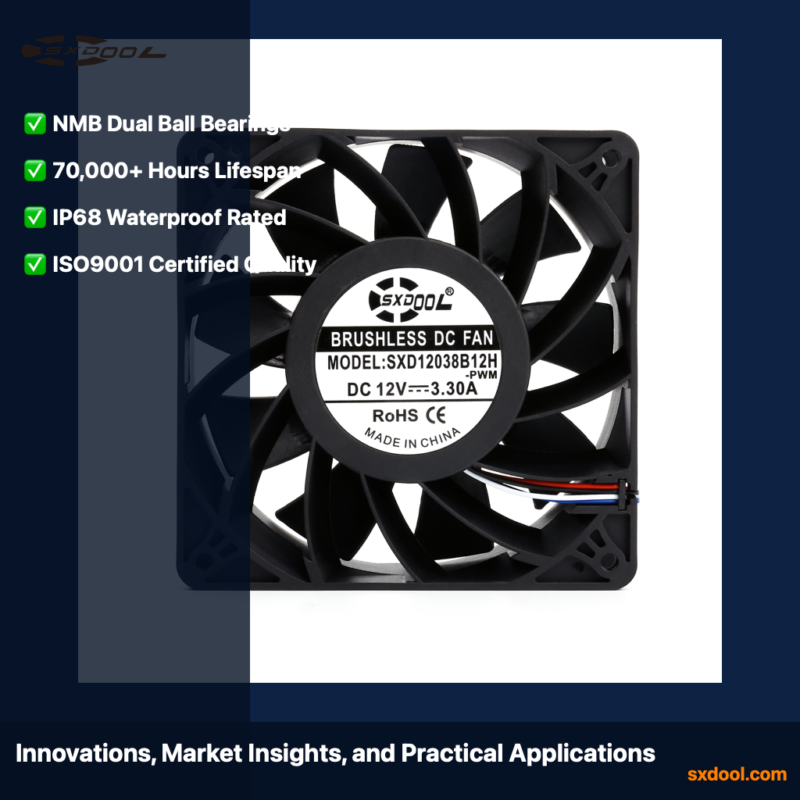
24V vs 48V Industrial Fans: Which is Better for Your Equipment?
A technical comparison of 24V and 48V DC fans for industrial applications, focusing on efficiency and system integration. -->
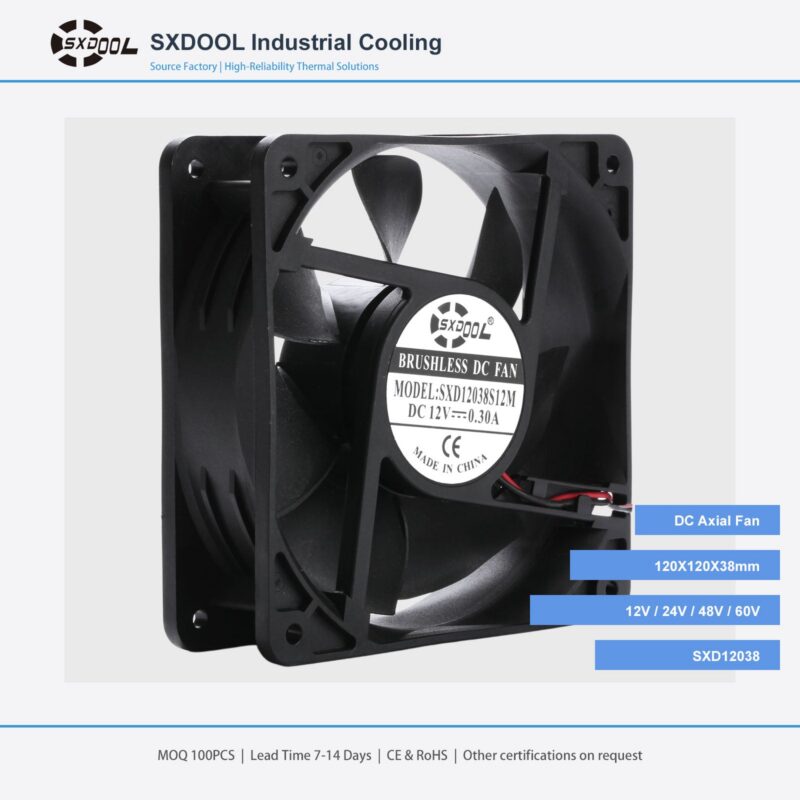
120x120x38mm High-Speed DC Fans: A Technical Guide for Engineers
Explore the specifications, engineering benefits, and industrial applications of 120x120x38mm high-speed DC fans with dual ball bearings. -->
Sourcing DC Fans for Mass Production: The Ultimate Checklist
A comprehensive checklist for sourcing high-performance DC fans. Learn how to evaluate airflow, static pressure, and IP68 ratings for bulk manufacturing. -->
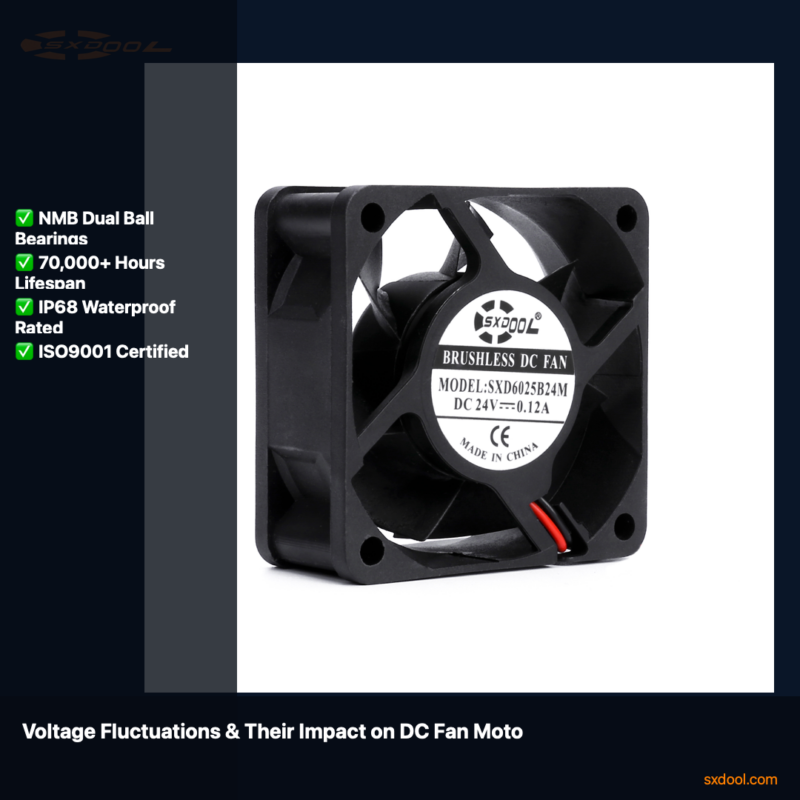
Voltage Fluctuations & Their Impact on DC Fan Motors
Understand how voltage fluctuations affect DC cooling fan motors and how SXDOOL's 48V fans with NMB bearings provide the reliability needed for industrial appli
How to Test a 24V/48V DC Fan Using a Multimeter – SXDOOL
Learn how to professionally test 24V/48V DC cooling fans with a multimeter to diagnose motor, power, and bearing issues for industrial thermal systems. -->
Troubleshooting DC Cooling Fans: A Technical Guide
A comprehensive technical guide for engineers on troubleshooting DC cooling fans. Learn how to diagnose power, signal, and mechanical issues effectively. -->
Cooling for IoT: Selecting Micro DC Fans for Embedded Systems
Learn how to cool IoT devices and embedded systems with SXDOOL's compact micro DC fans. Features like low acoustic noise and 70k hour life.
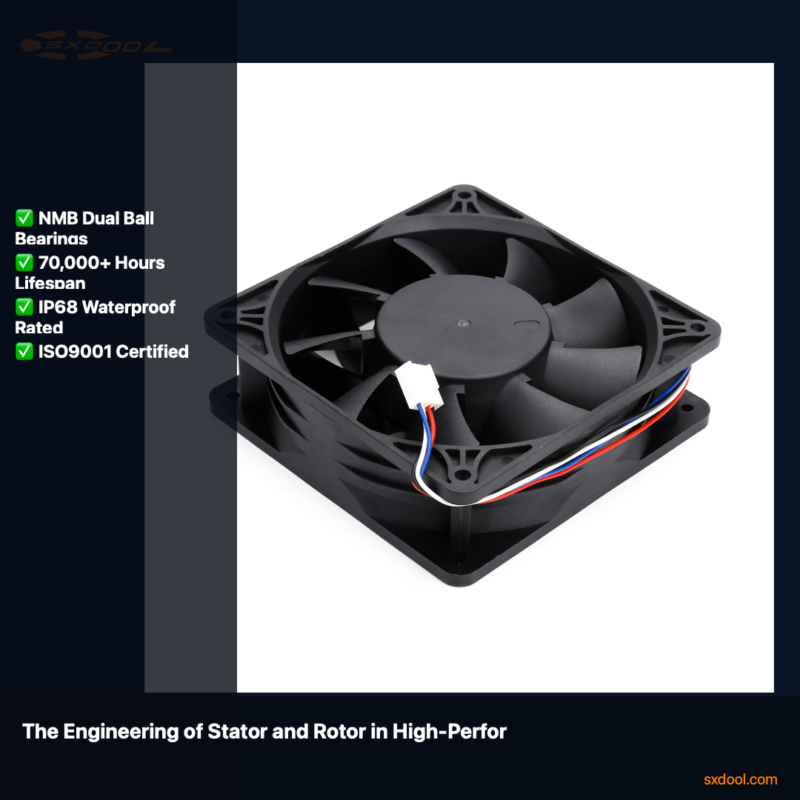
The Engineering of Stator and Rotor in High-Performance DC Fans
Explore the internal components of DC cooling fans. Learn how the stator and rotor design impacts torque, efficiency, and the lifespan of industrial fans.
DC Cooling Fans: A 2026 Guide to Technology, Market Trends, and Selection
DC cooling fans are indispensable for modern electronics, offering unmatched efficiency, control, and adaptability. By understanding core technologies, market trends, and selection criteria, engineers can optimize thermal management for diverse applications—from data centers to e