Blog
Portable Oxygen Concentrator Fan Selection

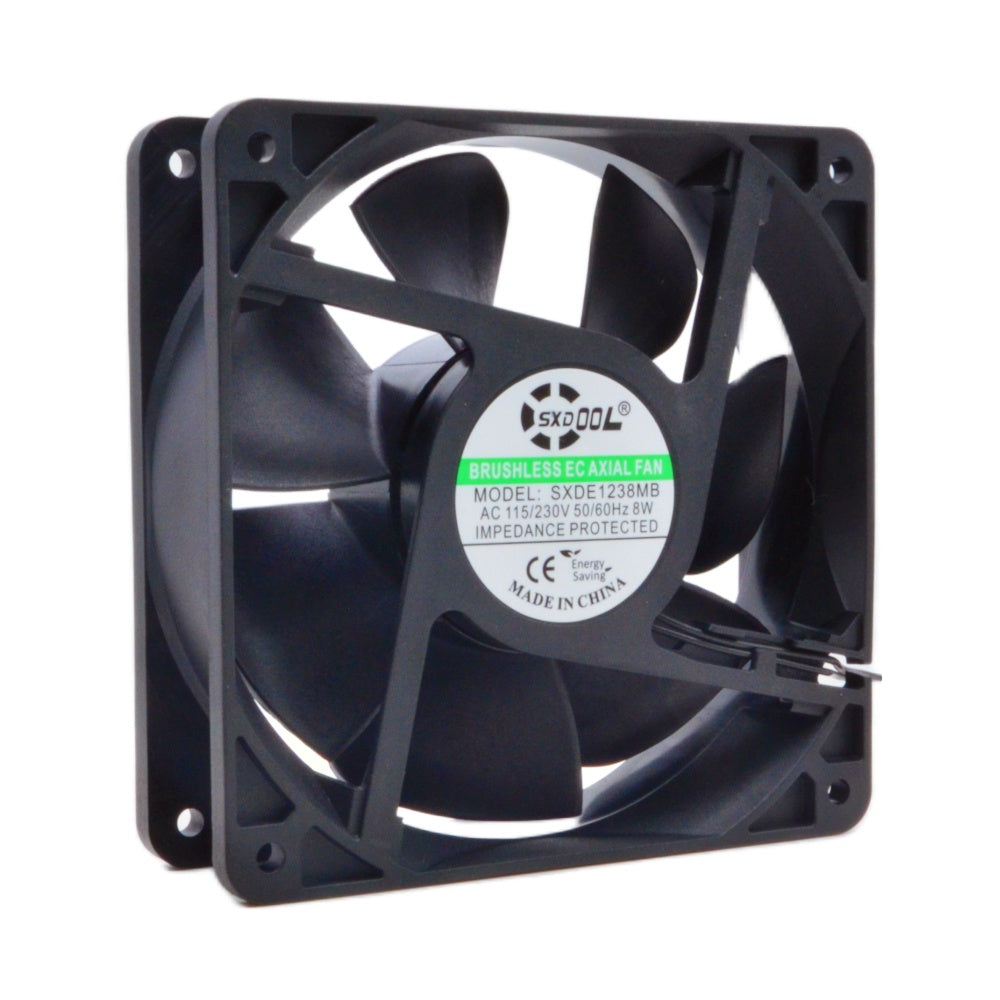
Component selection scope
This guide helps engineers shortlist a fan component by size, operating point, power, acoustics, bearing, mounting and signal needs. It does not establish medical-device suitability; the equipment manufacturer must validate the selected fan within the complete concentrator.
Portable oxygen concentrators place unusual demands on airflow components. The enclosure is compact, battery powered and used close to the patient, yet it contains heat-producing electronics and a pressure-driven gas separation system. Engineers should therefore treat the process-air blower and the thermal cooling fan as two separate components with different operating points, qualification requirements and failure consequences.
Separate the process-air path from the thermal path
The process-air path moves ambient air through filters, valves and molecular-sieve beds. It normally requires a blower selected for pressure capability at a defined flow rate. The thermal path removes heat from the compressor, battery, power electronics and enclosure. It normally uses an axial fan when the airflow route is relatively open, or a compact blower when the duct path is restrictive.
Using one free-air CFM value to specify both functions is a common mistake. A fan or blower must be evaluated at the actual system resistance, because filters, ducts, bends, guards and internal components shift the operating point away from the free-air rating.
| Selection item | Process-air blower | Thermal cooling fan |
|---|---|---|
| Primary purpose | Move air through the gas concentration circuit | Remove heat from electronics, battery and compressor |
| Main curve requirement | Pressure versus flow at the required duty point | Airflow versus system resistance at the thermal duty point |
| Typical architecture | Compact centrifugal or radial blower | Axial fan for open paths; blower for restrictive ducts |
| Electrical review | Rated voltage, current, startup current and control method | Rated voltage, current, PWM/FG/RD signals and startup behavior |
| Mechanical review | Outlet geometry, mounting, seal and vibration transfer | Frame size, thickness, mounting, guard and cable routing |
| Qualification focus | Pressure stability, temperature rise, duty cycle and contamination control | Temperature margin, acoustics, airflow distribution and blocked-flow behavior |
Build the fan requirement from the thermal load
Start with the heat that must be removed under the worst credible operating condition. Review compressor losses, converter losses, battery charging or discharging heat, ambient temperature and allowable component temperature. The airflow target should then be checked with a prototype enclosure or a representative pressure fixture. Computational estimates are useful for screening, but the final choice should be validated with temperature measurements at the critical components.
Do not assume that a larger nominal airflow rating will always improve cooling. A higher-speed fan may increase acoustic output, startup current and power consumption without improving airflow through a poorly designed inlet or outlet. Reducing recirculation, opening the exhaust path and keeping hot components out of the inlet stream can produce a larger thermal benefit than simply increasing RPM.
Account for pressure, filters and battery power
Portable equipment has a strict energy budget. Compare fan options at the required duty point and include startup current, not only rated current. If variable-speed control is available, use a thermal control strategy that maintains temperature margin while avoiding unnecessary full-speed operation. Confirm the PWM input range and frequency with the fan supplier, and verify how the fan behaves if the control signal is missing.
Filters add resistance as they load with dust. Test both a clean-filter condition and an end-of-service condition that represents the maintenance plan. A fan selected only against a clean filter can lose airflow as the pressure drop rises. The inlet should also be positioned to reduce blockage when the device is carried, placed against a surface or used inside a bag approved by the equipment manufacturer.
Control mechanical and aerodynamic noise
Acoustic performance depends on the complete assembly. Bearing noise, commutation tone, blade-passing frequency, grille turbulence, duct resonance and structural vibration can all be audible. Evaluate sound at several operating speeds and in the final enclosure. Soft isolation can reduce vibration transfer, while a larger inlet area and smoother airflow path can reduce turbulence. Any isolation material must still maintain secure mounting and electrical clearance.
Qualification checklist for an OEM RFQ
- Define whether the component serves the process-air circuit or thermal cooling circuit.
- Provide the required airflow and static-pressure operating point, not only free-air CFM.
- State rated voltage, acceptable current, startup-current limit and speed-control method.
- Confirm maximum envelope, mounting pattern, outlet direction, cable length and connector.
- Specify the expected ambient temperature, duty cycle, dust exposure and service interval.
- Identify required feedback signals such as FG tachometer or RD alarm.
- Validate temperature, acoustic performance and fault behavior in the finished device.
Frequently asked engineering questions
Can an axial fan replace the process-air blower?
Usually the two components solve different problems. An axial fan is efficient for moving air through a relatively open thermal path, while a centrifugal blower is generally better suited to a compact path with higher resistance. Select by the required pressure-flow operating point.
Which data should be sent for fan selection?
Send the target airflow and pressure, voltage, current limit, envelope, inlet and outlet geometry, acoustic target, duty cycle, ambient range, cable, connector, control signal and estimated quantity. A system-resistance curve or prototype pressure measurement is especially useful.
Does selecting a cooling fan make the finished device medically compliant?
No. Component selection supports thermal design, but the finished equipment manufacturer remains responsible for device-level risk management, safety, EMC, performance, software and regulatory validation. Component requirements should be tied to the final device qualification plan.
Need an OEM airflow review? Use the SXDOOL Fan Selector for an initial shortlist, then send the operating point and mechanical requirements through the factory RFQ form or email david@sxdool.com.
Related engineering resource
Continue with Portable Oxygen Concentrator Thermal Design for the adjacent decision stage. The two pages address different search intents and should be used together.
Project-specific FAQ
Which fan data matters most in a portable concentrator?
Use installed airflow and pressure, input power, acoustic spectrum, start-up behavior, size, mass, orientation and expected ambient conditions.
Can a low current rating alone identify the best fan?
No. A lower-current fan may deliver less pressure or operate inefficiently at the required point. Compare complete curves and temperature results.
What should be included in a fan sample request?
Include the mechanical envelope, voltage range, airflow path, pressure estimate, cable and connector, speed or alarm signal, sample quantity and equipment validation plan.
Project review: Send the operating conditions, target airflow, static pressure, voltage, size, cable and connector requirements to david@sxdool.com for a model-specific review and factory quotation.