Blog
3D Printer Cooling: The Role of Blower Fans in Extrusion

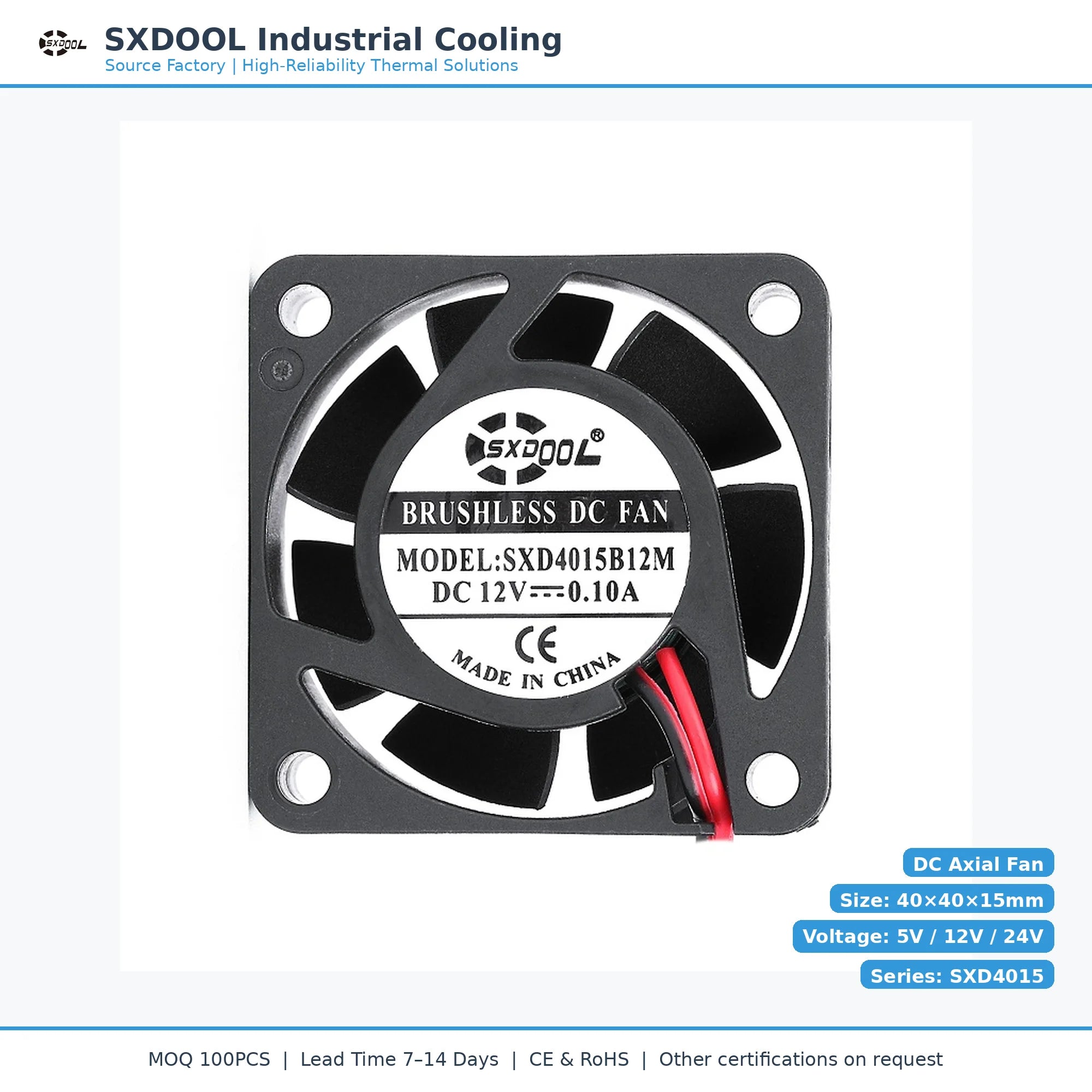
3D printers use compact fans to control hot-end temperature, part cooling, electronics airflow and enclosure stability. Blower fans are especially useful when airflow must be directed through a nozzle or narrow duct instead of simply moving air across an open surface.
Where This Cooling Requirement Appears
This requirement appears in extrusion cooling, motherboard compartments, enclosed printers, filament dryers and compact motion-control cabinets. The main challenge is balancing airflow, noise, dust exposure and available mounting space.
Fan Selection Points
Start with the available voltage, usually 5V, 12V or 24V DC. Then confirm blower outlet direction, static pressure, cable length, connector, bearing type and target noise level. For enclosed printers, temperature and duty cycle are more important than maximum airflow alone.
RFQ Checklist
- Fan size, blower outlet direction and mounting space.
- Voltage, current limit, connector and cable length.
- Airflow path, nozzle restriction and target noise level.
- Sample quantity, expected batch quantity and printer model or application.
Buyer FAQ
When should a 3D printer use a blower fan?
Use a blower when the air must be focused through a duct, nozzle or compact outlet. Axial fans fit better for open electronics cooling.
Can SXDOOL customize small 3D printer fans?
Yes. SXDOOL can review connector, cable length, label and small-batch custom fan requirements for qualified OEM projects.
For model recommendations, samples, datasheets or small-batch custom cooling fan support, contact SXDOOL through the official RFQ page.