3D Printer Cooling Fans and Blower Fans
SXDOOL supports compact cooling fan and blower fan projects for 3D printers, electronics modules and small equipment where airflow direction and connector fit matter.
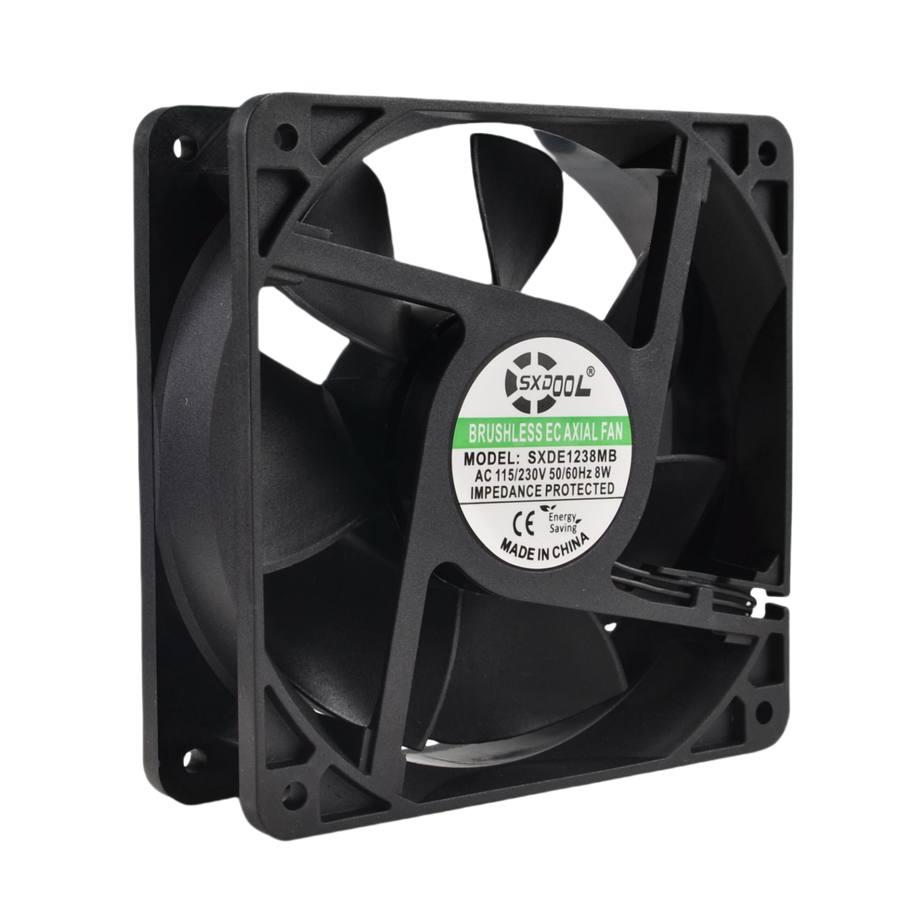
Application Fit
- Hotend cooling
- Part cooling
- Controller board cooling
- Compact device ventilation
Recommended Fan Match
- Small DC axial fans
- Blower fans for directed airflow
- 5V / 12V / 24V options
- Custom connector and cable length
RFQ Details To Send
- Fan size and voltage
- Axial or blower airflow path
- Connector type
- Noise and RPM target
SXDOOL is a Guangzhou-based OEM cooling fan manufacturer supporting low MOQ project reviews, small-batch custom fan projects, fast RFQ response, and custom DC, AC, EC, axial and blower fan options for B2B equipment buyers.
Can SXDOOL provide small fans for 3D printers?
Yes. SXDOOL supplies compact DC axial fans and blower fans with 5V, 12V and 24V options for 3D printer and small equipment projects.
Can connector and cable length be customized?
Yes. Cable length, connector, terminal, label and packaging can be customized for qualified OEM projects.
Application engineering
3D printer cooling fan selection for hotend, part and enclosure airflow
Engineering guide for 3D printer cooling
Deliver the correct airflow or focused pressure in a small mounting envelope near heated components. A reliable design starts with the heat load and the resistance of the complete airflow path. Free-air CFM is not enough when filters, heat sinks, grilles, ducts or densely packed components create pressure loss.
SXDOOL supports project review for hotend cooling, part cooling, controller enclosures and heated-chamber ventilation. The objective is to identify a suitable fan family and mounting envelope first, then confirm voltage, operating point, control signal, environment, cable, connector, documentation and sample requirements through RFQ.
| Primary engineering problem | Deliver the correct airflow or focused pressure in a small mounting envelope near heated components. |
|---|---|
| Candidate fan platforms | Compact DC axial fans for electronics and heat sinks; centrifugal blowers for directed part or duct airflow. |
| Required project inputs | 5V, 12V or 24V supply, frame size, mounting depth, duct restriction, noise target and connector pinout. |
| Control and monitoring | PWM behavior and tachometer compatibility must be checked against the printer controller rather than assumed. |
| Environmental boundary | Filament particles, elevated chamber temperature and continuous print duration influence the fan selection. |
Recommended selection sequence
- Quantify heat generation and the maximum allowable component or enclosure temperature.
- Map the inlet, outlet and internal obstructions, then estimate or measure the pressure drop at the target airflow.
- Confirm the available frame, depth, mounting pattern, supply voltage and controller signal interface.
- Review ambient temperature, dust, moisture, acoustic limits, service access, life expectation and fault response before approving samples.
3D printer cooling FAQ
Which fan family should engineers start with for 3D printer cooling?
Compact DC axial fans for electronics and heat sinks; centrifugal blowers for directed part or duct airflow. Start with the airflow path and system resistance, then compare the available frame, voltage and control interface.
Which project data is required to size a fan for 3D printer cooling?
5V, 12V or 24V supply, frame size, mounting depth, duct restriction, noise target and connector pinout. Include target temperature, mounting envelope and expected quantity so a duty point can be reviewed instead of selecting by fan diameter alone.
How should environmental and control requirements be specified for 3D printer cooling?
PWM behavior and tachometer compatibility must be checked against the printer controller rather than assumed. Filament particles, elevated chamber temperature and continuous print duration influence the fan selection.
Compare the available fan platforms, use the fan selector, review the related engineering resource, or email david@sxdool.com with the application data.