

EN50155 Standards: What Railway Engineers Need to Know About Cooling Fans
EN50155 Standards: What Railway Engineers Need to Know About Cooling Fans
The railway industry is one of the most demanding environments for electronic equipment. From high-speed rolling stock to urban subway systems, the electronics powering traction, signaling, and passenger services must operate with absolute reliability under extreme conditions. Central to this reliability is thermal management—ensuring that sensitive components remain within safe operating temperatures despite the harsh realities of the tracks. For railway engineers, the benchmark for this reliability is the EN50155 standard.
In this comprehensive guide, we explore what the EN50155 standard entails and why it is critical when selecting cooling fans for railway applications.
What is EN50155?
EN50155 is a European standard (often adopted globally) that specifies the requirements for electronic equipment used on rolling stock for railway applications. It covers everything from design and manufacturing to testing and documentation. The goal is to ensure that any electronic system installed on a train can withstand the unique physical and electrical stresses it will encounter over its service life, which often exceeds 20 years.
For cooling fans, EN50155 compliance isn't just a "nice-to-have" feature; it is a fundamental requirement for system safety and operational continuity.
Key Environmental Requirements for Railway Fans
The EN50155 standard defines several environmental categories that cooling fans must meet to be considered railway-grade.
1. Temperature and Humidity
Railway equipment must operate in wide temperature ranges, often classified into classes like T1 (-25°C to +55°C) to TX (-40°C to +85°C). Cooling fans must not only survive these extremes but maintain consistent airflow and static pressure. Humidity is another factor—condensation can lead to short circuits or corrosion if the fan's motor and electronics aren't properly protected (e.g., via vacuum potting or nano-coating).
2. Shock and Vibration
Unlike stationary industrial installations, railway fans are subject to constant mechanical stress. EN50155 references EN 61373, which details the shock and vibration tests equipment must pass. Fans used in traction inverters or under-carriage bays must withstand "Category 1, Class B" or even more stringent tests to ensure that the bearings, blades, and housing don't fail under the relentless rhythmic pounding of the rails.
3. Electromagnetic Compatibility (EMC)
Railways are electrically noisy environments. Large motors, switching inverters, and high-voltage lines create significant electromagnetic interference. EN50155 requires equipment to neither emit excessive EMI nor be susceptible to it. Railway-grade fans often feature specialized circuitry and shielding to ensure they don't interfere with sensitive signaling or communication equipment.
Electrical Stresses and Power Supply
Railway power networks are notorious for their instability. Voltage fluctuations, surges, and interruptions are common as trains move across different power sections or start/stop.
- Voltage Range: Equipment must handle nominal voltages (e.g., 24V, 48V, 72V, 110V DC) and their variations (0.7 to 1.25 times the nominal voltage).
- Interruptions: EN50155 Class S2 requires equipment to handle a 10ms power interruption without malfunctioning.
Cooling fans for rail must be designed with wide-input voltage ranges and robust internal voltage regulation to handle these "dirty" power conditions without burning out or stalling.
Why Standard Industrial Fans Fail in Rail Applications
Many engineers mistakenly assume that a high-end industrial fan with an IP68 rating is sufficient for railway use. However, industrial fans are typically designed for environments where vibration is secondary and power is stable.
In a railway setting, a standard fan's bearing system will likely suffer from brinelling (permanent indentation of the bearing races) due to constant vibration. Furthermore, the plastic housing may become brittle in extreme cold or melt under the high heat of a traction inverter bay. Without EN50155-specific testing, there is no guarantee that the fan's internal controller can handle the voltage spikes typical of rolling stock power lines.
SXDOOL’s EN50155-Compliant Cooling Solutions
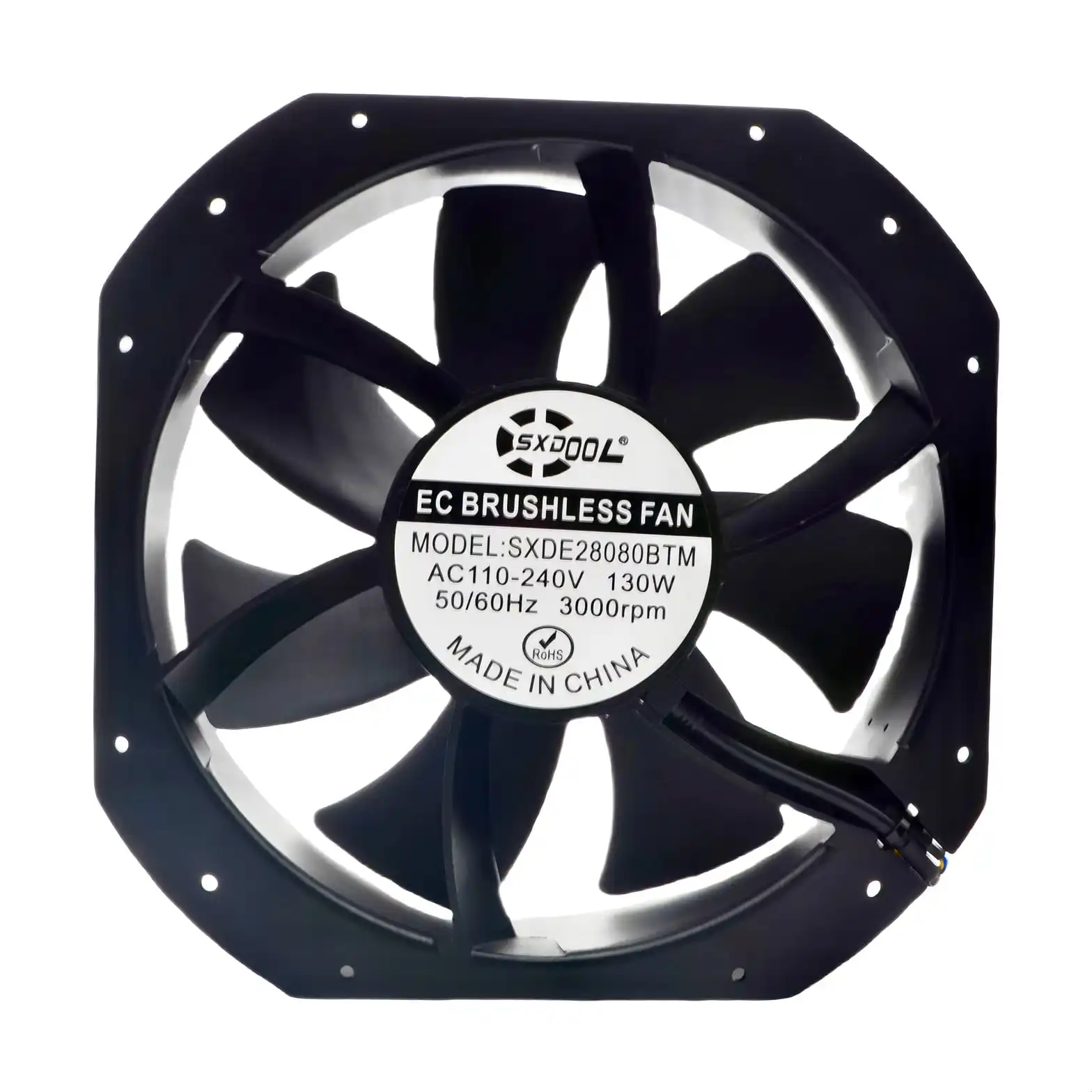
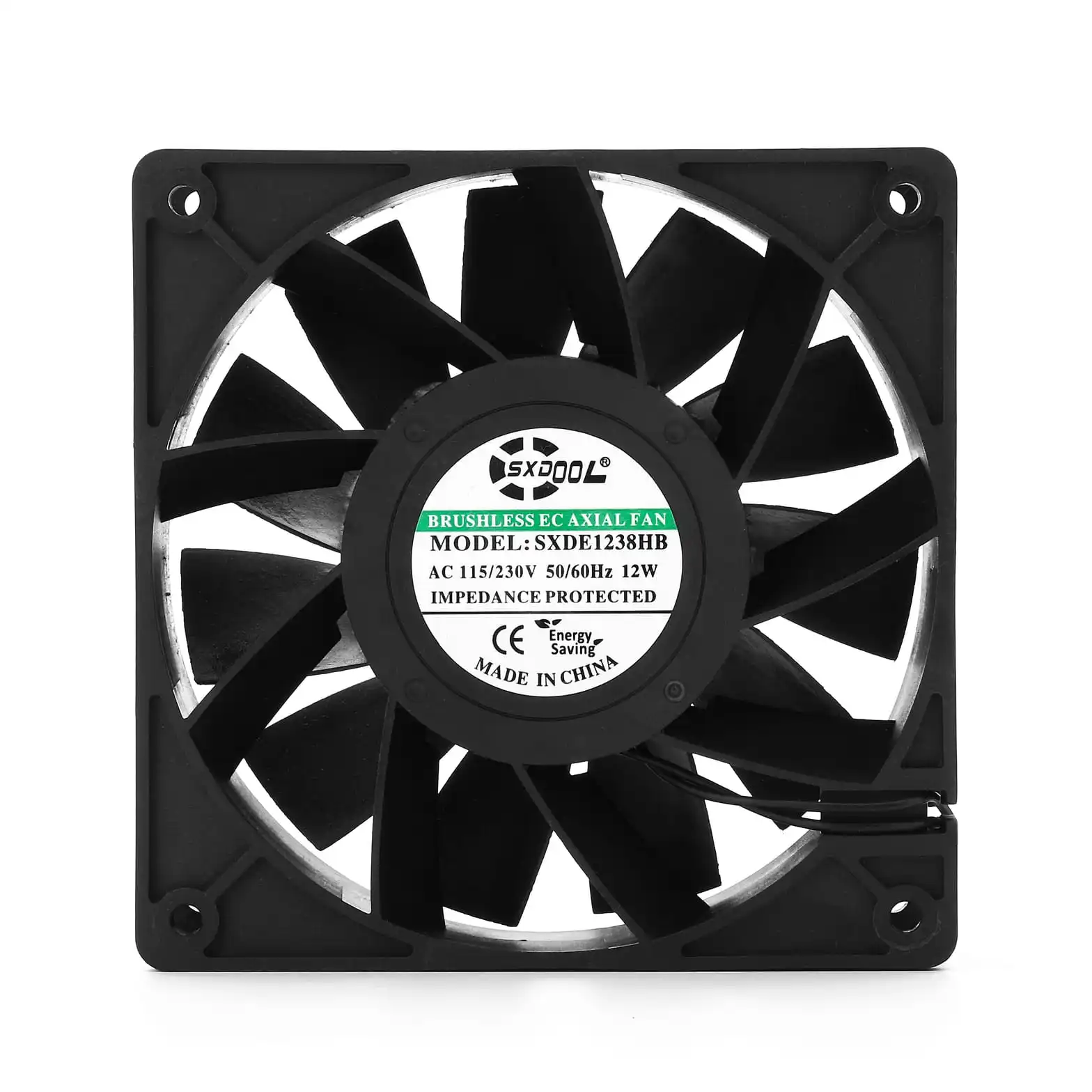
At SXDOOL, we have spent 15 years perfecting cooling solutions that meet and exceed the EN50155 standard. Our railway-grade fans are engineered from the ground up for the rolling stock environment.
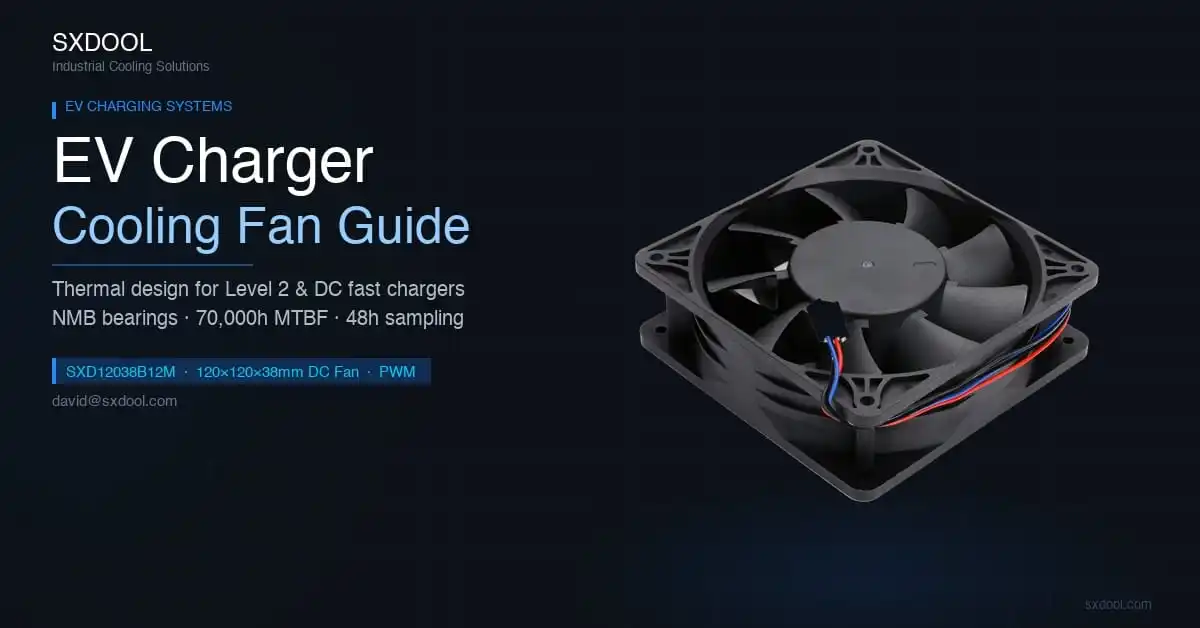
- Dual Ball Bearings from NMB: We use precision Japanese NMB bearings with specialized lubricants that maintain viscosity from -40°C to +100°C, ensuring a life span (L10) of over 70,000 hours even in high-vibration zones.
- Vacuum Potting Technology: Our motors are completely sealed in a vacuum-injected epoxy resin. This provides 100% protection against moisture, conductive dust (like brake dust), and mechanical shock.
- Ruggedized Housing: We offer magnesium-aluminum and high-grade PBT (UL94-V0) housings that provide the structural integrity required for rail applications.
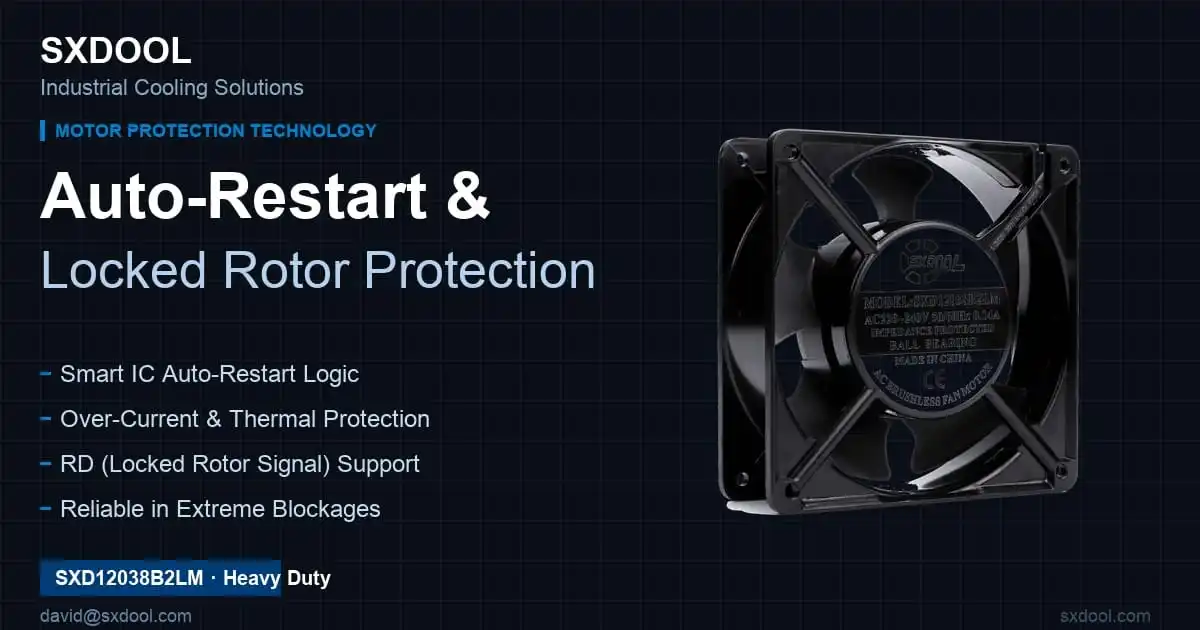
- Smart Control: Our fans feature PWM speed control, RD (Rotation Detection), and FG (Frequency Generator) signals, allowing the train's control system to monitor fan health in real-time—a crucial feature for predictive maintenance.
Conclusion: Reliability is Not Optional
In the railway industry, a fan failure is never "just a fan failure." It can lead to the overheating of a traction inverter, a train delay, or even a safety incident. By adhering to the EN50155 standard, railway engineers can ensure they are selecting components that are as resilient as the infrastructure they support.
When designing your next thermal management system for rolling stock, look beyond the basic specs. Choose a partner like SXDOOL that understands the rigorous demands of EN50155 and provides the technical data and testing reports to prove it.
---
Keywords: EN50155, Railway Cooling, Rolling Stock Electronics, Traction Inverter Cooling, Industrial Fan, SXDOOL, NMB Bearings, EN61373.








0 Comments