

Liquid Cooling vs. Forced Air Cooling for 350kW+ Ultra-Fast Charging Stations
Liquid Cooling vs. Forced Air Cooling for 350kW+ Ultra-Fast Charging Stations
As the electric vehicle (EV) industry shifts from 50kW rapid chargers to 350kW+ ultra-fast charging (UFC) stations, thermal management has moved from a secondary design consideration to the primary engineering bottleneck. Charging at these power levels requires handling massive amounts of waste heat—not just in the power modules, but also in the charging cables and connectors. For industrial OEM engineers and procurement professionals, the choice between forced air cooling and liquid cooling is a multi-million dollar decision that affects the lifespan, reliability, and total cost of ownership (TCO) of the charging infrastructure.
In this technical deep dive, we explore the trade-offs between these two cooling methodologies and how SXDOOL (Sensda Electronics) is pioneering advanced fan technologies to optimize thermal performance in high-power EVSE environments.
1. The Thermal Challenge of 350kW+ Ultra-Fast Charging
Thermal management in a 350kW charging station is exceptionally demanding. Even at 95% efficiency, a 350kW power converter generates 17.5kW of waste heat. Without active cooling, this heat would lead to thermal throttling—where the station reduces power output to protect internal components—or worse, catastrophic component failure. Furthermore, at the higher currents required for UFC (up to 500A), the charging cable itself can reach temperatures exceeding 100°C if not properly managed.
The core objective of EVSE cooling is to maintain the temperature of power electronics (SiC MOSFETs, IGBTs, and transformers) within their optimal operating range (typically below 85°C) while ensuring the outdoor enclosure remains sealed against environmental contaminants.
2. Forced Air Cooling: The Reliable Standard
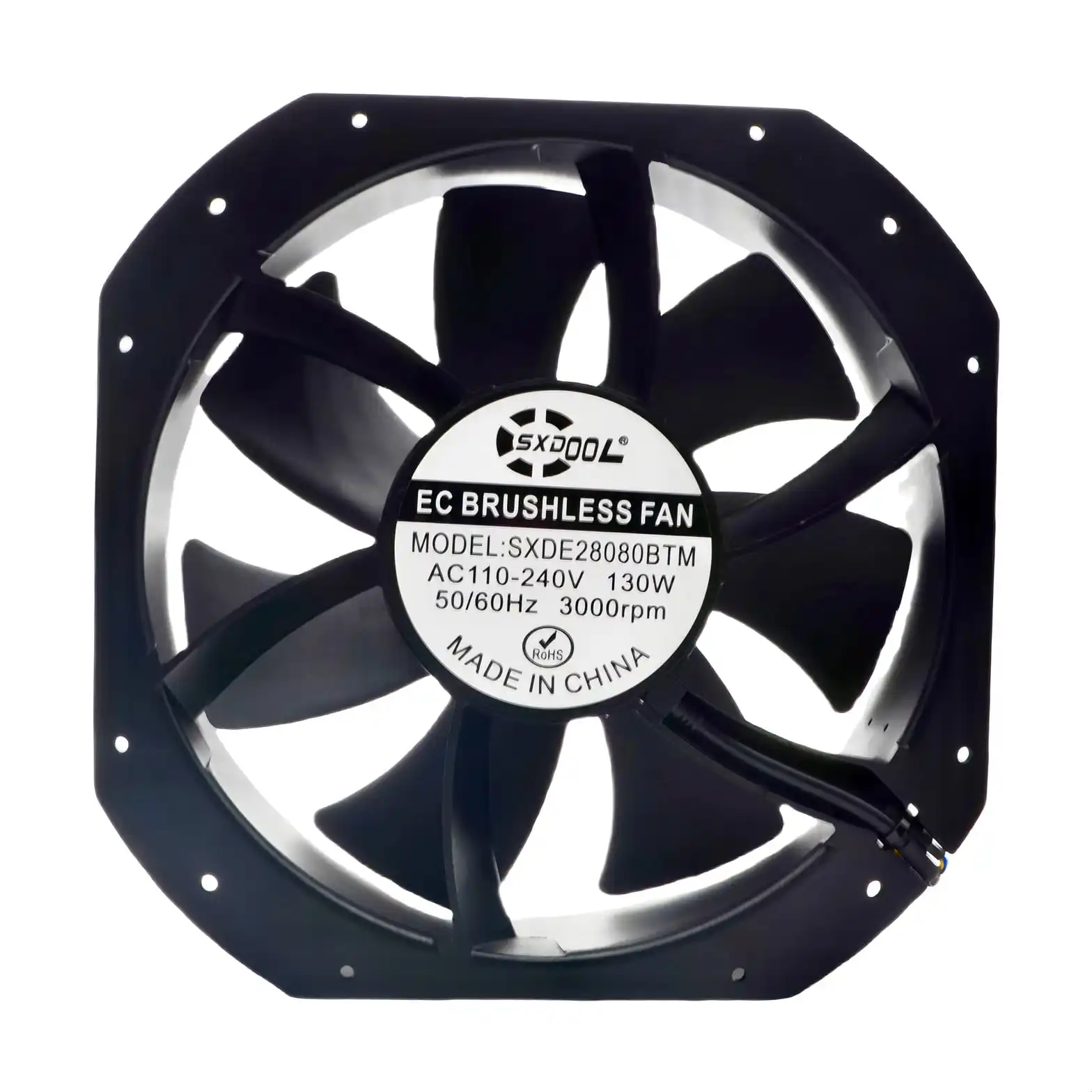
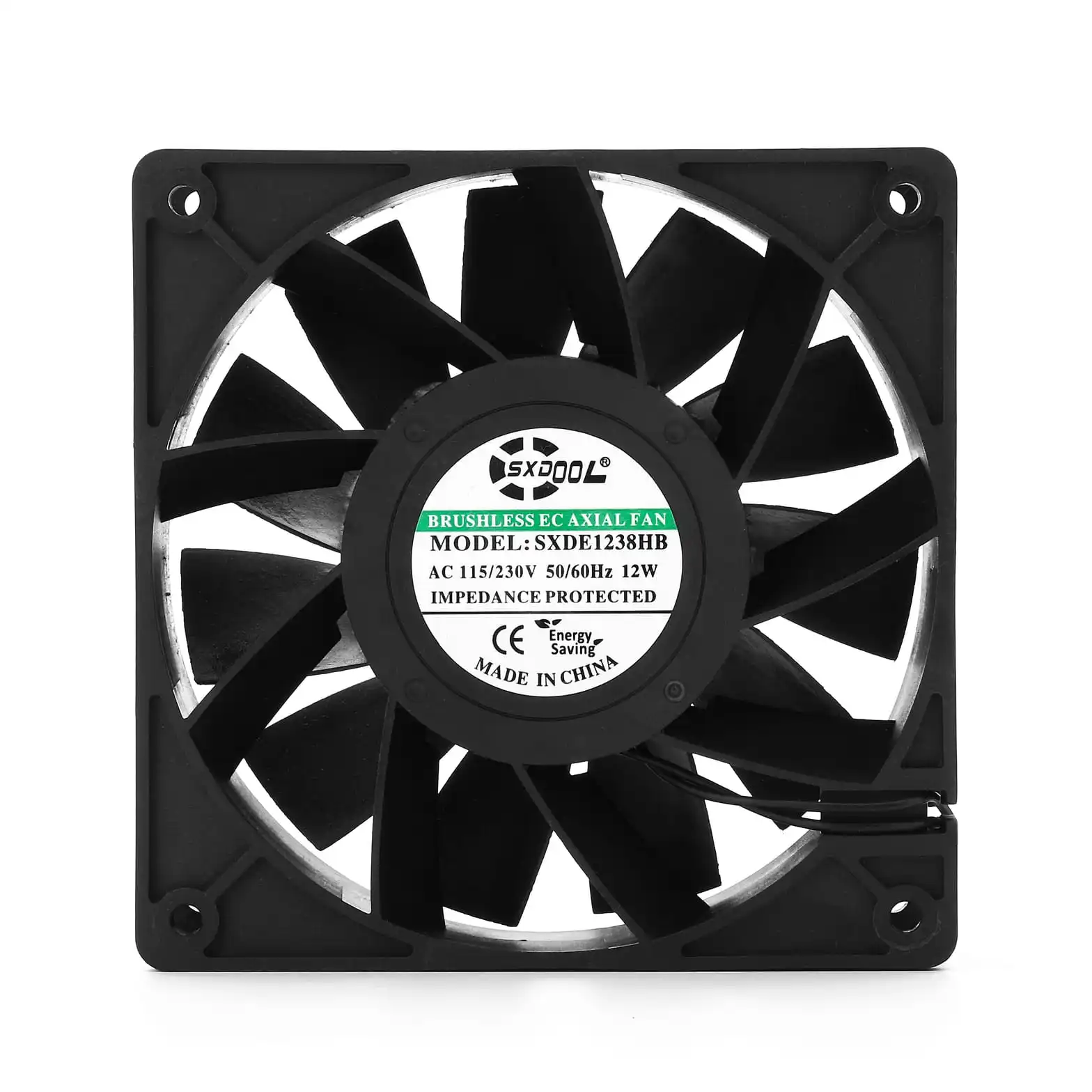
Forced air cooling has long been the industry standard for EV chargers. It utilizes high-performance axial fans to drive air through heat sinks or across power modules. In the context of ultra-fast charging thermal management, forced air cooling offers several distinct advantages:
Simplicity and Reliability
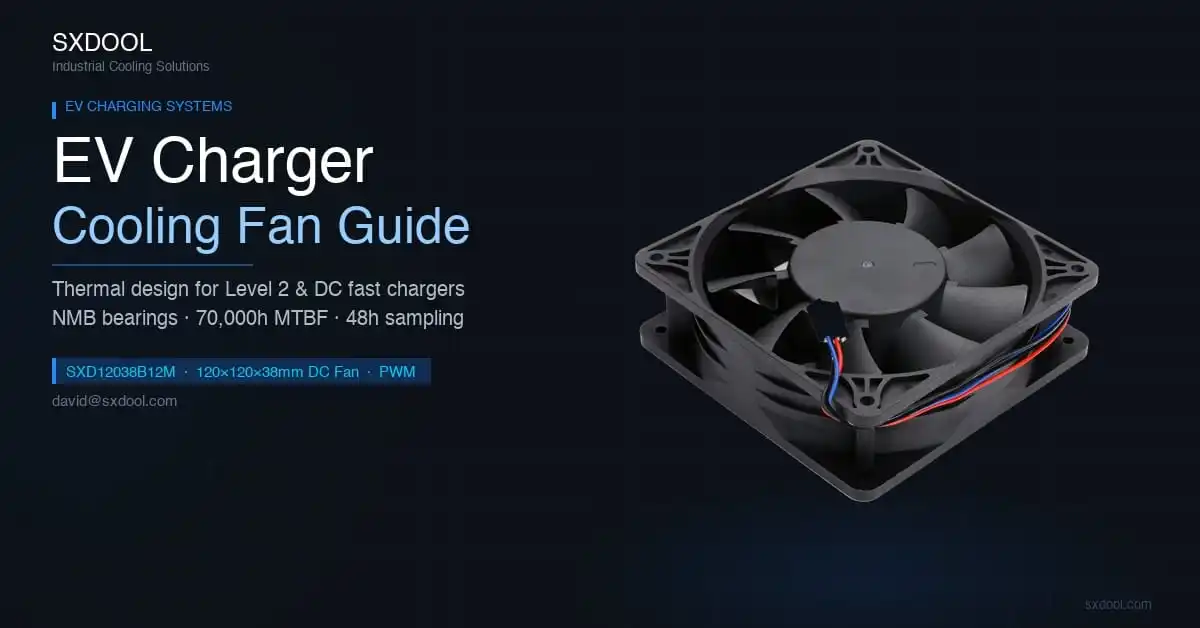
Air-cooled systems are mechanically simpler than liquid-cooled ones. They do not require pumps, reservoirs, coolant lines, or leak-detection sensors. This simplicity translates to fewer points of failure. When using high-grade industrial fans like those from SXDOOL, the mean time between failures (MTBF) can reach over 70,000 hours.
Cost-Effectiveness
From a procurement perspective, the CAPEX (Capital Expenditure) for an air-cooled system is significantly lower. The components—primarily high-static pressure fans and aluminum heat sinks—are mass-produced and easy to source. Maintenance is also straightforward, usually limited to periodic filter cleaning or replacement.
SXDOOL’s IP68 Solutions for Air Cooling
The main challenge for outdoor air cooling is the ingress of moisture and dust. SXDOOL (Sensda Electronics) addresses this with our IP68 cooling fans. Unlike standard fans, SXDOOL’s waterproof fans utilize a specialized vacuum potting process that completely encapsulates the PCB and motor windings. This allows the fan to operate reliably even when submerged or exposed to high-pressure water jets and salt spray, making them ideal for coastal or harsh industrial environments.
Furthermore, our fans feature Japanese NMB dual ball bearings. These precision-engineered bearings provide superior stability and low friction, which is critical for the high-RPM operation required to generate the static pressure needed to push air through densely packed EVSE enclosures.
3. Liquid Cooling: The Cutting-Edge Solution
Liquid cooling involves circulating a coolant (usually a water-glycol mixture) through cold plates attached directly to the heat-generating components. The heat is then transferred to the liquid and dissipated via a remote heat exchanger (radiator) equipped with fans.
Higher Thermal Conductivity
Liquid has a much higher heat capacity and thermal conductivity than air. This allows liquid-cooled systems to remove heat more efficiently, enabling more compact power module designs. For 350kW+ stations, liquid cooling is often necessary for the charging cable itself to keep the handle size manageable for consumers.
Acoustic Performance
Liquid-cooled stations can be quieter because the radiator fans can run at lower speeds or be located away from the user interface. This is a significant factor for charging stations located in residential or high-end commercial areas.
The Disadvantage: Complexity and Risk
The "wet" nature of liquid cooling introduces the risk of leaks, which can be devastating for high-voltage electronics. Procurement professionals must also account for the specialized maintenance required, such as flushing the coolant and inspecting seals, which increases the OPEX (Operating Expenditure).
4. Comparative Analysis: CAPEX, OPEX, and Scalability
| Factor | Forced Air Cooling | Liquid Cooling |
|---|---|---|
| Initial Cost (CAPEX) | Low to Moderate | High |
| Maintenance (OPEX) | Low (Filter cleaning) | High (Coolant/Pump service) |
| Reliability | High (Fewer failure points) | Moderate (Leak risk) |
| Energy Efficiency | Moderate | High (at peak loads) |
| Environmental Resistance | High (with IP68 fans) | High (Sealed loop) |
For most 350kW installations, the power modules are air-cooled using high-performance SXDOOL axial fans, while the charging cables may be liquid-cooled. This hybrid approach balances the cost and reliability of air cooling with the specific necessity of cable cooling.
5. Why Material Science Matters: UL94V-0 PBT Housing
In high-power EVSE environments, safety is paramount. SXDOOL fans are constructed using UL94V-0 PBT (Polybutylene Terephthalate) housing and impellers. This material is not only mechanically robust but also fire-retardant. In the rare event of a thermal runaway within the charging station, the fan material will not contribute to the spread of fire, fulfilling critical safety requirements for industrial certifications.
6. SXDOOL (Sensda Electronics): Your Thermal Management Partner
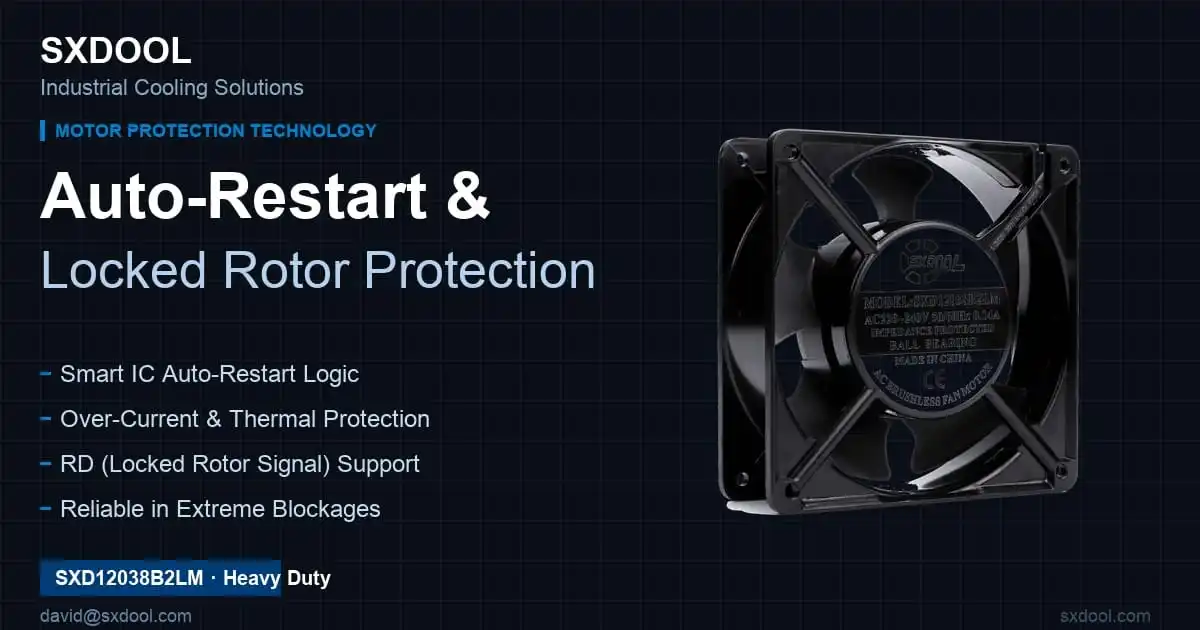
At Sensda Electronics, we understand that an EV charging station is only as reliable as its cooling system. Our engineering team works closely with OEM designers to select the right fan profile for their specific pressure/airflow (P-Q) curve. By integrating features like PWM (Pulse Width Modulation) speed control and RD (Rotation Detection) alarms, our fans provide the intelligence needed for modern, software-defined charging infrastructure.
Our commitment to quality—utilizing NMB bearings and advanced waterproofing—ensures that your 350kW+ ultra-fast chargers can operate at peak capacity in the hottest deserts and the most humid coastlines without fear of downtime.
Conclusion
While liquid cooling offers higher thermal density, forced air cooling remains the most reliable and cost-effective solution for cooling the power electronics of 350kW+ ultra-fast charging stations. By utilizing advanced IP68 cooling fans from SXDOOL, engineers can design systems that withstand the rigors of outdoor environments while maintaining the efficiency required for the next generation of e-mobility. Whether you are scaling a charging network or designing a flagship UFC station, prioritizing high-quality thermal components is the key to longevity and user satisfaction.








0 Comments