

Industrial Cooling Fan Bearing Types: Complete Guide to Selection and Maintenance


Introduction
Industrial cooling fan bearings are critical components that determine performance, reliability, and lifespan. Choosing the right bearing type for your application can significantly impact energy efficiency, noise levels, and maintenance costs. This guide covers all major bearing technologies used in modern industrial fans, from traditional sleeve bearings to advanced magnetic levitation systems.
Major Bearing Types
Ball Bearings
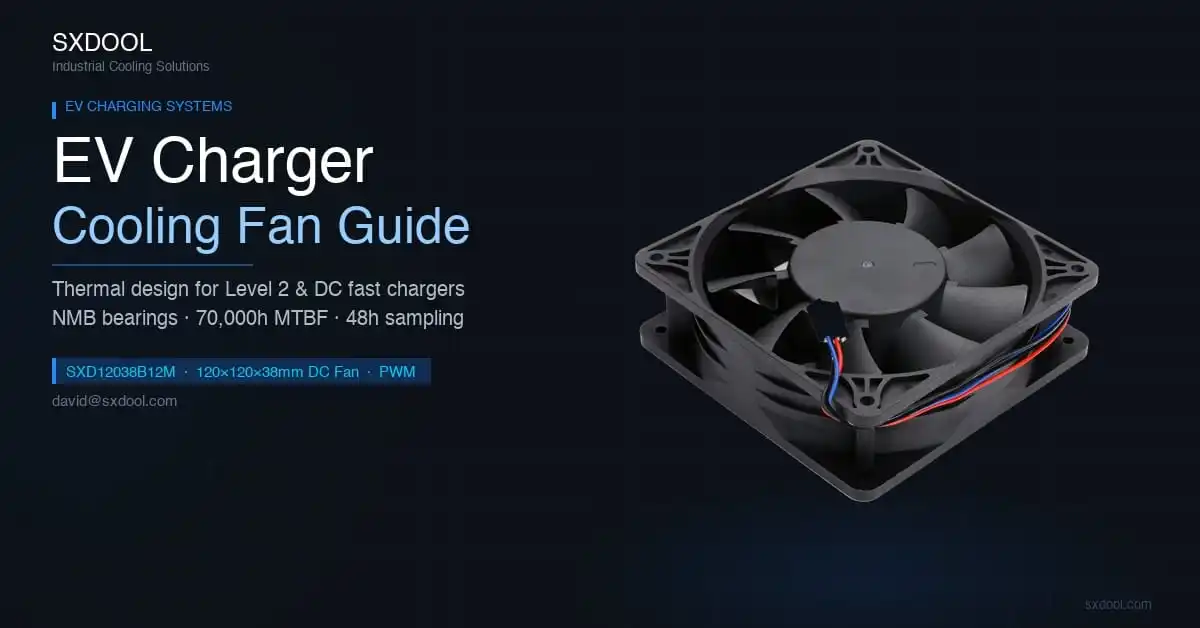
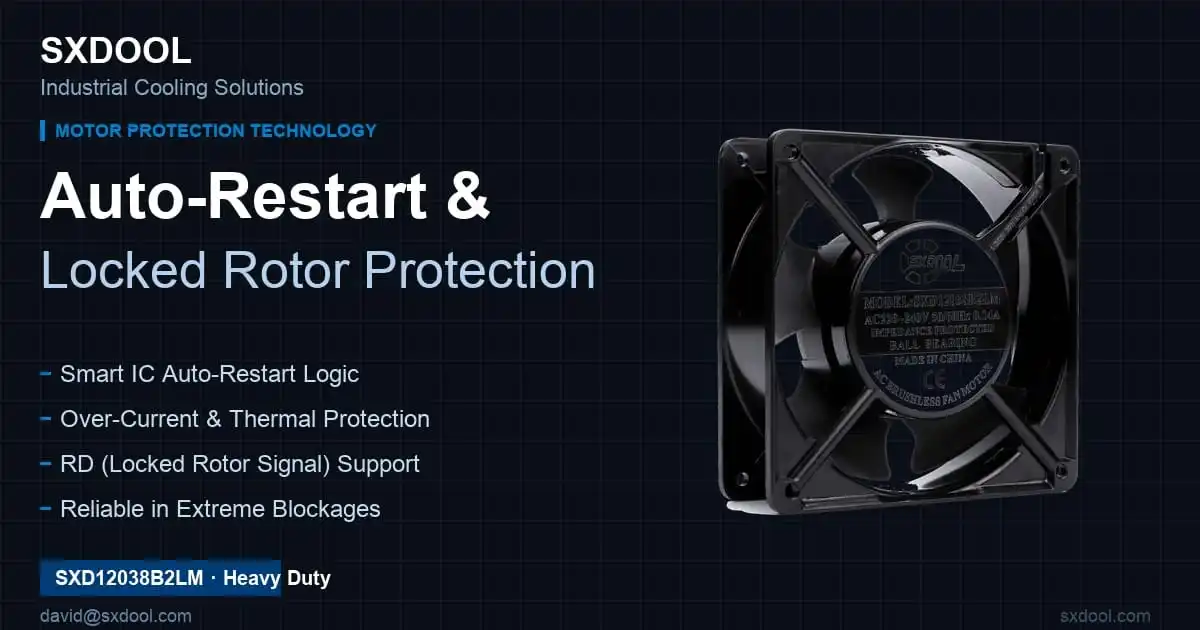
Ball bearings use rolling elements (balls) between the rotating shaft and stationary housing, providing excellent durability and performance. Double ball bearings are considered high-end options, offering superior longevity compared to single ball designs. These bearings operate through rolling friction, which generates less heat and wear than sliding friction systems. Ball bearings can operate in any orientation and withstand higher temperatures, making them ideal for demanding industrial applications where reliability is paramount. However, they tend to be noisier than sleeve bearings and are more susceptible to impact damage due to their complex construction.
Sleeve Bearings (Oil Bearings)
Sleeve bearings, also known as oil bearings, use oil as a lubricant between the shaft and bearing surface. These are the most common and cost-effective option for low-speed applications. The simple design consists of a cylindrical sleeve that supports the rotating shaft through direct contact, with carefully polished surfaces to reduce friction. While sleeve bearings are reliable and durable, they have lower efficiency compared to rolling or hydrodynamic systems. They're typically used in applications where cost is a primary concern and operating speeds are moderate.
Hydraulic Bearings
Hydraulic bearings represent a significant advancement over traditional sleeve bearings. These bearings are filled with a special liquid that creates a hydrodynamic layer during rotation, allowing the moving parts to slide without direct contact. This technology dramatically reduces friction and noise while improving reliability. Hydraulic bearings are extremely quiet and offer excellent performance characteristics, making them popular across all levels of cooling systems from budget to premium applications. The only drawback is their relatively higher cost, though this is often justified by their superior performance and longevity.
Magnetic Levitation Bearings
Magnetic levitation bearings represent the cutting edge of bearing technology. These systems use magnetic fields to suspend the rotating shaft in air, completely eliminating physical contact between moving parts. The rotor "floats" in a fixed orbit, supported by magnetic forces rather than mechanical contact. This design achieves near-zero friction, minimal noise, and exceptional reliability. Magnetic levitation bearings are typically used in conjunction with other bearing types (such as magnetic levitation + oil-retaining bearing or magnetic levitation + ball bearing) to provide both magnetic suspension and mechanical support. While expensive, they offer unparalleled performance for critical applications where noise, vibration, and maintenance requirements must be minimized.
Selection Criteria
Application Requirements
The choice of bearing type depends heavily on your specific application needs. For high-speed, high-temperature industrial environments, ball bearings are typically the best choice due to their durability and temperature tolerance. In applications where noise is a primary concern, such as office equipment or medical devices, hydraulic or magnetic levitation bearings provide superior acoustic performance. For cost-sensitive applications with moderate performance requirements, sleeve bearings offer the best value proposition.
Operating Environment
Environmental factors play a crucial role in bearing selection. Dusty or contaminated environments require sealed bearing designs to prevent particle ingress, which can accelerate wear. High-temperature applications need bearings with appropriate temperature ratings and lubrication that won't break down under thermal stress. In corrosive environments, stainless steel or specially coated bearings may be necessary to prevent premature failure.
Performance Parameters
Key performance metrics to consider include speed rating (maximum RPM), load capacity (radial and axial), expected lifespan (MTBF), and noise level (dBA). Ball bearings typically offer the highest speed ratings and load capacities, while hydraulic and magnetic bearings provide the quietest operation. Always match the bearing specifications to your application's requirements with appropriate safety margins.
Maintenance and Lubrication
Lubrication Requirements
Proper lubrication is critical for bearing longevity. For grease-lubricated bearings, use high-quality lithium-based grease conforming to NLGI Grade 3. The lubricant should be applied until it oozes out at the bearing seal, with the fill quantity maintained between 1/3 and 1/2 of the bearing cavity space. Under normal operating conditions, bearings should be lubricated every 800-1200 hours of operation. In high-temperature or dusty environments, lubrication intervals should be more frequent. Always use the same type of grease consistently, as mixing different lubricants can lead to premature wear.
Regular Inspection
Establish a comprehensive maintenance schedule that includes regular inspections for abnormal noise, vibration, and temperature. Check for signs of wear, contamination, and proper lubrication levels. Monitor electrical parameters such as voltage and current, as abnormal readings can indicate bearing problems before they become critical failures. Keep detailed maintenance records to track performance trends and predict when maintenance or replacement will be needed.
Common Failure Symptoms
Abnormal Noise
Unusual sounds are often the first sign of bearing trouble. Grinding, growling, or chirping noises typically indicate bearing wear or lack of lubrication. A continuous high-pitched squeak may suggest excessive bearing movement or misalignment. These sounds occur because the bearing is no longer functioning smoothly, creating friction and vibration that generates audible noise. Early detection of these symptoms can prevent more serious damage to the fan motor and other components.
Vibration and Temperature Issues
Excessive vibration is another common indicator of bearing problems. Vibration can be caused by misalignment, imbalance, or worn bearings. Similarly, abnormal temperature increases often signal lubrication issues or excessive friction. Bearings operating at temperatures above 70°C require more frequent lubrication and may need additional cooling measures. Regular vibration analysis and temperature monitoring can help identify these issues before they lead to catastrophic failure.
Performance Degradation
Reduced airflow, difficulty starting, or erratic speed control can all indicate bearing problems. As bearings wear, they create additional friction that increases the load on the motor, leading to performance issues. In severe cases, the motor may fail to start altogether due to excessive friction or bearing seizure. Monitoring performance parameters and comparing them to baseline measurements can help detect these issues early.
Prevention Strategies
Proper Installation
Correct installation is crucial for bearing longevity. Ensure proper alignment during installation to prevent uneven wear. Use the specified torque values when tightening mounting bolts, as over-tightening can cause premature failure. Allow for thermal expansion by maintaining appropriate clearances between components. For floating bearings, ensure they can move axially to accommodate shaft expansion without creating excessive stress.
Environmental Protection
Protect bearings from contamination by using appropriate seals and shields. In dusty environments, consider using sealed bearings or adding additional protection. Maintain proper ventilation around the fan to prevent heat buildup. Regularly clean the fan and surrounding area to prevent dust and debris from entering the bearing system.
Predictive Maintenance
Implement a predictive maintenance program that includes regular vibration analysis, temperature monitoring, and performance testing. By tracking trends over time, you can predict when maintenance will be needed and schedule it proactively rather than reactively. This approach minimizes downtime and extends equipment lifespan while reducing the risk of unexpected failures.
Conclusion
Choosing the right bearing type for your industrial cooling fan is essential for optimal performance and reliability. Ball bearings offer durability for demanding applications, sleeve bearings provide cost-effective solutions for moderate requirements, hydraulic bearings deliver quiet operation, and magnetic levitation systems represent the pinnacle of performance technology. By understanding the characteristics of each bearing type and implementing proper maintenance practices, you can maximize the lifespan of your cooling fans and ensure reliable operation in your industrial applications.








0 Comments