

Telecom Cabinet Cooling: Air Conditioning vs. Free Cooling Fans

Telecom Cabinet Cooling: Air Conditioning vs. Free Cooling Fan Systems

In the rapidly expanding world of 5G infrastructure and edge computing, the thermal management of outdoor telecom cabinets has become a critical engineering challenge. As hardware density increases, the heat generated within these enclosures can quickly exceed safe operating limits, leading to equipment failure or shortened component lifespans. Engineers typically choose between two primary cooling methodologies: active Air Conditioning (AC) units and Free Cooling Fan Systems. This article provides a technical comparison of these approaches, focusing on efficiency, reliability, and total cost of ownership (TCO).
The Mechanics of Free Cooling Fan Systems
Free cooling systems utilize high-performance axial fans to draw ambient air directly through the cabinet. This method relies on the temperature differential (Delta T) between the internal air and the outside environment. To maintain the integrity of sensitive electronics, these systems must incorporate sophisticated filtration and environmental sealing.
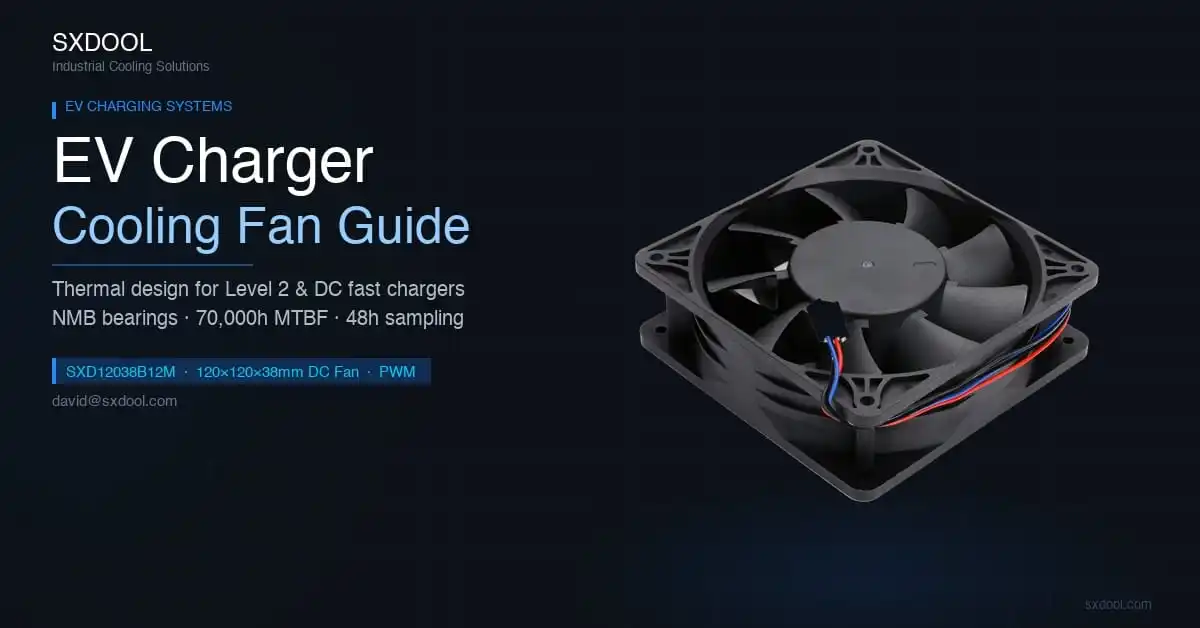
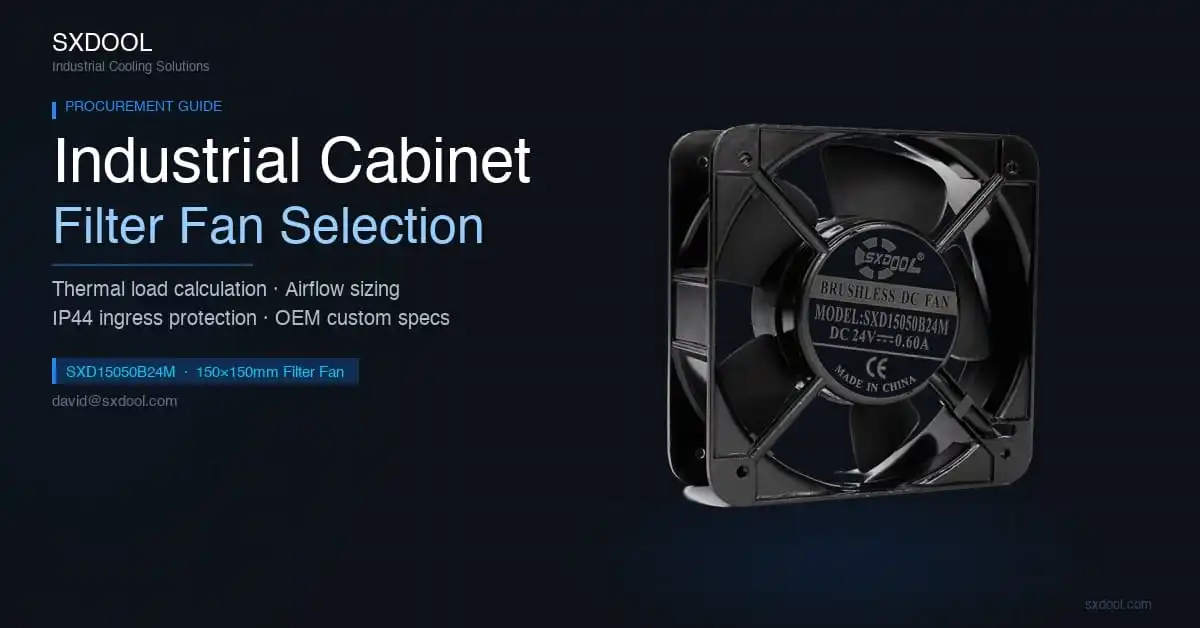
SXDOOL’s high-pressure DC axial fans are engineered specifically for this application. Utilizing UL94V-0 reinforced PBT plastic for both the impeller and frame, our fans withstand the structural stresses of high-speed operation. The core of our reliability lies in the use of genuine Japanese NMB dual ball bearings, which allow for continuous operation in various orientations—a critical requirement for compact telecom layouts.
Active Air Conditioning: Precision vs. Energy Consumption
Active air conditioning uses a refrigerant cycle (compressor, evaporator, and condenser) to drop the internal temperature below ambient levels. While this allows for precise temperature control regardless of external conditions, it comes with significant drawbacks for B2B operators:
- Energy Intensity: AC units consume significantly more power than fan-based systems, increasing operational expenditure (OPEX).
- Maintenance Complexity: Refrigerant leaks, compressor failures, and filter clogs in AC units require specialized technicians.
- Weight and Space: AC units are bulky and heavy, complicating cabinet design and installation.
Why Free Cooling Fans are the Cost-Effective Choice
For the majority of telecom deployments, a well-designed free cooling system using SXDOOL fans offers a superior TCO. By leveraging the natural ambient air, operators can reduce cooling energy consumption by up to 90% compared to traditional AC units.
IP68 Waterproofing and Environmental Protection
A common concern with free cooling is the ingress of moisture and dust. SXDOOL addresses this through our advanced vacuum-sealed motor technology, achieving IP68-rated protection. This ensures that even in coastal or humid environments, the fan's internal circuitry remains isolated from corrosion and short circuits. Combined with high-efficiency cabinet filters, our fan systems provide a robust barrier against the elements.
Extended Lifespan and Reliability
Reliability is non-negotiable in telecom. Our fans are rated for an L10 life of 70,000 hours at 40°C. This longevity is achieved through precision engineering of the motor and the heat-dissipation properties of the NMB bearings. For procurement managers, this translates to fewer truck rolls and lower long-term maintenance costs.
Optimizing Airflow with SXDOOL DC Axial Fans
To maximize the efficiency of a free cooling system, the choice of fan is paramount. SXDOOL offers a range of high-performance DC axial fans with PWM (Pulse Width Modulation) control. This allows the cabinet's controller to adjust fan speed based on real-time temperature sensors, further reducing power consumption and maintaining low acoustic noise levels during periods of low thermal load.
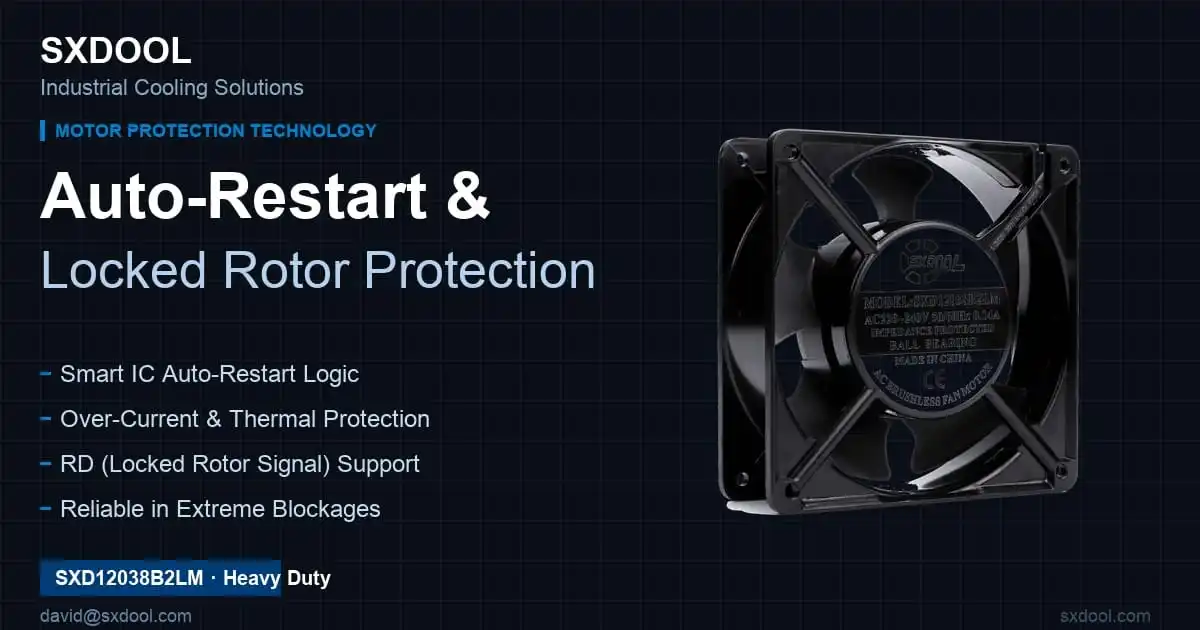
Our OEM/ODM services allow for custom lead wire lengths, connector types, and specialized signals (such as Tachometer or RD alarm signals), ensuring seamless integration into existing telecom monitoring systems. With a minimum order quantity (MOQ) of just 100 pieces and a lead time of 7-15 days, we support both prototyping and rapid scaling of infrastructure projects.
Conclusion: Engineering the Future of Connectivity
While active air conditioning remains necessary for extreme environments where ambient temperatures exceed the safe operating range of the electronics, free cooling fan systems are the standard for sustainable, cost-effective telecom infrastructure. SXDOOL's commitment to quality—from ISO9001 certified manufacturing to CE, RoHS, and FCC compliance—ensors that your equipment stays cool and operational for years to end.
Contact SXDOOL's engineering team at david@sxdool.com for bespoke thermal solutions and OEM bulk pricing. Visit www.sxdool.com








0 Comments